

What Does an HVAC Maintenance Plan Include — And Why It Matters for New Jersey Homeowners
What does an HVAC maintenance plan include is one of the most important questions a homeowner can ask before their heating or cooling system fails on the worst possible day. A comprehensive HVAC maintenance plan is a scheduled service agreement between you and a licensed HVAC contractor that covers preventive inspections, cleaning, and tune-ups — typically twice a year — so small problems get caught before they turn into expensive emergencies.
Here is a quick overview of what most plans cover:
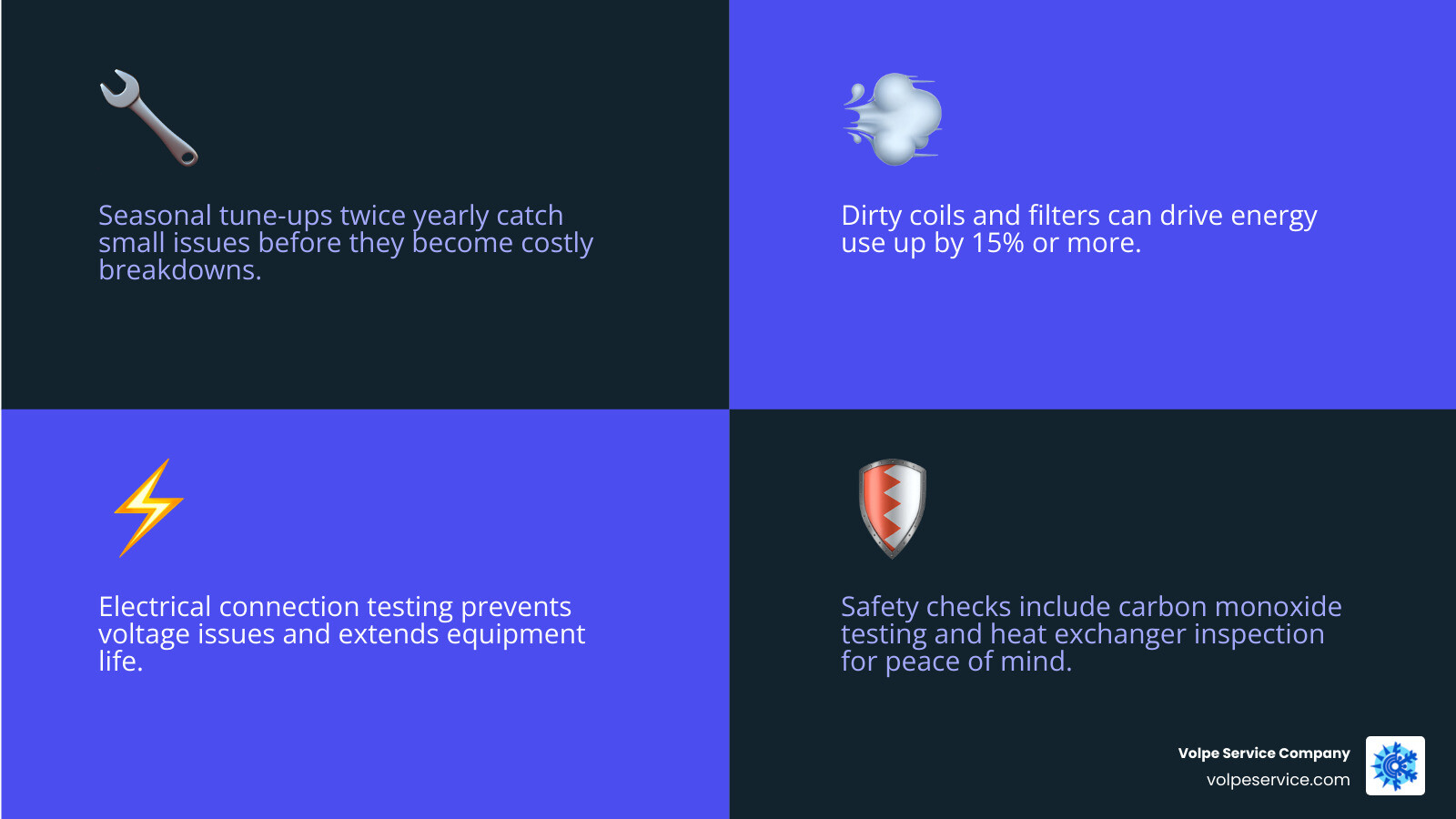
- Seasonal tune-ups — one spring visit for your cooling system, one fall visit for your heating system
- Filter inspection and replacement — keeping airflow clean and unrestricted
- Refrigerant level checks — ensuring your AC runs at rated efficiency
- Electrical connection testing — tightening terminals, checking voltage and amperage
- Coil cleaning — condenser and evaporator coils cleared of dirt and buildup
- Thermostat calibration — verifying accurate temperature readings
- Safety checks — carbon monoxide testing, heat exchanger inspection, gas line review
- Condensate drain flushing — preventing water damage and blockages
- Blower motor and belt inspection — catching wear before it causes a breakdown
- Priority scheduling and repair discounts — member perks that add real value
A neglected HVAC system can lose up to 5% of its efficiency every year without professional service — and a dirty or poorly maintained system can drive energy use up by 15% or more. For homeowners across Northern and Central New Jersey, where summers are humid and winters are cold, that kind of efficiency loss shows up fast on your utility bill.
This guide walks through every component of a solid maintenance plan, how often you should schedule service, and how to decide whether a plan is right for your home or building.
What Is an HVAC Maintenance Plan vs. Warranties?
When looking for ways to protect your heating and cooling systems, it is easy to get confused by the different terms used in the industry. Homeowners often ask how an HVAC maintenance plan differs from home warranties or manufacturer warranties. Understanding these boundaries ensures you do not leave your home comfort unprotected.
What is an HVAC Maintenance Plan?
An HVAC maintenance plan is a proactive, preventive service agreement. Instead of waiting for your furnace to stop heating in January or your air conditioner to blow warm air in July, you schedule regular, professional tune-ups. It is comparable to getting your car’s oil changed or visiting the dentist for routine cleanings. These plans are designed to prevent breakdowns, optimize energy efficiency, and prolong the lifespan of your equipment.
What is a Home Warranty?
A home warranty is a service contract that covers the repair or replacement of major home systems and appliances (like plumbing, electrical systems, and HVAC units) when they break down due to normal wear and tear. Unlike a maintenance plan, a home warranty is entirely reactive. It does not include routine cleanings or seasonal safety inspections. You only call the warranty company after a failure has already occurred.
What is a Manufacturer Warranty?
A manufacturer warranty comes with your HVAC equipment when it is installed. It typically covers the cost of replacement parts (like a compressor or a heat exchanger) if they fail due to factory defects within a specific time period.
Here is the catch: almost all major HVAC manufacturers require documented annual professional maintenance to keep their warranties valid. If your system breaks down and you cannot provide service records proving that a licensed technician has maintained the unit, the manufacturer can legally deny your warranty claim.
To dive deeper into whether these agreements are a smart financial safety net or an unnecessary expense, read our detailed analysis on HVAC Maintenance Plans: Peace of Mind or Money Pit?.
What Does an HVAC Maintenance Plan Include for Year-Round Comfort?

A comprehensive maintenance plan is tailored to the specific demands of each season. Our systems in New Jersey work incredibly hard, transitioning from humid summer cooling to intense winter heating. A professional plan addresses these shifting demands by dividing your service into two seasonal visits.
By scheduling these visits, you ensure that your system is thoroughly prepared for peak demand. Regular inspections uncover hidden wear and tear, such as loose electrical connections, deteriorating belts, or blocked drain lines. To understand why these routine checkups are essential for your system’s health, explore the Regular HVAC Maintenance Services Importance.
What Does an HVAC Maintenance Plan Include for Cooling Systems?
When our technicians perform a spring cooling tune-up, we focus on maximizing heat transfer, verifying electrical safety, and ensuring proper airflow. This preparation keeps your home cool even during the muggiest July heatwaves.
A standard professional cooling checklist includes:
- Condenser and Evaporator Coil Inspection: Dirt acts as an insulator on your coils, forcing your compressor to work harder and reducing efficiency. We inspect and clean these coils to maintain proper heat exchange.
- Refrigerant Level Measurement: Operating with a refrigerant charge that is even 10% off specification can drop system efficiency by up to 20% and put dangerous strain on your compressor.
- Electrical Testing: We test capacitors (the components that give your motors the “jolt” they need to start) and tighten all electrical connections. Loose terminals can lead to system failure or electrical hazards.
- Condensate Drain Line Flushing: Air conditioners pull gallons of moisture out of your indoor air. We flush the drain lines to prevent mold, algae, and clogs that can cause water damage inside your home.
- Blower Motor and Fan Calibration: We check the fan blades and motor amperage to ensure quiet, balanced operation.
For an in-depth breakdown of what occurs during our cooling inspections, check out our guide on What Is Involved in an AC Tune-Up?.
What Does an HVAC Maintenance Plan Include for Heating Systems?
As the autumn leaves begin to fall, our focus shifts to heating performance and, most importantly, combustion safety. Furnaces and heat pumps require precise calibration to keep your family warm and safe throughout the freezing winter months.
A standard professional heating checklist includes:
- Heat Exchanger Inspection: We inspect the heat exchanger for cracks, rust, or blockages. A cracked heat exchanger is the number one carbon monoxide hazard in residential heating systems.
- Carbon Monoxide Testing: We run combustion analyses to ensure no dangerous gases are leaking into your living spaces.
- Burner and Igniter Cleaning: Dust and debris on the burner assembly can lead to delayed ignition, uneven heating, and wasted fuel. We clean and adjust these components for clean combustion.
- Flue and Venting Review: We verify that exhaust gases are venting safely out of your home.
- Limit Control and Safety Switch Testing: We test the internal safety controls to ensure the system will automatically shut down if it overheats.
If you suspect your heating system is struggling before your scheduled visit, review these 10 Signs That It’s Time for a Furnace Tune-Up.
How Often to Schedule Preventive Maintenance and Its Benefits
For standard split systems (an air conditioner paired with a furnace) or heat pumps, we recommend scheduling professional maintenance twice a year. The ideal timeline is to schedule cooling prep in the spring (March through May) and heating prep in the fall (September through November).
The benefits of keeping up with this schedule are substantial:
- Extended Equipment Lifespan: A well-maintained HVAC system can easily last 15 to 20 years, whereas a neglected system often breaks down permanently after just 10 to 12 years.
- Improved Energy Efficiency: Regular maintenance keeps your system running at peak performance, improving efficiency by 15% to 25% compared to neglected units.
- Fewer Emergency Breakdowns: Homeowners who invest in routine maintenance experience up to 60% fewer emergency repair calls.
- Better Indoor Air Quality: Regular cleanings and filter management keep dust, pollen, and mold from circulating through your home’s ductwork.
The $5,000 Rule for HVAC
When faced with an unexpected repair on an aging system, how do you decide whether to fix it or replace it? Many industry experts use the $5,000 Rule.
To use this rule, multiply the age of your system (in years) by the estimated cost of the repair. If the total exceeds $5,000, it is generally wiser to invest in a new, energy-efficient system rather than repairing the old one. If the total is less than $5,000, proceeding with the repair is usually the practical choice. Keeping your system maintained helps you avoid facing this tough decision prematurely.
| Feature / Detail | Maintained HVAC System | Neglected HVAC System |
|---|---|---|
| Average Lifespan | 15 to 20 Years | 10 to 12 Years |
| Energy Efficiency | Operates at original manufacturer ratings | Loses up to 5% efficiency per year |
| Air Quality | Clean, filtered, low allergen levels | High dust, potential mold in coils/drains |
| Warranty Status | Fully valid (with documented service records) | Voided due to lack of professional care |
| Breakdown Risk | Low (issues are caught during off-season) | High (fails during peak summer/winter load) |
To learn more about the ideal timing for your system’s checkups, read Don’t Wait for the Smoke: How Often to Schedule Heating and Cooling Tune-Ups. For more details on protecting your heating equipment, explore the Regular Furnace Maintenance Benefits and find out if a seasonal checkup is right for you by reading Is HVAC Tune-Up Worth It?.
Frequently Asked Questions About HVAC Maintenance Plans
Navigating home maintenance can raise plenty of questions. Below are some of the most common inquiries we receive from homeowners in East Hanover, Morristown, and surrounding New Jersey communities.
What are the warning signs my system needs attention between visits?
While seasonal tune-ups prevent most issues, your system may occasionally need extra attention between visits. Keep an eye out for these warning signs:
- Unusual Noises: Squealing, banging, rattling, or grinding sounds indicate loose belts, failing bearings, or motor issues.
- Inconsistent Temperatures: If some rooms feel like iceboxes while others are warm, your system is struggling to distribute air evenly.
- Short-Cycling: If your furnace or air conditioner turns on and off rapidly without completing a full cooling or heating cycle, it is overheating or experiencing sensor issues.
- Unexplained Utility Spikes: A sudden jump in your energy bills without a change in weather or usage patterns means your system is working much harder than it should.
Ignoring these warning signs can lead to severe system damage. Learn why addressing these issues early is vital in our post on why Regular HVAC Maintenance Is Crucial.
Can I perform HVAC maintenance tasks myself?
Homeowners can absolutely handle a few basic tasks to keep their systems running smoothly between professional visits:
- Replace Air Filters: Check your air filters every 1 to 3 months. A clogged filter restricts airflow, forces your system to work harder, and can even cause your evaporator coils to freeze.
- Clear Debris Around Outdoor Units: Keep shrubs, weeds, and leaves cleared away from your outdoor condenser unit. Maintain at least two feet of clear space around the unit so it can “breathe” properly.
- Keep Vents Clear: Ensure that furniture, carpets, or drapes are not blocking your indoor return and supply vents.
However, any tasks that involve opening the unit cabinets, testing electrical circuits, checking refrigerant pressures, or performing combustion analysis require professional training and specialized tools. For safety and warranty compliance, always leave these tasks to a licensed technician. You can read more about balancing DIY tasks and professional care in our HVAC Service Plans Guide 2025.
How do I choose the right HVAC maintenance plan?
When comparing maintenance plans, look for options that offer transparent value and match the specific needs of your home:
- Comprehensive Checklists: Ensure the plan includes a detailed multi-point inspection for both heating and cooling, rather than just a quick visual check.
- Priority Scheduling: A great plan guarantees that if your system breaks down during a peak heatwave or a winter freeze, you get moved to the front of the service line.
- Member Perks: Look for plans that offer valuable discounts on repairs and diagnostic fees.
- Local Reputation: Choose a licensed, insured contractor with deep roots in your community and a track record of reliable service.
If you are a resident of Morris or Essex County, you can find a plan designed specifically for our local climate by visiting our HVAC Maintenance Plan Parsippany NJ page.
Conclusion
Your HVAC system is one of the most significant investments in your home. Rather than waiting for an unexpected breakdown to disrupt your comfort and budget, enrolling in an HVAC maintenance plan provides year-round peace of mind, lower energy bills, and a longer lifespan for your equipment.
Since 1963, Volpe Service Company has provided data-driven, honest, and reliable heating and cooling services to families and businesses across Northern and Central New Jersey. From our office in East Hanover, we proudly serve communities including Livingston, Morristown, Summit, West Orange, Madison, Millburn, Denville, Parsippany, Montville, Boonton, Mountain Lakes, Chester, Mendham, and Mt. Olive.
Let us take the guesswork out of your home comfort. To secure your system’s performance for the upcoming season, explore our tailored programs on our HVAC Maintenance Plan Parsippany NJ page or contact our friendly team today to schedule your next tune-up.