
Why Oil to Gas Conversion Benefits for Homeowners Go Beyond Just Lower Bills
The oil to gas conversion benefits for homeowners are real, measurable, and worth understanding before your next heating season hits. Here’s a quick look at what switching delivers:
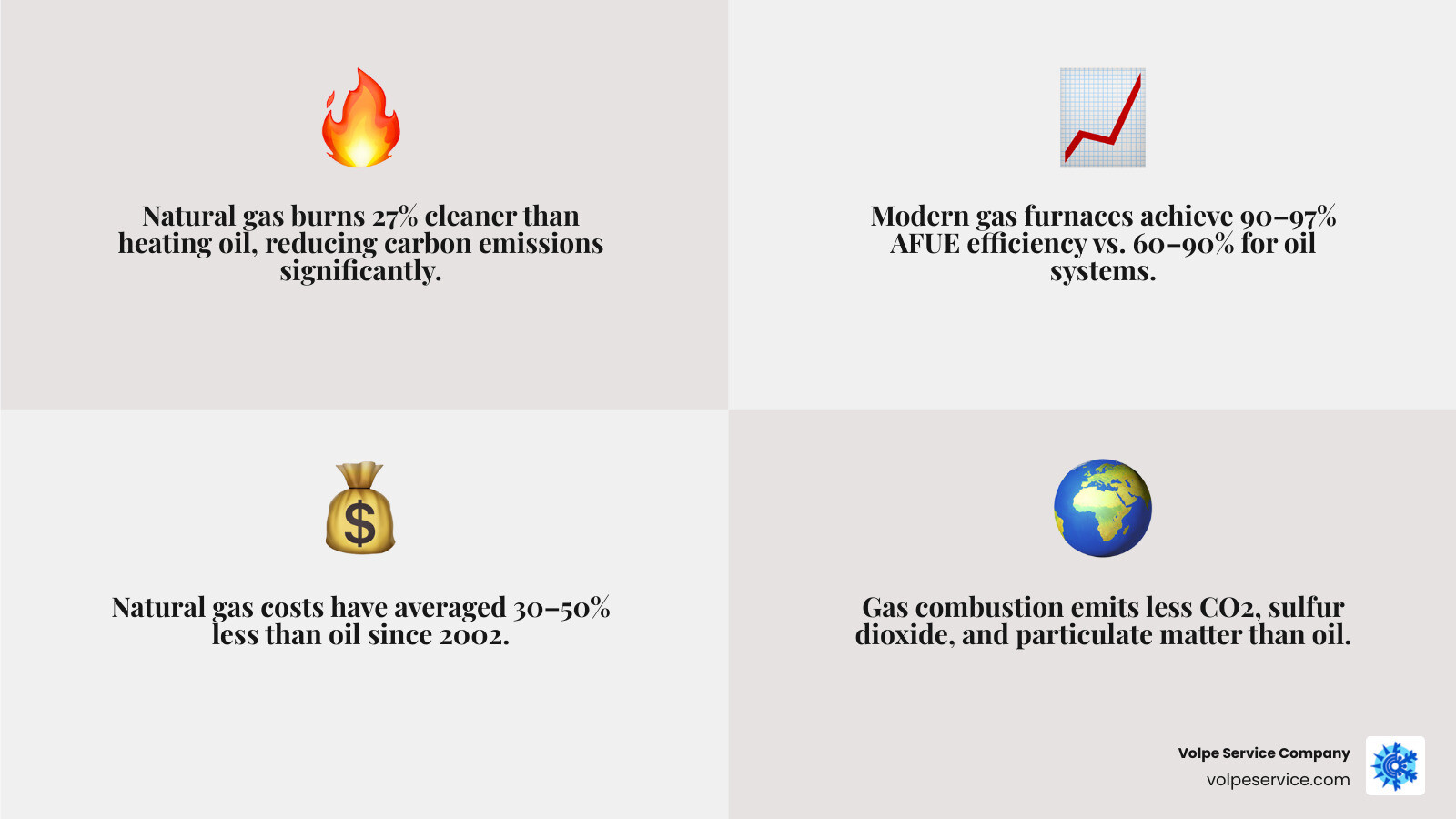
- Lower carbon emissions – Natural gas burns roughly 27% cleaner than heating oil
- Higher efficiency – Modern gas furnaces reach 90–97% AFUE vs. 60–90% for oil systems
- More stable fuel costs – Natural gas has averaged 30–50% less expensive than oil since 2002
- No more delivery scheduling – Gas arrives through underground pipelines, always on demand
- Less maintenance – Gas systems produce fewer combustion byproducts than oil
- Increased home value – Homes with natural gas heat tend to sell faster and at higher prices
- Potential rebates – Programs like NJSERDA can offset a significant portion of upfront costs
If you heat your New Jersey home with oil, you already know the routine: watching the tank gauge, scheduling deliveries, and bracing for price spikes every winter. It’s a system that worked for decades, but the landscape has shifted. Natural gas is now available to more neighborhoods across Northern and Central New Jersey than ever before, and homeowners who make the switch are seeing real results — lower monthly bills, more consistent warmth, and a noticeably smaller carbon footprint.
The environmental side of this equation is especially compelling. Heating oil combustion releases more carbon dioxide, sulfur dioxide, and particulate matter than natural gas. For homeowners who care about reducing their household’s environmental impact, switching fuels is one of the most direct and impactful steps they can take — without sacrificing comfort.
This guide walks you through everything you need to know: the key benefits, the step-by-step conversion process in New Jersey, what to expect with costs and rebates, and how the change affects your home’s long-term value.
Key Oil to Gas Conversion Benefits for Homeowners
When we talk about the oil to gas conversion benefits for homeowners, we often start with the “blue flame.” Unlike the yellow, soot-producing flame of an oil burner, natural gas burns with a clean, steady blue flame. This visual difference represents a major leap in chemical efficiency. Natural gas is the cleanest-burning fossil fuel available today, emitting significantly fewer pollutants such as sulfur dioxide and nitrogen oxides.
One of the most immediate Oil To Gas Conversions Mt Olive Nj homeowners notice is the stability of the fuel supply. Because natural gas is delivered via a permanent underground pipeline, you are no longer at the mercy of a delivery truck’s schedule or a snowy driveway that prevents a refill. This “always-on” reliability is a game-changer during North Jersey winters.
Furthermore, the efficiency gap between old oil units and modern gas systems is vast. To understand this, we look at the AFUE (Annual Fuel Utilization Efficiency) rating, which measures how much of your fuel actually turns into heat for your home versus how much escapes up the chimney.
| Heating System Type | Typical AFUE Rating |
|---|---|
| Older Oil Furnaces | 60% – 70% |
| New Oil Furnaces | 84% – 90% |
| Modern High-Efficiency Gas Furnaces | 90% – 97% |
| Ultra-High Efficiency Gas Units | Up to 98% |
Why oil to gas conversion benefits for homeowners include a smaller carbon footprint
In April 2026, environmental stewardship is more than just a buzzword; it’s a practical goal for many New Jersey families. Natural gas produces approximately 27% less carbon dioxide than heating oil when burned. By choosing a Natural Gas Furnace Mt Olive Nj, you are effectively shrinking your household’s carbon footprint by several tons of CO2 per year.
Beyond carbon, oil systems are notorious for producing particulate matter—essentially microscopic soot—that can degrade local air quality and accumulate in your home’s venting system. Natural gas virtually eliminates these particulates. This transition helps protect the local environment in communities like Mendham and Long Valley, ensuring cleaner air for everyone.
Maximizing oil to gas conversion benefits for homeowners through rebates
Making the switch is an investment, but it’s one that the state of New Jersey and various utility providers actively encourage. There are several Factors Heating Furnace Replacement that can make the transition more affordable. High-efficiency upgrades often qualify for significant rebates through clean energy programs or manufacturer incentives.
In many cases, homeowners in areas like West Orange or Summit can access low-interest financing or specialized “on-bill” repayment plans offered by utilities to help cover the equipment costs. These incentives are specifically designed to push homeowners toward the 95% AFUE and higher models, which provide the greatest long-term environmental and financial returns.
The Step-by-Step Conversion Process in New Jersey
At Volpe Service Company, we’ve been helping New Jersey residents navigate this process since 1963. While it might seem like a daunting overhaul, we break it down into manageable stages. The first step is always a thorough site assessment. We evaluate your current Oil Furnace Mt Olive Nj and determine if your home is already near a gas main.
Once availability is confirmed, the utility company will install a service line from the street to your home and set up a meter. While the utility handles the exterior line, our team handles everything from the meter inward, ensuring your internal piping is safely installed and meets all local North Jersey building codes.
Upgrading Your Heating Equipment
You cannot simply “hook up” an old oil furnace to a gas line. Because the combustion technologies and pressures are completely different, a full Furnace Replacement Mt Olive Nj is required. This is actually a major benefit, as it allows us to properly size the new unit for your home’s current needs. Many older homes have systems that are significantly oversized, leading to “short-cycling” and wasted energy.
During the installation, we also address ventilation. Modern gas furnaces are so efficient that their exhaust is relatively cool, often allowing for venting through PVC pipes out the side of the house rather than needing a traditional brick chimney. If we do use the existing chimney, a stainless steel liner is often required to protect the masonry from the slightly acidic condensation produced by gas combustion.
Decommissioning the Old Oil Tank
A critical part of the oil to gas conversion benefits for homeowners is the removal of the old oil storage tank. Whether your tank is in the basement or buried underground, it represents a potential environmental liability. When performing a Heating Furnace Replacement In Chester Nj, we coordinate the proper decommissioning of these tanks.
For underground tanks, this involves acquiring permits, soil testing to ensure no leaks have occurred, and either removing the tank or filling it with an inert material like sand or foam (if removal isn’t feasible). Removing the tank not only protects the soil but also clears up valuable square footage in your basement or yard, giving you more space for storage or landscaping.
Long-Term Value and Home Performance
Beyond the monthly savings and the environmental perks, converting to gas is a savvy real estate move. In the competitive New Jersey market—from Morristown to Madison—buyers are often wary of oil heat. They worry about the cost of deliveries and the potential “hidden” liability of an old oil tank.
By converting, you increase your home’s resale appeal. A modern, high-efficiency gas system is a major selling point that suggests the home has been well-maintained and is inexpensive to run. Furthermore, natural gas is versatile. Once the line is in your home, you can easily add other gas-powered amenities like a kitchen range, a clothes dryer, a fireplace insert, or even an outdoor grill hookup, further enhancing your lifestyle and property value.
Maintenance requirements also drop significantly. Oil systems require frequent cleaning of burner nozzles, pump strainers, and filter elements to prevent soot buildup. Gas systems are much cleaner, requiring only an annual safety check and filter change to keep them running at peak performance for 15 to 25 years.
Frequently Asked Questions about Fuel Switching
How long does the conversion process typically take?
The physical equipment swap—removing the old furnace and installing the new gas unit—usually takes just 1 to 2 days. However, the entire process, including utility applications, gas line installation from the street, and permit approvals, can take anywhere from 4 to 8 weeks. We recommend starting the process in the spring or summer so you are ready before the first frost.
Is natural gas available in my North Jersey neighborhood?
Most suburban areas in counties like Morris and Essex have gas mains running under the streets. You can check with your local utility provider (such as PSE&G or NJNG), or our team can help you verify availability during our initial consultation. Even if a line isn’t currently at your curb, utilities often extend lines if there is enough interest on a particular block.
Will I need to modify my chimney for a gas furnace?
It depends on the model you choose. If you opt for a high-efficiency condensing furnace (90%+ AFUE), we typically vent it through a wall using PVC pipes. If you choose a mid-efficiency unit or use the chimney for a gas water heater, you will likely need a stainless steel chimney liner. This prevents the moisture in gas exhaust from damaging your chimney’s mortar and brickwork.
Conclusion
Making the switch from oil to natural gas is one of the most impactful upgrades you can make for your New Jersey home. From the significant oil to gas conversion benefits for homeowners like lower emissions and increased property value to the daily convenience of a constant fuel supply, the advantages are clear.
At Volpe Service Company, we take a data-driven approach to every installation. We don’t just swap boxes; we ensure your new system is perfectly sized and calibrated for maximum efficiency. If you’re ready to shrink your carbon footprint and enjoy a more comfortable, reliable home, our family-owned team is here to guide you through every step of the Oil To Gas Conversions Mt Olive Nj process. Since 1963, we’ve been committed to honest pricing and professional workmanship—let us help you fuel a change for the better.