

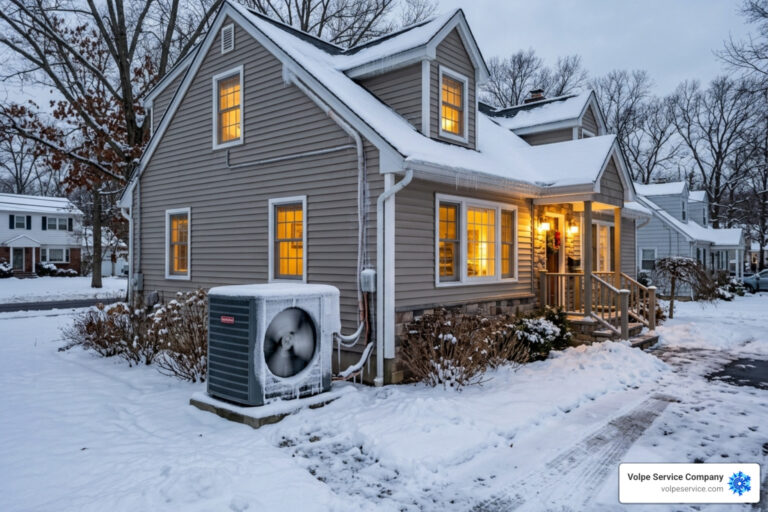
Why Northern New Jersey’s Climate Puts Your HVAC System to the Test
How northern new jersey climate affects your hvac system is something every homeowner and property manager in the region deals with year-round — and the answer is: relentlessly, and from every direction.
Northern New Jersey doesn’t give your HVAC a break. Winters drive temperatures down to 10°F. Summers push past 90°F with dew points above 70°F. Newark alone logs around 4,800 Heating Degree Days and 1,100 Cooling Degree Days each year. That’s a system working hard in both directions, often with very little transition time in between.
Here’s a quick look at how each season hits your HVAC:
| Season | Climate Challenge | HVAC Impact |
|---|---|---|
| Winter | Design temps as low as 10°F | High heating demand; heat pumps need backup heat |
| Summer | 92°F heat, 70%+ humidity | Cooling and dehumidification strain; short-cycling risk |
| Spring/Fall | Rapid temperature swings | System switches between heating and cooling daily |
| Year-round | Wind, precipitation, coastal salt air | Accelerated wear on coils, compressors, and electrical components |
The result? An HVAC system that rarely gets a true rest — and one that needs to be properly sized, efficiently rated, and well-maintained to handle what Northern New Jersey throws at it.
This guide walks through every major way the local climate affects your equipment, and what you can do to stay ahead of it.
Understanding How Northern New Jersey Climate Affects Your HVAC System
When we talk about how northern new jersey climate affects your hvac system, we are looking at a “mixed-humid” environment. This means our equipment has to be a jack-of-all-trades. In the winter, we face design temperatures as low as 10°F, requiring high-output furnaces or boilers. In the summer, the design condition hits 92°F dry-bulb, but the real “grind” comes from the dew points that often soar above 70°F.
This dual-threat climate means your system isn’t just fighting the thermometer; it’s fighting moisture and extreme pressure variations. Whether you are in East Hanover or Parsippany, your system is under constant mechanical stress. You can find more deep dives into these specific regional challenges on our Hvac Blog.
Why High Summer Humidity is a Major Challenge
In Northern New Jersey, summer relative humidity frequently exceeds 70%. For an air conditioner, cooling the air is only half the job; the other half is removing moisture (latent load). When humidity is this high, your AC acts as a giant dehumidifier.
If a system is even slightly oversized, it will “short-cycle,” meaning it cools the room so fast that it shuts off before it has a chance to pull the moisture out of the air. This leaves your home feeling “clammy” and creates a breeding ground for mold. Managing these Hvac Summer Maintenance Issues is critical for both comfort and indoor air quality.
How Northern New Jersey Climate Affects Your HVAC System Efficiency
As of April 2026, efficiency standards have never been more important. New Jersey falls under northern region requirements, meaning air conditioners must meet a minimum of 13.4 SEER2 (equivalent to the old 14 SEER). For heating, gas furnaces generally require at least an 80% AFUE rating, though many local homeowners opt for 95% or higher to offset high energy demand.
Furthermore, the New Jersey Global Warming Response Act and evolving refrigerant regulations are pushing the industry toward more eco-friendly, high-efficiency units. Staying compliant while staying comfortable requires a proactive approach to Regular Hvac Maintenance Services Importance.
Selecting the Best Equipment for the Mixed-Humid North
Choosing the right “tool for the job” depends on your specific property. Here is how the most common systems stack up in our region:
| System Type | Best Use Case in Northern NJ | Climate Performance |
|---|---|---|
| Gas Furnace | Traditional homes in Morristown or Summit | Excellent for 10°F nights; rapid heat recovery. |
| Boiler (Radiant) | Older estates and multi-story homes | Consistent, “dust-free” heat; great for cold snaps. |
| Cold-Climate Heat Pump | Modern retrofits and eco-conscious homes | Efficient down to sub-zero; may need backup heat. |
| Ductless Mini-Split | Added rooms or homes without ductwork | Precise zoning; excellent dehumidification. |
For larger Bergen County estates or expansive homes in Mendham, a dual-fuel system — which pairs an electric heat pump with a gas furnace backup — often provides the most reliable Hvac Services New Jersey by switching fuels based on whichever is most efficient at the current outdoor temperature.
How Northern New Jersey Climate Affects Your HVAC System Sizing
“Guesstimating” system size is a recipe for disaster in our climate. We use Manual J load calculations to determine the exact BTUs your home needs. This calculation accounts for Northern NJ’s specific design temperatures, but it also looks at your home’s “envelope.”
If your home has poor insulation or significant air leaks, your HVAC will work 20% harder than it needs to. We often find that identifying Hvac Ductwork Leaks Signs can save a homeowner more on their monthly bills than even the most expensive equipment upgrade.
Addressing Uneven Temperatures in Multi-Level Homes
The topography of areas like Cedar Grove, combined with the architectural style of multi-level New Jersey homes, creates a unique challenge: heat rising. In the summer, your second floor might feel like a sauna while the basement is a refrigerator.
Zoning systems use motorized dampers in your ducts to direct air exactly where it’s needed, controlled by smart thermostats. This prevents the “thermostat wars” and ensures the system doesn’t overwork itself trying to cool a stubborn upstairs bedroom. This is a common fix for Hvac Air Distribution Problems in our local townships.
Protecting Your System from Extreme Weather and Environmental Stress
Whether it’s a blizzard in Denville or a summer storm in West Orange, extreme weather events stress every inch of your HVAC. High winds can force debris into outdoor coils, while heavy precipitation increases the humidity load your system must process.
Electrical components are particularly vulnerable during New Jersey’s frequent “voltage flickers” during storms. Having a professional check for Hvac Electrical Issues Solutions can prevent a fried compressor or control board after a summer thunderstorm.
Essential Maintenance for Harsh Seasonal Transitions
In Northern New Jersey, we don’t really have a “shoulder season.” We often go from using the heater on a Monday to the AC on a Wednesday. These transitions are the most common times for system failure because components that have been dormant for six months are suddenly slammed into high gear.
Biannual tune-ups are non-negotiable here. Spring cooling prep ensures your coils are clean and refrigerant levels are topped off, while fall heating inspections verify that your heat exchanger is safe and your burners are clear. Following Hvac Tips For Transitioning From Winter To Spring ensures your system is ready for the “Garden State Grind.”
Coastal Challenges: Corrosion and High Dew Points
Even though we are “Northern” NJ, areas with coastal proximity experience salt-air corrosion. Salt is a silent killer for outdoor AC condensers, eating away at aluminum fins and copper coils. This leads to refrigerant leaks and reduced heat transfer.
In these zones, we recommend systems with coated coils and a heightened focus on filtration. Keeping an eye on Hvac Filter Blockage Issues is even more vital when salt and high humidity combine to create a sticky “film” on your system’s intake.
Frequently Asked Questions about Northern NJ HVAC Performance
Do cold climate heat pumps work in Northern New Jersey winters?
Yes, modern cold-climate heat pumps are designed to maintain high efficiency even when temperatures drop to 10°F or lower. They use advanced variable-speed compressors to extract heat from frigid air. However, for total peace of mind during a true Jersey “Polar Vortex,” we often recommend a backup heat source (like electric heat strips or a gas furnace). Because these systems run longer cycles, Regular Hvac Maintenance Is Crucial to keep those advanced motors running smoothly.
Why does my AC struggle to dehumidify on 90-degree days?
If your home feels sticky despite the AC running, it’s likely a “latent load” issue. This often happens with oversized units that cool the air too quickly and shut off. On a 90-degree day with 70% humidity, the system needs to run long enough for the evaporator coil to stay cold and let moisture drip into the condensate pan. If you’re seeing water around your unit or feeling high humidity, it’s time for some Hvac System Troubleshooting.
Is a high SEER2 rating worth the investment in New Jersey?
Absolutely. With electricity rates in New Jersey projected to rise through 2026, a high SEER2 unit (18+) can reduce cooling costs by up to 20-40% compared to an older 10 SEER unit. When you factor in utility rebates and the long-term reliability of modern components, the math usually favors the higher-efficiency choice. If you’re wondering Is Hvac Tune Up Worth It for an older unit versus replacing it with a high-efficiency model, we can provide a data-driven comparison for your specific home.
Conclusion
At Volpe Service Company, we’ve been helping our neighbors in East Hanover, Livingston, and throughout Northern New Jersey navigate this challenging climate since 1963. We know exactly how northern new jersey climate affects your hvac system because we’ve seen it all — from frozen boilers in Morristown to humidified-out ACs in Parsippany.
Our family-owned approach means we don’t just sell equipment; we provide data-driven solutions tailored to the unique “grind” of the Garden State. Whether you need a 24/7 emergency repair or a long-term plan to lower your energy bills, we are here to provide the courteous, honest service you deserve.
Ready to protect your home from the next New Jersey cold snap or heat wave? Explore our Hvac Service Plans Guide 2025 or contact us today for expert Hvac Services you can trust.