
Don’t Wait Until It Breaks: Knowing when to call a professional for ac problems
Knowing when to call a professional for ac problems can save you from a costly breakdown — especially during a New Jersey heat wave. Some AC issues are simple enough to check yourself. Others need a licensed technician right away.
Here’s a quick guide to help you decide:
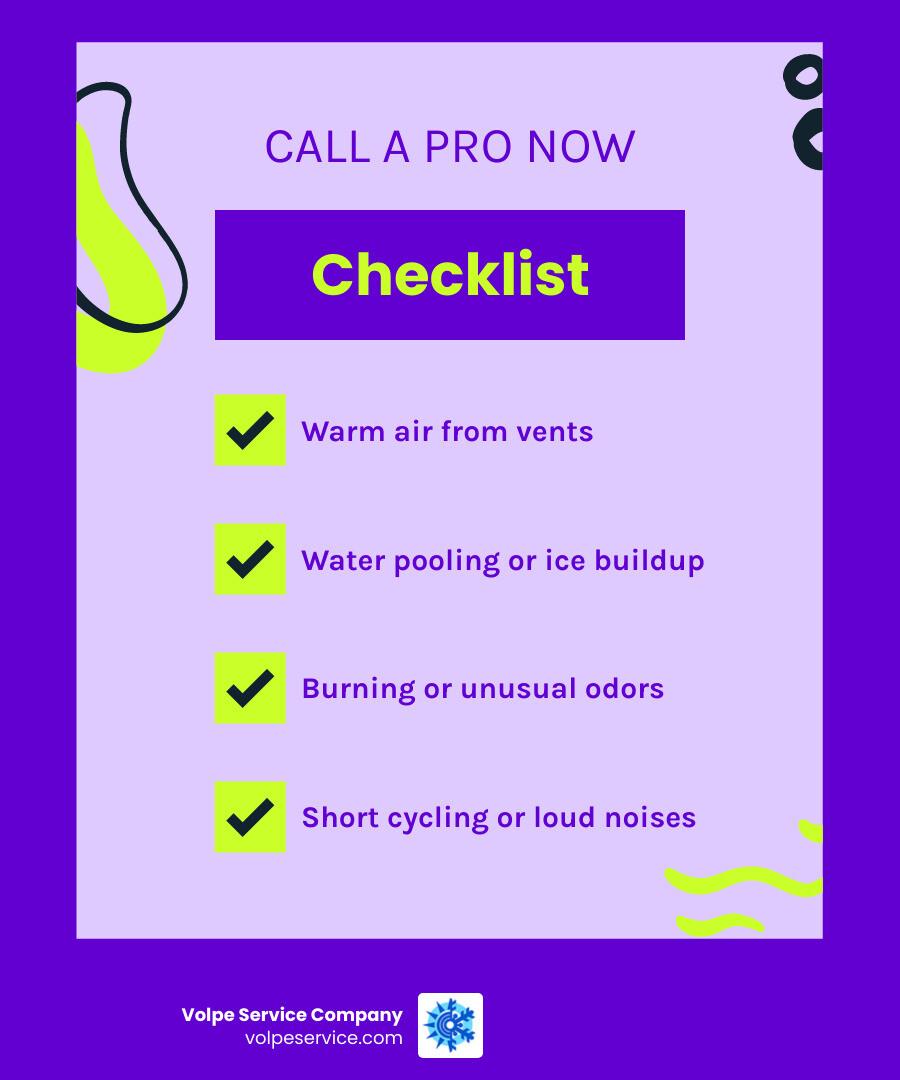
Call a professional immediately if you notice:
- Warm or hot air blowing from vents despite correct thermostat settings
- Water pooling around the indoor unit or air handler
- Ice on the refrigerant lines or evaporator coils
- A burning, electrical, or chemical smell coming from vents
- Loud grinding, banging, or squealing noises
- The circuit breaker tripping repeatedly when the AC runs
- Your system short cycling (turning on and off every few minutes)
You can safely check these yourself first:
- Thermostat settings (make sure it’s set to COOL and below room temperature)
- Air filter (replace if dirty or clogged)
- Circuit breaker (reset once if tripped)
- Vents (make sure none are blocked by furniture)
If the basic checks don’t fix the problem — or if you notice any of the warning signs above — it’s time to call in a pro.
Northern New Jersey summers are no joke. From Morristown to Livingston to Summit, temperatures climb fast, and your AC system works hard to keep up. Most homeowners don’t think much about their air conditioner until something goes wrong. By then, what started as a minor issue can turn into a major repair — or a full system failure.
The truth is, modern AC systems are complex. They involve pressurized refrigerant, high-voltage electrical components, and precision-calibrated parts that aren’t meant to be handled without proper training and tools. Attempting a fix without that knowledge doesn’t just risk making things worse — it can also void your warranty and create safety hazards in your home.
One common scenario HVAC technicians see regularly: a homeowner assumes their AC has completely died, when in reality the system simply shut itself off due to a clogged condensate line. A quick professional diagnosis would have caught it early. Instead, the delay led to water damage and a bigger repair bill.
This guide will walk you through exactly which warning signs demand a professional call, what you can safely check on your own, and how to make smart decisions about repairs versus replacement — so you stay comfortable all season long.
Recognizing the Warning Signs: When to Call a Professional for AC Problems
It’s April 2026, and the cooling season is just around the corner. If you’ve noticed your home isn’t reaching the temperature set on your thermostat, or if the air coming from your vents feels like a lukewarm breeze, your system is trying to tell you something. Recognizing these signs you need an AC repair early is the best way to prevent a total system shutdown in the middle of July.
Weak airflow is one of the most common complaints we hear. While it might seem like a minor nuisance, it often points to a failing blower motor or a blockage in your ductwork. Similarly, if your unit is constantly turning on and off — a process known as short cycling — it’s putting massive strain on your compressor. This is one of the top warning signs: how to tell if your air conditioner is broken. Short cycling can be caused by anything from an oversized unit to a refrigerant leak, and it requires a data-driven diagnosis to fix correctly.
Unusual odors are another red flag. A musty, “dirty sock” smell often indicates mold growth within the unit or the ducts, while a chemical or sweet smell could signal a refrigerant leak. Understanding how to know if your air conditioner is broken involves paying attention to these sensory cues. If the air in your Madison or Parsippany home feels humid despite the AC running, your system’s evaporator coils likely aren’t removing moisture effectively, which is a key part of the cooling process.
Safe Homeowner Checks Before Requesting Service in Morristown
Before you pick up the phone, there are a few “sanity checks” every homeowner should perform. We often see service calls in Morristown and Denville that could have been resolved in seconds with a simple adjustment. First, check your thermostat. It sounds obvious, but ensure it is set to “Cool,” the batteries are fresh, and the temperature is set below the current room temperature.
Next, look at your air filter. A clogged filter is responsible for a surprising number of service calls because it restricts airflow so much that the system can’t breathe. This leads to many of the 8 reasons your AC is not turning on & how to fix them. We recommend changing your filters every two months — or monthly if you have pets.
Finally, check your electrical panel. If your AC suddenly stopped, you might have a tripped circuit breaker. You can try resetting it once, but if it trips again immediately, do not try a third time. This is a safety feature indicating an electrical fault that needs professional attention. For more localized advice, check out our AC repair tips Chester NJ to keep your system running smoothly.
When to call a professional for ac problems involving water or ice
Water and ice belong in your freezer, not on your air conditioner. If you see ice forming on the copper refrigerant lines or the indoor evaporator coil, turn the system off immediately. Continuing to run a frozen AC can lead to permanent compressor failure.
Ice is usually caused by one of two things: restricted airflow (like a filthy filter or blocked return vents) or low refrigerant levels. Since refrigerant is a pressurized chemical that requires licensing to handle, you should never attempt to “top it off” yourself. This is a primary reason for why your AC freezes up.
Water pooling around the base of your indoor unit is another common issue. Almost 90% of central air service calls are related to water leaks. This usually happens when the condensate drain line gets clogged with algae or debris, causing the drain pan to overflow. While some people try to vacuum out the line, a professional can properly clear the clog and treat the line to prevent future growth. These are definitive signs for AC repair service that shouldn’t be ignored.
When to call a professional for ac problems related to electrical issues
Electrical problems are perhaps the most dangerous category of AC issues. If you smell something burning — like ozone or melting plastic — shut the system down at the breaker immediately. This often indicates wiring that has shorted out or a motor that is overheating.
Buzzing or humming sounds often point toward AC capacitor failure signs. The capacitor is like a large battery that gives the motor the “kick” it needs to start. These components can store a dangerous electrical charge even when the power is off, so they should only be replaced by a technician.
If your AC circuit breaker keeps tripping, it’s usually because the system is drawing too much power. This could be due to a grounded compressor or a fan motor that is seizing up. Especially during the peak of summer, an AC trips circuit breaker in summer because the heat makes the system work harder, exposing weak electrical connections.
The Risks of Delaying Expert HVAC Repairs in Livingston
In Livingston and Millburn, we’ve seen how “waiting until next week” can turn a simple repair into a total replacement. Small issues don’t fix themselves; they just put more stress on other parts of the system.
| Minor Performance Issue | Potential Major Failure if Ignored |
|---|---|
| Dirty Evaporator Coil | Compressor burnout due to overheating |
| Clogged Drain Line | Mold growth in ductwork and water damage to ceilings |
| Low Refrigerant | Total system freeze-up and motor failure |
| Worn Fan Belt | Smashed internal components and broken blower |
Ignoring these signs your AC needs urgent repair leads to a massive loss in energy efficiency. When your system struggles, it runs longer and works harder, which you’ll see reflected in your utility bills. Furthermore, water leaks that go unnoticed can lead to mold growth inside your walls or ductwork, creating health risks for your family. If the heat is extreme and your system fails, it can quickly become an emergency AC repair Chester situation, especially for households with seniors or young children.
Deciding Between Repairing or Replacing Your System in Summit
One of the hardest questions homeowners in Summit and West Orange face is whether to keep patching up an old unit or invest in a new one. Central air conditioners typically last between 10 to 15 years. If your unit is approaching that 15-year mark and you’re facing a repair that costs a significant fraction of a new system, replacement is often the more cost-effective choice.
Think about the “repair history.” If you’ve had to call us three times in the last two years, the system is likely at the end of its reliable life. While we can often fix AC fan problems causing poor airflow, those repairs can add up.
Newer systems are significantly more energy-efficient than those built even a decade ago. If you are constantly dealing with AC warm air causes & solutions, a new installation might pay for itself over time through lower monthly bills. We can help you determine what is the most common AC repair for your specific model and whether it’s worth the investment to keep it running.
Frequently Asked Questions about AC Repairs
How often should I have my AC professionally inspected?
We recommend a professional inspection at least once a year, ideally in the spring before the heavy cooling season begins. Regular maintenance can prevent nearly 80% of common repair issues and ensures your system is running at peak efficiency. For older units, a bi-annual check-up is often a smart move to catch wear and tear before it leads to a breakdown.
Is a hissing noise from my AC an emergency?
A hissing noise is often a sign of a refrigerant leak or an internal valve leak. While it might not be a “fire” emergency, it is a “system” emergency. Running an AC that is low on refrigerant will eventually destroy the compressor, which is the most expensive part of the unit. If you hear hissing, turn the system off and call for service.
Why is my air conditioner blowing warm air despite the settings?
There are several possibilities, ranging from a simple thermostat error to a failed compressor or a refrigerant leak. Sometimes, the outdoor unit has lost power due to a tripped breaker while the indoor fan continues to run, blowing uncooled air through the house. If you’ve checked your filters and thermostat and the air is still warm, a technician needs to look at the outdoor condenser and refrigerant levels.
Conclusion
Since 1963, Volpe Service Company has been helping our neighbors in East Hanover and across Northern New Jersey stay cool. We know that when to call a professional for ac problems isn’t always clear, but our team is here to provide the data-driven solutions and honest pricing you deserve. Whether you’re in Montville, Boonton, or Mendham, you can count on our licensed technicians for courteous service and constant communication.
Don’t let a small rattle turn into a mid-summer meltdown. Our family-owned business is dedicated to keeping your home comfortable and your energy bills manageable. Schedule your professional HVAC inspection today and let us ensure your “Climate Control is Done Right—Guaranteed.”