

Why Knowing How Proper HVAC Maintenance Prevents Mold Growth Could Protect Your Home
How proper HVAC maintenance prevents mold growth comes down to one core principle: controlling moisture. When your HVAC system is well-maintained, it manages indoor humidity, keeps condensation in check, and moves clean air through your home consistently. When it’s neglected, moisture builds up in coils, drain pans, and ductwork — and mold follows.
Here’s a quick summary of how proper maintenance stops mold before it starts:
- Replace air filters every 1–3 months to maintain airflow and prevent moisture buildup
- Keep indoor humidity between 30–50% so mold spores can’t take hold
- Clean and inspect condensate drain lines to prevent standing water
- Schedule professional HVAC inspections twice a year to catch hidden moisture problems early
- Seal leaky ductwork to stop humid air from condensing inside your ducts
- Dry any wet HVAC components within 24–48 hours to block mold from forming
For New Jersey homeowners especially, where humid summers push indoor moisture levels higher, a neglected HVAC system can become a silent breeding ground for mold. Mold spores are always in the air — they only need a damp surface to start growing. Your HVAC system, with its coils, drain pans, and miles of ductwork, offers plenty of those surfaces if maintenance slips.
The good news? Most of this is entirely preventable with a consistent maintenance routine.
The Connection Between HVAC Systems and Mold Growth
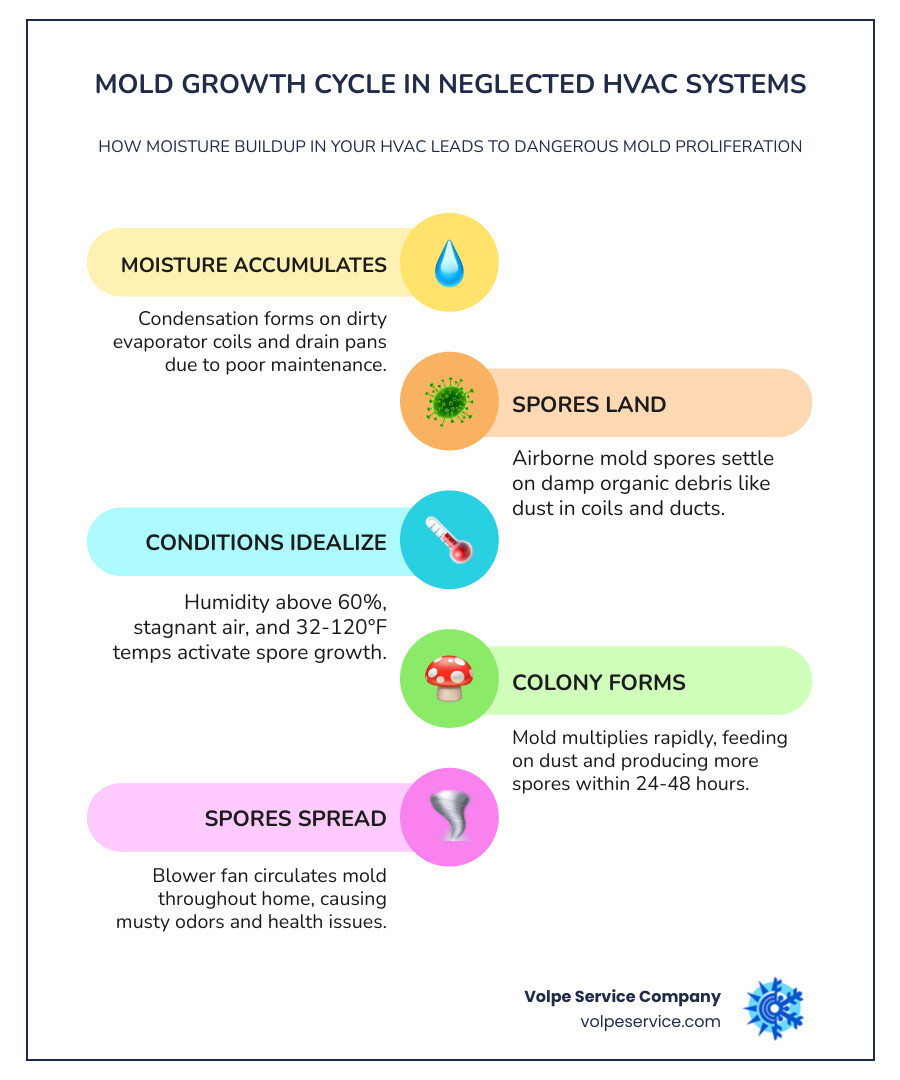
To understand how proper HVAC maintenance prevents mold growth, we first have to look at the “why.” Mold isn’t just a guest that shows up uninvited; it’s a biological entity that needs three specific things to survive: moisture, organic matter (food), and the right temperature (usually between 32 and 120 degrees Fahrenheit).
Unfortunately, a neglected air conditioner or furnace provides all three. Your AC unit works by pulling warm, humid air across a cold evaporator coil. This process naturally creates condensation. In a healthy system, that water drips into a pan and flows out of your home. But if the system is dirty or poorly maintained, that moisture sticks around.
When you combine standing water with the dust and dander (organic matter) that settles in your vents, you’ve essentially built a five-star resort for mold. Once mold takes root, the blower fan acts like a delivery service, spreading spores through every room in your house. This is why we often see 6 Signs Your AC Could Be Making You Sick, ranging from unexplained headaches to persistent coughing.
Specific issues like AC Cooling Coil Problems are often the primary culprit. If those coils are covered in grime, they can’t shed moisture properly, leading to damp patches where mold flourishes.
Identifying Common Causes of Contamination
Mold doesn’t just happen; it’s usually the result of a system under stress. One of the most common issues we see in Northern New Jersey homes is high indoor humidity. If your home feels like a swamp in July, your HVAC system might be struggling to dehumidify.
Sometimes the problem is the system itself. If an AC unit is oversized for the home, it will “short cycle,” meaning it turns on and off too quickly. It cools the air down, but it doesn’t run long enough to actually pull the moisture out of the air. This leaves your home feeling cold and clammy—a perfect setup for spores.
Additionally, poor ventilation can lead to stagnant air. When air doesn’t move, moisture settles. This is often Why Your AC Freezes Up or fails to regulate the “dew point” on your walls and inside your ducts.
Recognizing the Signs of Mold in Your Vents
How do you know if your HVAC system has already become a host? The most famous sign is “Dirty Sock Syndrome.” If you turn on your AC and it smells like a locker room or has a distinct musty, earthy odor, that’s likely mold or mildew growing on your coils or in your ducts.
You should also keep an eye out for:
- Visible spots: Black, green, or white fuzzy patches on your register vents or around the indoor unit.
- Increased allergy symptoms: If your family starts sneezing or experiencing watery eyes only when the AC is running, the air quality is compromised.
- Excessive condensation: Water beads on the outside of your vents or around the AC cabinet.
Dealing with AC Odors and IAQ (Indoor Air Quality) is something we take seriously at Volpe Service Company because by the time you smell it, the mold has likely already established a colony.
How Proper HVAC Maintenance Prevents Mold Growth
Think of HVAC maintenance as a “spa day” for your home’s lungs. Just as a spa treatment rejuvenates you, our AC Maintenance in East Hanover, NJ rejuvenates your system by removing the buildup that leads to biological growth.
The primary way how proper HVAC maintenance prevents mold growth is through humidity regulation. A clean, well-tuned system is incredibly efficient at keeping your home in the 30-50% humidity range. When we optimize airflow and clean the internal components, we ensure that moisture is being removed from the air and expelled from the home exactly as designed.
We’ve seen that Regular HVAC Maintenance is Crucial for the longevity of your equipment and the health of your family.
| Feature | Maintained HVAC System | Neglected HVAC System |
|---|---|---|
| Humidity Levels | Steady (30-50%) | High (Above 60%) |
| Airflow | Strong and consistent | Weak and stagnant |
| Internal Moisture | Drains effectively | Standing water in pans/coils |
| Air Quality | High (filtered and dry) | Low (spores and dust) |
| Energy Bills | Optimized and predictable | Spiking due to inefficiency |
Managing Humidity and Condensation Levels
In mold prevention, 60 is the magic (and scary) number. Mold typically flourishes in environments where the relative humidity is above 60 percent. In New Jersey, our outdoor humidity often hits 80% or 90% during the summer. Your HVAC system is the only thing standing between you and a mold outbreak.
We recommend homeowners use a simple tool called a hygrometer (available at most hardware stores) to monitor their indoor air. If you notice your levels creeping toward that 60% mark, it’s a sign your AC isn’t doing its job. This is often Why Your AC Makes Your Home Feel Humid. Proper maintenance ensures the evaporator coil is clean enough to pull that moisture out of the air effectively.
Essential Steps for How Proper HVAC Maintenance Prevents Mold Growth
The most important task you can do yourself is filter replacement. We recommend changing or cleaning your filters every 1 to 3 months, depending on if you have pets or allergies. A dirty filter restricts airflow. When airflow is restricted, the air stays in the system longer, the coils get too cold, and condensation increases.
When choosing a filter, look at the MERV rating. High-efficiency filters (MERV 8-13) are excellent at trapping mold spores before they can even enter your ductwork. Knowing How Often Should You Change the AC Filter? is the first line of defense in any mold prevention strategy. For those looking to go deeper, Proper AC Filter Maintenance involves ensuring the filter fits tightly so air can’t bypass the material.
Critical Components: Drains, Ducts, and Coils
If the filters are the shield, the condensate drain is the exit ramp. Your AC unit has a drain pan that catches all the water pulled from the air. If this pan is tilted the wrong way, or if the line is clogged with algae or dust, the water backs up.
Standing water is a mold factory. We often see AC Condensation Line Problems lead to water damage in ceilings and walls, which then leads to massive mold colonies. During a maintenance visit, we flush these lines to ensure they are flowing freely. Solving Summer AC Drainage Issues is one of the most common ways we help our neighbors in Morristown and Livingston stay dry and mold-free.
Sealing Leaks and Improving Airflow
Your ductwork is like the circulatory system of your home. If there are leaks in the ducts—especially in unconditioned spaces like a hot attic or a damp crawl space—humid air can get sucked into the system. When that warm, wet air hits the cool metal of your ducts, it turns into liquid water.
Identifying Signs of HVAC Ductwork Leaks is vital. If you have “cold spots” on your walls or dust that seems to settle immediately after cleaning, your ducts might be leaking. Sealing these leaks and ensuring proper insulation are key Ventilation Solutions for a Healthier Home.
The Role of Professional Duct Cleaning
Even with great filters, some dust eventually makes it into the ducts. Over years, this dust (which includes skin cells, pet dander, and pollen) coats the inside of your vents. This is essentially “mold food.” If moisture ever enters the ducts due to a leak or high humidity, the mold has everything it needs to grow.
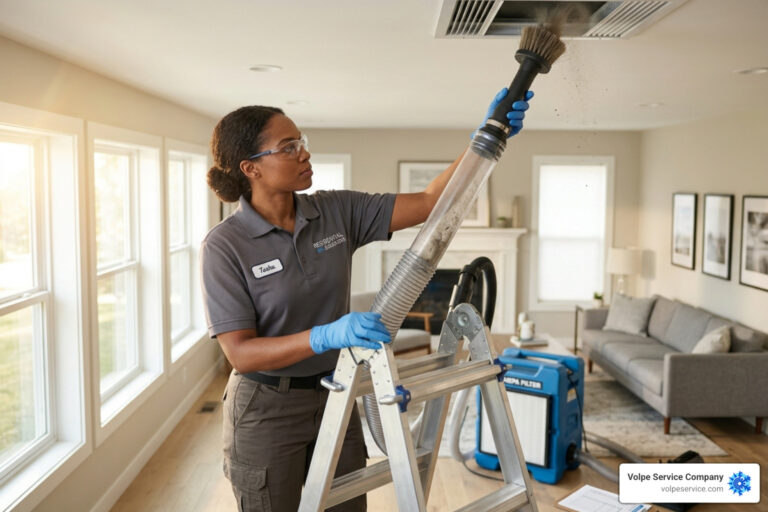
Our Air Duct Cleaning Service East Hanover, NJ removes this food source entirely. By keeping the “lungs” of your home clean, you significantly reduce the risk of spores finding a place to settle. This is a critical part of Home Ventilation for Improved Air Quality.
Advanced Solutions and Professional Inspections
For homeowners who want the ultimate protection, there are advanced Top Indoor Air Quality Solutions available. One of our favorites is the installation of UV germicidal lights. These lights are installed inside your HVAC unit, usually near the evaporator coil.
UV-C light works by penetrating the cellular walls of microorganisms and destroying their nucleic acid and DNA. This effectively “zaps” mold spores and bacteria before they can ever start a colony. When you combine this with a whole-house dehumidifier—especially in humid areas like Parsippany or Montville—you create an environment where mold simply cannot survive.
But what exactly happens during a “spa day” for your AC? What’s Involved in an AC Tune-Up? At Volpe Service Company, we don’t just kick the tires. We check refrigerant levels, clean the coils, flush the drain lines, and use data-driven diagnostics to ensure your system is running at peak dehumidification efficiency.
Professional Oversight for How Proper HVAC Maintenance Prevents Mold Growth
We recommend bi-annual inspections—once in the spring before the cooling season and once in the fall before the heating season. This proactive approach allows us to catch small moisture issues before they become big mold problems.
If you’re looking for AC Maintenance in Parsippany, NJ, our team is ready to help. There are at least 5 Reasons You Need AC Maintenance This Spring, and mold prevention is at the top of that list. Catching a clogged drain or a dirty coil in April can save you from a musty-smelling house in August.
Long-Term Benefits of Proactive Care
The benefits of staying on top of your HVAC maintenance extend far beyond just avoiding a bad smell.
- System Lifespan: An HVAC system that isn’t struggling with moisture or grime lasts much longer.
- Energy Efficiency: Clean coils transfer heat better, meaning your system runs less and saves you money on utility bills.
- Respiratory Health: Clean air means fewer asthma attacks and allergies. We’ve seen how much Indoor Air Quality & Children’s Health are linked.
- Peace of Mind: Knowing your home’s air is safe is priceless.
Even your heater needs attention. There are many Benefits of Regular Furnace Maintenance, including ensuring that humidifiers built into the furnace aren’t leaking or over-saturating your air during the winter.
Frequently Asked Questions about HVAC Mold Prevention
What is the ideal indoor humidity level to prevent mold?
The EPA recommends keeping your indoor relative humidity between 30 and 50 percent. Once you cross the 60 percent threshold, mold growth becomes much more likely. If your home feels clammy, it’s worth investigating Why Your AC Makes Your Home Feel Humid and using a hygrometer to track daily levels.
How often should I replace my air filters to stop mold?
For most homes in New Jersey, every 1 to 3 months is the standard. However, if you have pets, live in a particularly dusty area, or have family members with high sensitivity to allergens, you might want to check them monthly. Ignoring this can lead to HVAC Filter Blockage Issues, which restrict airflow and promote the damp conditions mold loves.
Can leaky ducts cause mold growth in my walls?
Yes. When ducts leak, they can release cold air into warm wall cavities or pull humid air into the system. This temperature difference causes condensation on the outside of the ducts or inside the walls. Over time, this moisture can lead to hidden mold growth that is difficult to detect until it causes structural damage. Watching for Signs of HVAC Ductwork Leaks is a key part of whole-home mold prevention.
Conclusion: Breathe Easier with Volpe Service Company
At the end of the day, your HVAC system is the most powerful tool you have to keep your home healthy. By understanding how proper HVAC maintenance prevents mold growth, you are taking a massive step toward protecting your property and your family’s well-being.
Since 1963, Volpe Service Company has been the trusted name for Indoor Air Quality Parsippany, NJ and across Northern New Jersey. We pride ourselves on providing data-driven solutions and honest, transparent communication. Whether you are in East Hanover, Morristown, or Summit, our family-owned team is here to ensure your system gets the “spa day” it deserves.
Don’t wait for the “dirty sock” smell to take over your home. Proactive care is the best cure. If you’re concerned about your air quality or it’s been a while since your last tune-up, our team is ready to help. Let’s keep your home’s air clean, dry, and mold-free for years to come.