

Why Knowing the signs your air filter needs changing Could Save Your NJ Home’s HVAC System
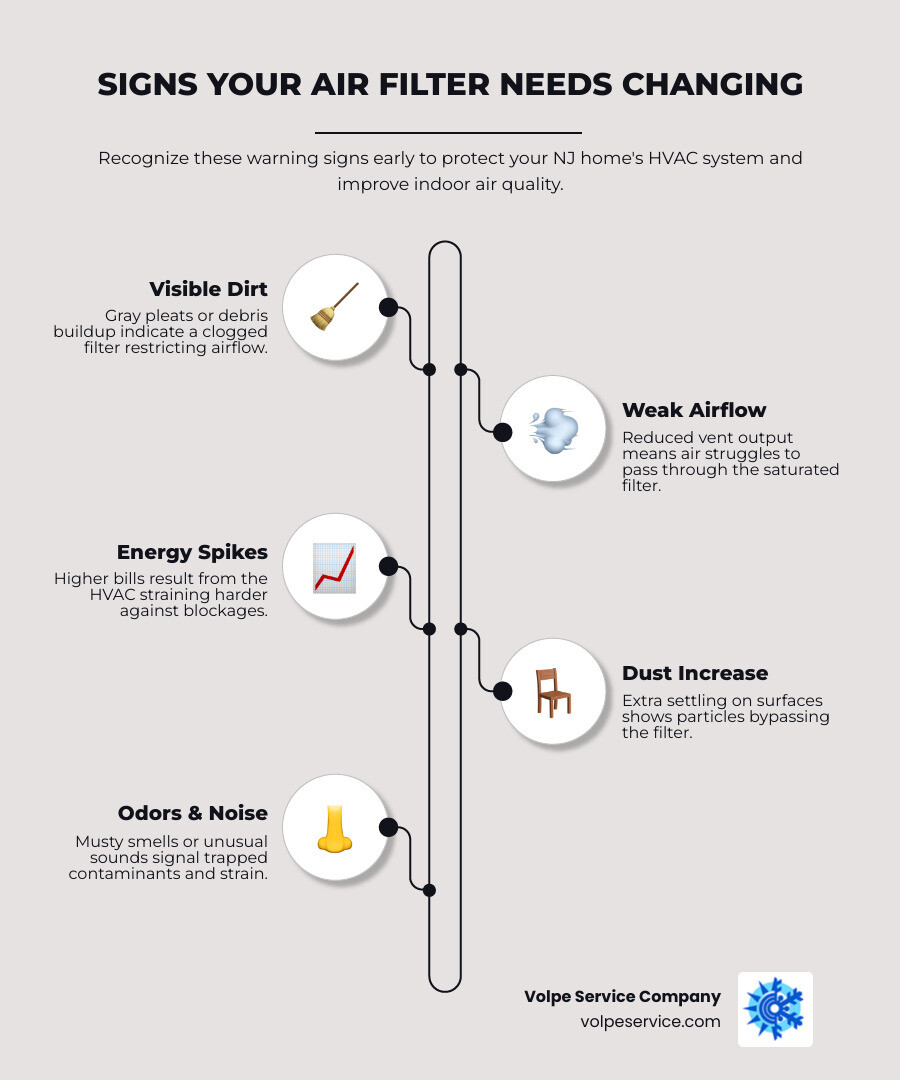
The most common signs your air filter needs changing include:
- Visible dirt or gray discoloration on the filter surface
- Weak or reduced airflow from your vents
- Rising energy bills without a clear reason
- Increased dust settling on furniture and surfaces
- Allergy or respiratory symptoms getting worse indoors
- Unusual noises from your HVAC system
- Musty or stale odors coming from vents
- Short cycling – your system turning on and off more than usual
Most filters should be replaced every 1 to 3 months, depending on filter thickness, household pets, and local air quality conditions.
Your HVAC system works hard year-round across New Jersey – through humid summers and cold winters alike. In communities like East Hanover and Livingston, the transition into the warmer months of May 2026 often brings a surge in pollen and airborne particulates that can quickly overwhelm a standard filter. But one small, easy-to-overlook part can quietly cause big problems: your air filter. When it gets clogged, your system strains harder to push air through, your energy bills climb, and your indoor air quality drops. Left too long, a dirty filter can even lead to frozen coils or costly system damage. The good news? The warning signs are easy to spot once you know what to look for.
Common Signs Your Air Filter Needs Changing in Your NJ Home
In our six decades of serving Northern New Jersey, from East Hanover to Morristown, we have seen that proper AC filter maintenance is the single most effective way for homeowners to prevent unexpected breakdowns. When an air filter becomes saturated with pollutants, it stops being a protector and starts being a barrier.
One of the first things you might notice is a layer of fine dust settling on your coffee table or TV screen just hours after you’ve finished cleaning. This happens because the filter is too full to capture new particles, allowing them to bypass the system and circulate back into your living spaces. Beyond the mess, a clogged filter directly impacts your home’s energy efficiency. According to the U.S. Department of Energy, replacing a dirty filter can reduce your HVAC energy consumption by 5% to 15%.

Physical Signs Your Air Filter Needs Changing
If you aren’t sure whether it is time for a swap, a quick physical inspection usually tells the whole story. A fresh filter is typically white or off-white. As it does its job, the pleats will begin to turn gray. Once they look dark gray or black and are covered in a visible “mat” of pet dander, lint, and debris, the filter has reached its limit.
If you want a definitive answer, try the “white sheet test.” Hang a clean white sheet about 6 to 12 inches away from one of your return vents for an hour. If the sheet turns gray or develops a dusty residue, your filter is likely failing to trap contaminants.
Performance Signs Your Air Filter Needs Changing
Performance issues are often the loudest signs your air filter needs changing. You might notice that certain rooms in your Madison or Summit home feel warmer or cooler than others. This is often due to weak airflow; the blower fan simply cannot pull enough air through a thick wall of dust.
Another red flag is “short cycling,” where your furnace or air conditioner turns on and off frequently. This happens because the system is overheating or struggling to maintain pressure. Furthermore, keep a close eye on your utility statements. A sudden spike in energy bills often indicates that your system is working overtime to compensate for a restricted air path. Understanding how often should you change the AC filter in your house can help you avoid these performance dips before they start.
Understanding HVAC vs. Vehicle Air Filters
While we focus on home comfort, it is important to remember that air filters are everywhere in our lives. Just like your home HVAC system, your car uses filters to keep things running smoothly. However, the signs and functions differ slightly.
| Filter Type | Primary Purpose | Common Signs of Failure | Typical Interval |
|---|---|---|---|
| HVAC / Furnace | Protects HVAC coils and improves indoor air quality. | Dust buildup, high bills, weak airflow. | 1–3 months |
| Engine Air Filter | Prevents dirt from entering the car’s engine. | Reduced horsepower, engine misfires, black smoke. | 10k–15k miles |
| Cabin Air Filter | Cleans air entering the vehicle’s passenger area. | Musty odors in car, fogged windows, loud fan noise. | 12 months |
In a vehicle, an engine air filter ensures the right mix of air and fuel for combustion—engines actually consume about 10,000 gallons of air for every gallon of fuel! In your home, the media in a furnace filter is usually made of pleated paper or polyester designed to trap microscopic allergens like mold spores and dust mite debris.
How to Visually Inspect Your Filter for Clogs
Following HVAC system maintenance tips starts with a simple “light test.” To do this, turn off your system at the thermostat to ensure safety and prevent debris from being sucked into the blower, slide the filter out of its housing, and hold it up to a bright light source or a window.
If the light shines through clearly, the filter still has life in it. If the light is blocked or appears very dim, the mesh is packed with particulates and needs immediate replacement. While you have the filter out, check the housing seal for any signs of wear or damage. Ensure there is no gap where air can “bypass” the filter, as this allows unfiltered air to coat your sensitive HVAC components. If you see heavy debris buildup on the inside of the housing itself, it is a sign that the filter was either installed incorrectly or left in place far too long, potentially allowing dust to accumulate on the evaporator coils.
The Risks of Ignoring a Dirty Air Filter
Ignoring the signs your air filter needs changing can lead to much more than just a dusty house. One of the most serious HVAC filter blockage issues is a frozen evaporator coil. In the summer, your AC needs a steady stream of warm air to keep the coils from getting too cold. If the filter blocks that air, the condensation on the coils can turn to ice, eventually causing the entire system to shut down. This ice can also melt and cause water damage to your furnace or the surrounding flooring.
Over time, this strain shortens the life of your expensive equipment. A blower motor that has to work twice as hard to pull air will burn out years earlier than one that breathes easily. This is why regular HVAC maintenance services importance cannot be overstated; a small investment in a clean filter prevents a massive investment in a new compressor or furnace. By maintaining a clear path for air, you ensure that every component of your system operates within its designed parameters, extending the overall lifespan of your home’s comfort infrastructure.
Frequently Asked Questions and Conclusion
At Volpe Service Company, we have been helping our neighbors in West Orange, Parsippany, and Denville stay comfortable since 1963. We believe in data-driven solutions and honest communication. If you have noticed any of the symptoms mentioned today, or if it has simply been too long since your last professional check-up, our team is ready to help. For total peace of mind, consider our HVAC maintenance plan in Parsippany, NJ, which ensures your filters and system components are checked by experts on a regular schedule.
How often should I change my HVAC filter?
For standard 1-inch pleated filters, we recommend a change every 3 months at a minimum. However, if you have pets, live in a high-pollen area like Millburn or Mendham, or have family members with allergies, you should check them every 30 days. High-efficiency 4-inch filters can sometimes last 6 to 12 months, but they should still be inspected seasonally to ensure they are not prematurely clogged by local environmental factors.
Can a dirty filter increase my energy bills?
Absolutely. A clogged filter acts like a wall. Your system has to run longer and use more electricity to move the same amount of air. This restricted airflow can increase your energy consumption by up to 15%. If your bills are creeping up in the middle of a Livingston winter or a Morristown summer, the filter is the first place you should look for a simple, effective fix.
What happens if I never change my air filter?
If left indefinitely, a dirty filter will eventually cause a total system failure. The air quality in your home will plummet, leading to health risks like increased asthma attacks or respiratory infections. Physically, the lack of airflow can cause the heat exchanger to crack or the AC compressor to fail – repairs that are significantly more complicated than a simple filter swap. Over time, the accumulation of grime can also lead to mold growth within the ductwork, creating a much larger remediation issue.
If you need help identifying the right filter for your home or want a professional tune-up to restore system performance, contact Volpe Service Company through our website to schedule service. We are proud to serve East Hanover and the surrounding communities with the courteous, expert service you deserve, backed by over six decades of local experience.