
Why Understanding How Nor’easters and Ice Storms Affect Your Equipment Could Save You Thousands
How nor’easters and ice storms affect your equipment is something every Northern New Jersey homeowner and property manager needs to understand before winter’s worst storms arrive. These powerful storms — fueled by cold Canadian air colliding with warm Atlantic moisture — can bring heavy snow, thick ice, hurricane-force winds, and extended power outages that put serious stress on your HVAC system, outdoor condenser units, and other critical equipment.
Here’s a quick summary of the main ways these storms cause damage:
- Snow and ice accumulation blocks airflow to outdoor units and adds crushing weight to rooftop systems
- High winds throw debris into condenser coils and fan blades, causing physical damage
- Power outages and voltage surges fry control boards, compressor motors, and sensitive electronics
- Frozen components including coils, drain lines, and refrigerant lines can crack or fail entirely
- Moisture intrusion leads to electrical shorts, corrosion, and long-term reliability issues
- Blocked exhaust vents create dangerous carbon monoxide buildup inside your home
Ice is especially dangerous. Accumulations of just over half an inch can knock out power for days and physically warp metal components on smaller HVAC units. And because the damage isn’t always immediate — weakened relays and capacitors often fail days after the storm — many homeowners don’t connect the breakdown to the weather event that caused it.
In 2026, La Niña weather patterns are driving a split jet stream across the Northeast, increasing the likelihood of high-precipitation nor’easters that hit East Hanover and surrounding New Jersey communities hard. That makes preparation more important than ever.
This guide walks you through exactly what storm damage looks like, how to protect your system before a storm hits, what to do after one passes, and how to prevent the delayed failures that catch homeowners off guard weeks later.
Understanding how Nor’easters and ice storms affect your equipment
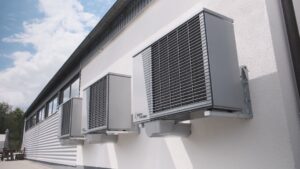
In places like Parsippany, Morristown, and Summit, we aren’t just dealing with “cold weather.” We are dealing with nor’easters that can dump two feet of snow in a single afternoon or coat everything in an inch of radial ice. Understanding how nor’easters and ice storms affect your equipment starts with recognizing that these are mechanical systems designed for airflow, not for being encased in a frozen tomb.
The Weight of the Storm
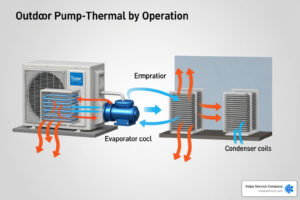
Snow accumulation and ice buildup are the primary enemies. When snow drifts pile up around your outdoor condenser, the system can no longer “breathe.” This airflow restriction forces the compressor to work twice as hard to move heat, leading to spiked energy bills and premature motor failure. On commercial rooftop systems, the sheer weight of wet snow can cause roof flex, which puts immense stress on refrigerant lines and electrical conduits, potentially leading to leaks that are difficult to find.
Wind and Debris
High winds are a hallmark of nor’easters, often reaching hurricane force along the coast and significant speeds inland in areas like West Orange and Montville. These winds don’t just blow snow; they hurl frozen branches and debris into the aluminum fins of your condenser coils. Once those fins are crushed, your system’s efficiency drops permanently.
To mitigate these risks, Regular HVAC Maintenance Services Importance cannot be overstated. A well-maintained system has the structural integrity and clean components necessary to withstand these external pressures.
Mechanical Impacts: Snow vs. Ice
| Feature | Heavy Snow Impact | Radial Ice Accumulation Impact |
|---|---|---|
| Airflow | Blocks intake/exhaust vents entirely | Restricts fan movement and coil heat exchange |
| Weight | Can cause structural roof flex on commercial units | Can warp metal casings and snap fan blades |
| Electronics | Moisture intrusion from melting | Encapsulates sensors, causing “false” readings |
| Defrost Cycle | Generally manageable for heat pumps | Forces constant, high-stress defrost cycles |
| Recovery | Easy to clear with a broom | Requires natural thaw or professional intervention |
Critical Risks: Electrical Surges and Component Stress

When a nor’easter hits Northern New Jersey, the power grid often takes a beating. For your HVAC and refrigeration equipment, the danger isn’t just when the power goes out—it’s also when it tries to come back on.
Power outages lead to sudden shutdowns that can cause “short cycling” in compressors. When the power flickers, the compressor may try to restart against high internal pressure, which can burn out the motor windings. Furthermore, voltage surges—those massive spikes of electricity that occur when a transformer blows or when the grid is re-energized—can instantly fry control boards and sensitive electronic sensors.
For businesses in East Hanover or Livingston with mission-critical refrigeration, these outages are even more dire. A loss of power doesn’t just mean a cold house; it means potential product loss. If you notice your system acting strangely after a storm—making clicking sounds or failing to maintain temperature—you should look for Signs to Call Our HVAC Technicians immediately.
Electrical damage and how Nor’easters and ice storms affect your equipment
Modern HVAC systems are essentially large computers that move air. They rely on delicate control boards and variable-speed motors that are highly susceptible to voltage fluctuations.
- Voltage Spikes: These can occur during thundersnow events or when power lines are downed by ice-laden trees.
- Brownouts: Dropping voltage is actually more dangerous than a total blackout, as it forces motors to draw more current, leading to overheating.
- Protection: We highly recommend installing surge protection specifically designed for HVAC equipment and utilizing uninterruptible power supplies (UPS) for sensitive commercial controls.
Mechanical failure and how Nor’easters and ice storms affect your equipment
Beyond the wires, the physical components face extreme stress. Ice storms are particularly brutal because ice expands as it freezes. If moisture gets into a micro-crack in your coil or an insulator, the resulting “cryofracture” can split the component wide open.
Salt air corrosion is another unique factor for our region. During a nor’easter, salt spray from the Atlantic can be carried miles inland, coating outdoor units in corrosive brine that eats away at aluminum fins. If your heat pump starts blowing lukewarm air or the “Aux” heat light stays on indefinitely, these are Immediate Heating Repair Signs that shouldn’t be ignored.
Pre-Storm Preparation for Northern New Jersey Homeowners
Preparation is the difference between a cozy snow day and an emergency repair bill. Before the first flake falls in Mendham or Chester, take these proactive steps:
- Filter Replacement: Ensure your air filters are clean. Your system will already be stressed by the cold; don’t make it fight a clogged filter too.
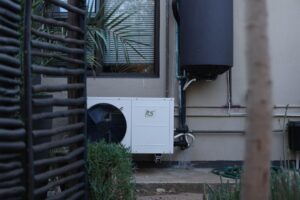
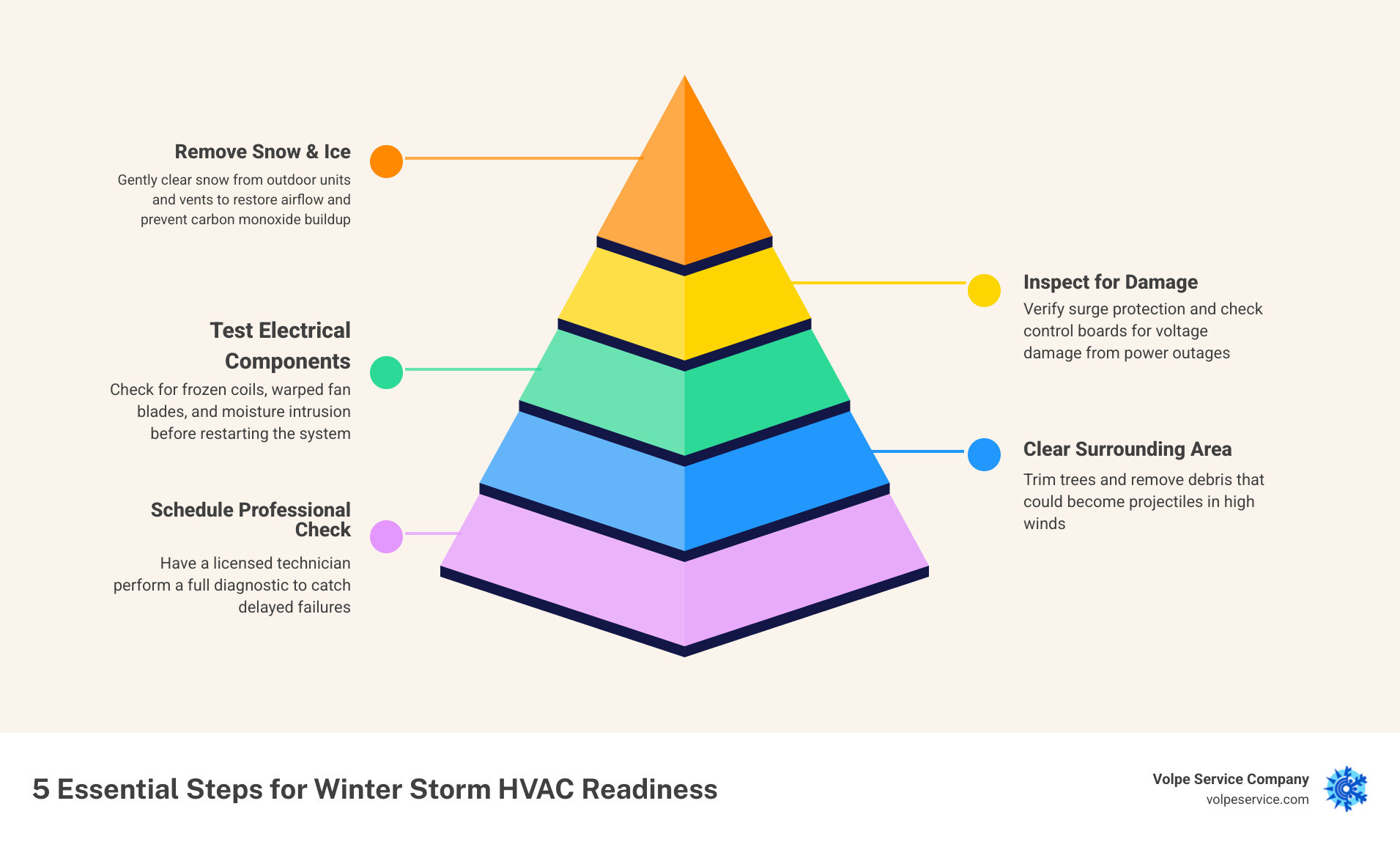
- Clear the Perimeter: Maintain at least a three-foot “no-fly zone” around your outdoor unit. Remove dead branches, loose lawn furniture, or anything the wind could turn into a projectile.
- Tree Trimming: Ice accumulations of just half an inch can snap large limbs. Trim any overhanging branches that could fall directly onto your HVAC unit.
- Check the Thermostat: If your thermostat uses batteries, change them now. You don’t want a dead thermostat to be the reason your house freezes during a blackout.
- Seal the Ducts: Leaky ducts can lose up to 30% of heated air. Reviewing HVAC System Maintenance Tips can help you identify where you’re losing efficiency.
Winter Storm HVAC Emergency Kit
Keep these items handy in your “storm closet”:
- A soft-bristled broom (for clearing snow off the unit without damaging fins).
- Battery-powered carbon monoxide detectors (essential if vents become blocked).
- Flashlight with extra batteries.
- The contact information for Volpe Service Company for 24/7 emergency support.
Post-Storm Recovery: Safe Inspection and Restart Procedures
Once the wind dies down, your first instinct might be to crank up the heat. Stop! Before you adjust the thermostat, you need to perform a safety sweep.
The 18-Inch Rule
Clear the snow from around your outdoor unit, maintaining at least 18 to 24 inches of clear space on all sides. Use a broom, not a shovel—one slip with a metal shovel can puncture a refrigerant line, turning a simple clearing task into a major Furnace Repair New Jersey project.
Check the Vents
This is the most critical safety step. Locate your furnace’s intake and exhaust pipes (usually white PVC pipes exiting the side of your house). If these are buried in a snowdrift, carbon monoxide can back up into your home. This is a life-threatening situation. Ensure these pipes are completely clear and unobstructed.
Visual Inspection
Look for:
- Ice buildup inside the fan blades.
- Frayed or pulled wires.
- Shifting of the unit’s base or pad.
- Unusual ice patterns on the coils (which could indicate a leak).
If everything looks clear, you can restart the system. However, if you hear grinding, screeching, or loud vibrating noises, shut it down immediately and call for Professional Heating Furnace Repair Services.
Preventing Long-Term Damage and Delayed System Failures
One of the most frustrating aspects of how nor’easters and ice storms affect your equipment is the “delayed failure.” A system might run perfectly during the blizzard, only to die three weeks later on a mild Tuesday.
Why does this happen? The extreme stress of a storm often weakens components without breaking them immediately. A capacitor might become “leaky,” or a relay might become “pitted” from repeated high-load defrost cycles. Eventually, these weakened parts give out.
Furthermore, moisture that intruded during the storm can lead to slow-acting corrosion on the control board. By the time the symptoms appear, the damage is often extensive. This is why Regular HVAC Maintenance is Crucial; a post-storm checkup can catch these “walking wounded” parts before they leave you without heat in the middle of the night.
Investing in Regular Furnace Maintenance Benefits means having a technician verify that your sensors are calibrated and your refrigerant levels are correct after the system has been pushed to its limit by a New Jersey winter.
Frequently Asked Questions about Winter Storm HVAC Care
When should I switch my heat pump to emergency heat?
You should only use “Emergency Heat” (which activates electric heat strips) if your outdoor unit is physically damaged, encased in a solid block of ice that won’t melt, or if the system is blowing cold air while the outdoor unit is running. Emergency heat is much more expensive to run, so use it only when necessary.
Is it safe to cover my outdoor unit during a Nor’easter?
We generally advise against wrapping your unit in plastic or heavy tarps. This traps moisture inside, which accelerates corrosion and creates a cozy home for rodents looking to chew on your wires. If you must cover it, use a breathable cover designed specifically for HVAC units that only covers the top to prevent ice from falling into the fan blades.
How does ice accumulation impact my system’s energy efficiency?
Even a thin layer of frost acts as an insulator, preventing the refrigerant from absorbing heat from the outside air. This forces the system into frequent defrost cycles, where it actually reverses the flow to send heat outside to melt the ice. This uses a massive amount of electricity and provides zero warmth to your home during the cycle.
Conclusion: Trust Volpe Service Company for Storm-Ready Comfort
Since 1963, Volpe Service Company has been the trusted name for “Climate Control Done Right” in Northern New Jersey. We’ve seen every type of nor’easter and ice storm the Atlantic can throw at us, and we know exactly how to keep your equipment running through the worst of it.
Whether you are in East Hanover, Morristown, or Parsippany, our data-driven solutions and licensed technicians are ready to ensure your home or business remains a sanctuary of warmth. Don’t wait for the next “Storm of the Century” to find out if your system is up to the task.
Schedule your professional storm-readiness inspection today and let us give you the peace of mind you deserve this winter.