
Understanding the Mechanics: How Does a Heat Pump Work?
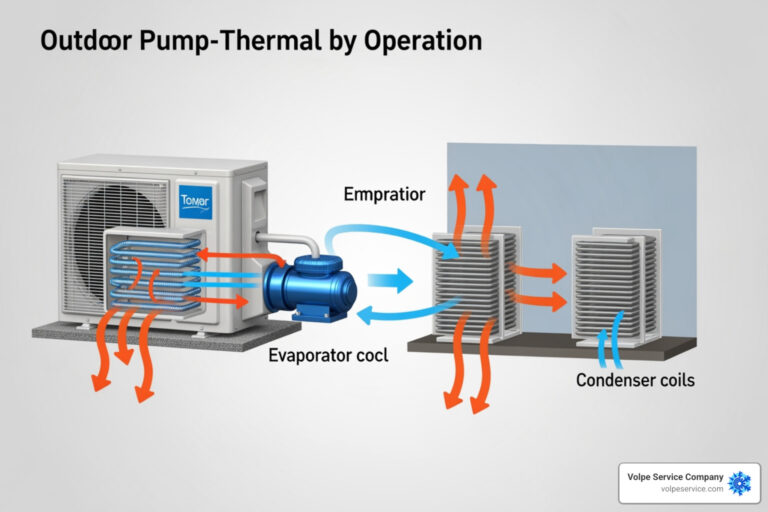
To truly grasp how does a heat pump work, it helps to think of it as a “heat transporter.” Unlike a furnace that burns natural gas or oil to create heat, a heat pump uses a specialized refrigeration cycle to pick up heat from one location and drop it off in another. This process relies on four main physical components and a chemical superstar called refrigerant.
The cycle begins with the refrigerant, a substance that can change from a liquid to a gas at very low temperatures. By manipulating the pressure of this refrigerant, the system can absorb or release thermal energy on demand.
Here are the key players in the system:
- The Compressor: Often called the “heart” of the system, it squeezes the refrigerant, raising its temperature and pressure.
- The Evaporator Coil: This is where the refrigerant absorbs heat from its surroundings.
- The Condenser Coil: This is where the refrigerant releases the heat it has carried.
- The Expansion Valve: This acts as a gateway, lowering the pressure of the refrigerant so it can begin the cycle again.
- The Reversing Valve: This is the “brain” that differentiates a heat pump from a standard air conditioner. It reverses the flow of refrigerant, allowing the system to switch between cooling your home and heating it.
For a deeper dive into these technical details, you can explore our Heat Pump Services Guide. At Volpe Service Company, we use data-driven diagnostics to ensure each of these components is working in perfect harmony, maximizing your home’s comfort.
How does a heat pump work in cooling mode?
When the New Jersey humidity hits in July, your heat pump acts exactly like a high-efficiency air conditioner. The process starts inside your home. The indoor evaporator coil contains cold, low-pressure liquid refrigerant. As your home’s warm air is blown over this coil, the refrigerant absorbs the heat and evaporates into a low-pressure gas.
This gas travels to the outdoor unit, where the compressor squeezes it, turning it into a hot, high-pressure vapor. The outdoor condenser coil then releases that heat into the outside air. Once the heat is gone, the refrigerant cools back into a liquid, passes through the expansion valve to drop its temperature further, and heads back inside to start over.
If your system isn’t keeping up with the summer swelter, you might be facing Summer Heat Pump Efficiency Problems, which often stem from dirty coils or refrigerant imbalances.
How does a heat pump work in heating mode?
This is where the magic happens. In the winter, the reversing valve flips the script. Now, the outdoor coil acts as the evaporator. Even when it feels freezing outside, there is still a significant amount of thermal energy in the air (heat exists all the way down to absolute zero, -459°F!).
The refrigerant in the outdoor unit is made even colder than the outside air, allowing it to “soak up” whatever heat is available. This gas is then compressed until it is very hot and sent to the indoor coil. Your indoor fan blows air across these hot coils, distributing warmth throughout your living space. This unique ability to find heat in the cold is Why New Jersey Homeowners Are Warming Up to Modern Heat Pumps as a primary heating source.
Comparing System Types and Efficiency Ratings

Not all heat pumps are created equal. Depending on your home’s structure and your specific comfort needs in East Hanover or Morristown, we might recommend different configurations:
- Air-Source Heat Pumps: The most common type, which moves heat between the outdoor air and your home.
- Ground-Source (Geothermal) Heat Pumps: These use the stable temperature of the earth (usually 50-60°F in NJ) to move heat. They are incredibly efficient but require more intensive installation.
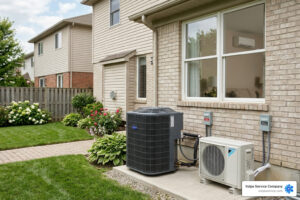
- Ductless Mini-Splits: Perfect for homes without existing ductwork or for specific additions. These connect an outdoor unit to one or more indoor air handlers.
- Absorption Heat Pumps: These use a heat source (like solar or gas) instead of electricity to drive the refrigeration cycle.
When comparing these systems, you’ll see several ratings. Understanding these helps you determine Is It Worth Installing a Heat Pump? for your specific situation.
| Rating | What it Measures | What to Look For |
|---|---|---|
| COP | Coefficient of Performance (Efficiency at a specific moment) | 3.0 to 4.0 is standard |
| SEER2 | Seasonal Energy Efficiency Ratio (Cooling efficiency) | 14 to 20+ |
| HSPF2 | Heating Seasonal Performance Factor (Heating efficiency) | 8.0 to 10.0+ |
In regions like ours, switching to a heat pump can reduce carbon emissions by 45% to 80% compared to high-efficiency gas boilers. Because heat pumps move heat rather than creating it, they often achieve 300% to 400% efficiency. That means for every $1 you spend on electricity, you get $3 to $4 worth of heat.
Performance in the New Jersey Winter
One of the most common questions we hear is: “Do they really work when it’s freezing?” In May 2026, the answer is a resounding yes. Modern “cold-climate” heat pumps are designed to maintain high performance even when temperatures drop to -22°F.
However, physics dictates that as the temperature gap between the outside air and your desired indoor temp grows, the system has to work harder. Around 25°F, standard heat pumps may begin to lose some efficiency. To combat this, your system may enter a “defrost cycle” to melt ice off the outdoor coils. If you notice steam rising from your unit or it seems to stop heating briefly, don’t panic; it’s likely just doing its job. However, persistent Heat Pump Defrost Cycle Problems should be addressed by a professional.
For homeowners in colder pockets of Northern NJ, like Mendham or Chester, we often recommend Dual-Fuel Hybrid Systems. This setup pairs a heat pump with a gas furnace. The heat pump handles the cooling and moderate heating, while the furnace kicks in only during extreme “Polar Vortex” events. This ensures you never have to rely solely on Heat Pump Emergency Mode, which uses expensive electric resistance heat.
Maximizing Longevity and Reliability
A well-maintained heat pump can last between 15 and 25 years. Because these systems work year-round (unlike a furnace that rests in summer or an AC that sleeps in winter), they require consistent care.
We recommend bi-annual professional tune-ups—once in the spring and once in the fall. Our East Hanover NJ Heat Pump Maintenance services include checking refrigerant levels, cleaning coils, and ensuring the reversing valve is switching correctly.
Between visits, you can help by:
- Changing Filters: Check them monthly and change them at least every 90 days.
- Clearing Debris: Keep the outdoor unit free of leaves, snow, and grass clippings.
- Monitoring Noises: Be aware of Professional Heat Pump Repair Signs like grinding or squealing.
Whether you need Chester NJ Heat Pump Maintenance or a quick repair in Madison, keeping your system clean is the best way to ensure it reaches its full lifespan.
Frequently Asked Questions about Heat Pumps
Are there government incentives or tax credits for heat pumps?
Yes! Under the Inflation Reduction Act, many homeowners can claim a 30% tax credit (up to $2,000 annually) for installing high-efficiency heat pumps. There are also various state-level rebates in New Jersey that can significantly offset the initial investment. We always recommend looking for ENERGY STAR certified models to maximize these benefits.
How does a heat pump differ from a traditional furnace?
A furnace creates heat by burning fuel (gas or oil). A heat pump uses electricity to move existing heat. This makes the heat pump much more environmentally friendly and often more cost-effective over time. If you’re debating between the two, our guide on Why Consider Heat Pump Installation breaks down the long-term savings.
What should I do if my heat pump makes strange noises?
Some noises, like a quiet hum or the “whoosh” of a defrost cycle, are normal. However, metal-on-metal grinding or loud rattling are not. You can read more about Heat Pump Strange Noises and Strange Heat Pump Noises & Solutions to help identify if the issue is mechanical or related to the refrigerant flow.
Conclusion
Understanding how does a heat pump work is the first step toward a more efficient, comfortable home. By leveraging the principles of the vapor-compression cycle, these systems provide a versatile, all-in-one solution for New Jersey’s unpredictable climate.
At Volpe Service Company, we’ve been providing data-driven HVAC solutions to our neighbors since 1963. As a family-owned business, we pride ourselves on honest pricing and expert workmanship. Whether you are in East Hanover, Livingston, or Summit, we are here to ensure your system runs perfectly through every season.
Ready to upgrade your home comfort? Schedule Expert Heat Pump Services in East Hanover with the team that New Jersey has trusted for over 60 years.