
Heat Pump Advantages Over Traditional Heating: What New Jersey Homeowners Need to Know
Understanding the heat pump advantages over traditional heating is one of the most important decisions you can make when upgrading your home’s comfort system. If you’re weighing your options, here’s a quick look at how heat pumps stack up:
Top Heat Pump Advantages Over Traditional Heating
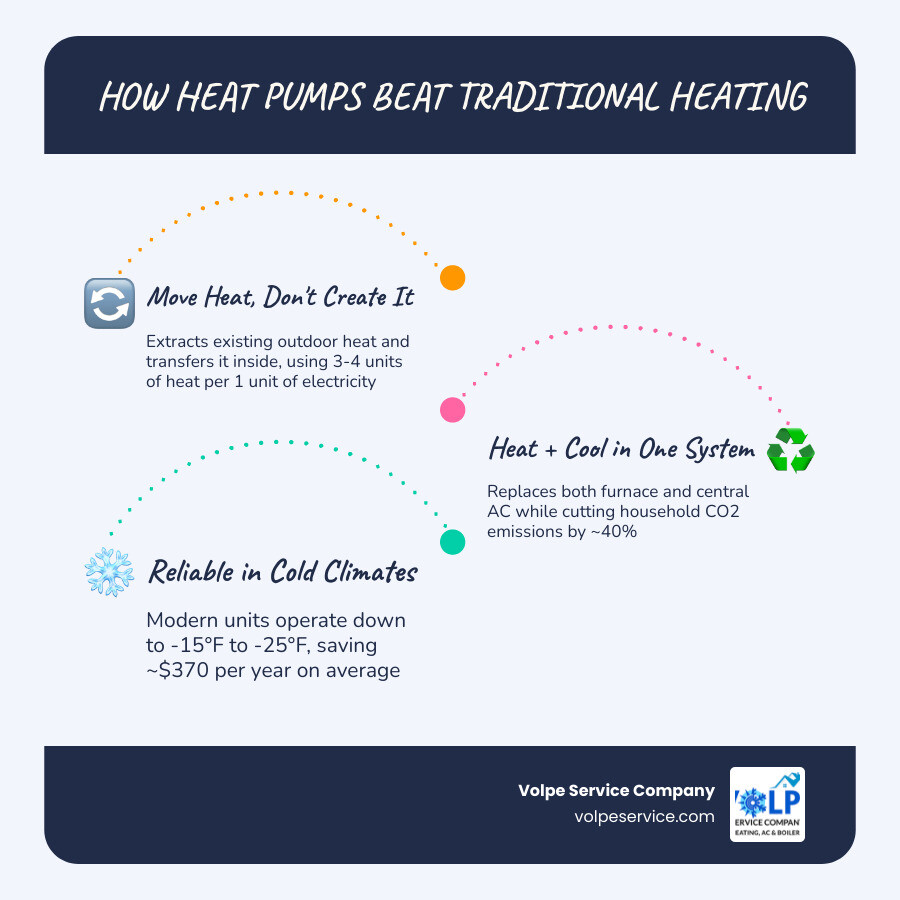
- 3-5x more energy efficient than gas boilers, with a typical output of 3-4 units of heat per 1 unit of electricity consumed
- Heats and cools in one system, replacing both your furnace and central AC
- Reduces household CO2 emissions by about 40% compared to gas furnaces
- Works in cold climates, with modern units operating reliably down to -15°F to -25°F
- Lower operating costs — the average U.S. household saves around $370 per year, with savings up to $1,000 when replacing oil, propane, or electric resistance heat
- Longer-lasting comfort with steadier temperatures and fewer on/off cycles than furnaces
- No combustion, meaning no risk of carbon monoxide from the heating system itself
For New Jersey homeowners and property managers, choosing the right heating system matters — especially when winters in Morris County and Essex County can be unpredictable. Traditional furnaces and boilers have done the job for decades, but the technology around home heating has shifted significantly. Heat pumps now account for more than half of all residential heating equipment sales in the U.S., and that’s not a coincidence.
The reason so many homeowners are making the switch comes down to a simple physics advantage: heat pumps move heat rather than generate it. A gas furnace burns fuel to create warmth. A heat pump extracts heat that already exists in the outdoor air and transfers it inside — and it does this with far less energy. That single difference drives nearly every advantage on the list above.
Whether you’re replacing an aging furnace, looking to cut your energy bills, or just trying to understand what all the buzz is about, this guide breaks it all down in plain language.
How Heat Pumps Work vs. Traditional Systems
To appreciate the heat pump advantages over traditional heating, it helps to understand how these systems differ under the hood.
Traditional heating systems rely on combustion or resistance to create warmth. A standard gas or oil furnace burns fuel to heat a metal heat exchanger, which then warms the air blown through your home’s ducts. A boiler works similarly but uses combustion to heat water, distributing warmth through radiators or baseboards. Electric resistance baseboards or electric furnaces run electrical currents through high-resistance coils to generate heat.
All of these traditional methods have an efficiency ceiling. Even the most advanced condensing gas furnace can never exceed 100% efficiency because it cannot generate more heat energy than the physical fuel contains. In practice, older furnaces operate at 60% to 80% efficiency, while modern high-efficiency units max out around 95% to 98%. Electric resistance heaters are technically 100% efficient at converting electricity into heat, but because generating heat this way requires massive amounts of electrical current, they are incredibly expensive to run.
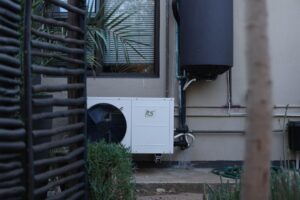
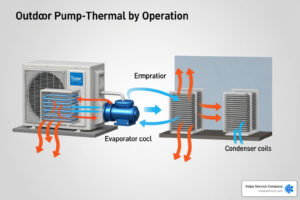
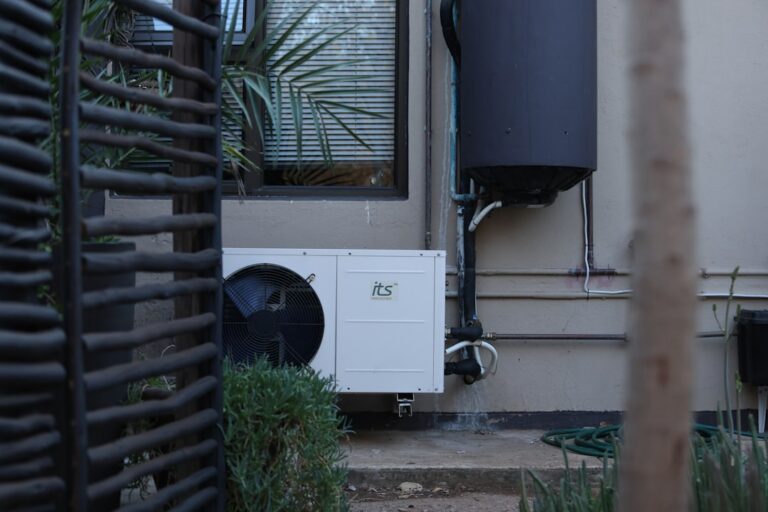
A heat pump completely rewrites this script. It uses the refrigeration cycle—the exact same technology that keeps your milk cold in the refrigerator or cools your home in the summer—but runs it in reverse. A heat pump consists of an outdoor unit (containing a compressor, condenser, and expansion valve) and an indoor air handler connected by refrigerant lines.
In the winter, the liquid refrigerant in the outdoor coil absorbs heat from the outdoor air (yes, even freezing cold air contains thermal energy). The compressor then squeezes this refrigerant gas, which raises its temperature significantly. This hot gas travels to the indoor coil, where a fan blows air across it, absorbing the heat and distributing it throughout your home. A reversing valve allows the system to switch directions seamlessly in the summer, extracting heat from your indoor air and dumping it outside, acting exactly like a standard central air conditioner.
Because electricity is only used to run the compressor and fans—not to actually generate the heat—heat pumps can achieve efficiency ratings of 300% to 500%. This means for every single unit of electricity the system consumes, it delivers three to five units of heat to your living space. When evaluating the Factors Ideal Heating System, this unparalleled efficiency is often the deciding factor for modern homeowners.
Key Heat Pump Advantages Over Traditional Heating
When comparing heat pumps directly to traditional combustion or electric resistance systems, the benefits extend far beyond a lower monthly energy bill.
- Exceptional Energy Efficiency (COP): Because they transfer heat instead of creating it, heat pumps operate at a Coefficient of Performance (COP) of 3 to 5. This makes them three to five times more efficient than gas boilers and up to four times more efficient than electric resistance heating.
- Two-in-One Comfort Solution: Traditional setups require you to maintain two separate appliances: a furnace or boiler for the winter and a central air conditioner for the summer. A heat pump handles both jobs flawlessly. This slashes your long-term equipment maintenance needs and simplifies your home utility setup.
- Steadier, More Consistent Comfort: Furnaces are notorious for creating temperature swings. They blast hot air into a room until the thermostat is satisfied, shut off, and then wait for the room to cool down before blasting hot air again. Heat pumps, particularly modern variable-speed models, run continuously at low, whisper-quiet levels. This provides a steady, even distribution of warmth without those sudden gusts of hot air or cold drafts.
- Enhanced Indoor Air Quality & Safety: Because heat pumps do not burn fossil fuels, there is absolutely zero risk of carbon monoxide leaks, gas line explosions, or fuel oil spills inside your home. Furthermore, they do not produce combustion byproducts that can degrade indoor air quality. When paired with high-quality filtration, they keep your indoor air clean and healthy.
- Boosted Home Value: As energy efficiency becomes a top priority for buyers in New Jersey, upgrading to a modern heat pump is a smart investment. You can read more about How Energy Efficient HVAC Systems Boost Your Home Value to see how these systems pay dividends even if you eventually sell your property.
If you are currently planning a home renovation or system replacement, taking the time to ask yourself, “Why Consider Heat Pump Installation?” can save you thousands of dollars in future utility costs.
Here is a quick look at how these systems compare side-by-side:
| Performance Metric | Modern Heat Pump | Gas Furnace | Gas/Oil Boiler | Electric Resistance |
|---|---|---|---|---|
| Primary Energy Source | Electricity | Natural Gas / Propane | Natural Gas / Oil | Electricity |
| Operational Efficiency | 300% – 500% (COP 3-5) | 80% – 98% | 80% – 90% | 100% |
| Primary Function | Heating & Cooling | Heating Only | Heating Only | Heating Only |
| Indoor Air Quality | Excellent (No combustion) | Moderate | Moderate | Excellent |
| Carbon Footprint | Low (Zero local emissions) | Moderate to High | High | High (Due to grid load) |
Cold-Weather Heat Pump Advantages Over Traditional Heating
A common misconception lingering from the 1980s and 1990s is that heat pumps cannot handle freezing northeastern winters. While early models struggled when temperatures dropped below 32°F, modern cold-climate heat pump technology has completely solved this issue.
Today’s cold-climate heat pumps utilize variable-speed inverter-driven compressors. Instead of simply turning fully “on” or fully “off,” these compressors can modulate their speed in tiny increments. This allows them to extract useful heat from outdoor air even when temperatures plummet to -15°F or -25°F. In fact, peer-reviewed Department of Energy (DOE) research confirms that modern heat pumps operate reliably and deliver savings to over 90% of households, even in cold climates.
For New Jersey homeowners who experience freezing winters alongside hot, humid summers, this cold-weather capability is a game-changer. Local families are discovering that they no longer need to rely on expensive fuel oil or propane to stay cozy in January. To learn more about how these systems perform locally, check out our article on Why New Jersey Homeowners Are Warming Up to Modern Heat Pumps.
Financial Incentives and Heat Pump Advantages Over Traditional Heating
While upgrading your home’s HVAC system is a significant long-term investment, the financial landscape in 2026 makes switching to a heat pump more attractive than ever before.
Because local utilities and state governments are heavily prioritizing residential electrification to meet carbon reduction goals, there are numerous financial incentives available to New Jersey residents. The Inflation Reduction Act (IRA) and state-specific programs like the NJ Clean Energy Program offer substantial rebates and tax incentives that can drastically reduce the net cost of your installation.
When you combine these upfront incentives with the long-term operational savings—such as saving up to $1,000 annually if you are switching from fuel oil, propane, or old electric baseboards—the payback period for a heat pump is shorter than ever. If you’re wondering about the financial math for your specific home, take a look at our detailed breakdown: Is It Worth Installing a Heat Pump?.
Lifespan and Maintenance Requirements
A well-maintained air-source heat pump typically lasts 15 to 20 years. Because a heat pump works year-round—providing cooling in the summer and heating in the winter—it does run more hours than a dedicated furnace or boiler. However, modern engineering, fewer moving parts than a combustion system, and the absence of high-heat combustion stress mean these systems are incredibly durable.
To keep your system running at peak performance, some basic routine maintenance is required:
- Filter Changes: Clean or replace your indoor air filters every 1 to 3 months to maintain optimal airflow.
- Outdoor Unit Clearance: Keep the area around your outdoor unit clear of leaves, snow, high grass, and debris. This ensures the heat exchanger has plenty of unrestricted airflow to transfer heat.
- Professional Inspections: We highly recommend scheduling professional maintenance twice a year—once in the spring before the cooling season, and once in the fall before the heating season.
To understand what goes into keeping your system in top-tier shape, read through our comprehensive Heat Pump Services Guide.
Cold Climate Performance and Hybrid Solutions
While modern cold-climate heat pumps are fully capable of heating a home entirely on their own, some homeowners prefer to have a backup plan for those rare, extreme subzero winter nights. This is where hybrid solutions come into play.
Hybrid and Dual-Fuel Systems for Maximum Reliability
A hybrid or “dual-fuel” system pairs an electric heat pump with a traditional gas furnace.
In this setup, the heat pump handles all of your cooling needs during the summer and provides highly efficient heating during the mild autumn and moderate winter days. When the outdoor temperature drops past a certain pre-set threshold (usually around 15°F to 10°F), the system automatically switches over to the gas furnace.
This dual-fuel approach offers the best of both worlds:
- Maximum Efficiency: You utilize ultra-cheap, highly efficient electric heat for 85% to 90% of the heating season.
- Uncompromised Reliability: You have the high-temperature heating power of a gas furnace ready to go on the coldest nights of the year.
- Grid Optimization: It helps reduce peak electrical demand on the local power grid during extreme winter weather events.
The Critical Role of Professional Installation
No matter how advanced or efficient a heat pump is on paper, its real-world performance depends entirely on the quality of its installation. In fact, studies show that up to 70% to 90% of residential HVAC installations have some form of design or installation defect, often due to undersized ductwork or incorrect system sizing.
Before installing a heat pump, a professional contractor must perform a Manual J load calculation. This data-driven calculation takes into account your home’s square footage, wall insulation, window types, local climate, and orientation to determine the exact heating and cooling capacity your home requires. An oversized system will cycle on and off rapidly (short-cycling), wearing out components and reducing efficiency, while an undersized system will struggle to keep up on cold days.
At Volpe Service Company, we take pride in our highly trained, licensed technicians who understand the nuances of proper system design, static pressure testing, and refrigerant charge verification. To learn more about why professional design is so vital, explore our guides on:
- Professional Heating Installation Benefits
- Expert Heat Pump Installation Benefits
- Heat Pump Installation Steps
- Essential Expert Heat Pump Installation
Frequently Asked Questions about Heat Pumps
Can a heat pump completely replace both my furnace and air conditioner?
Yes, absolutely. A heat pump is designed to provide both heating and cooling. In the summer, it functions exactly like a traditional central air conditioner, removing heat from inside your home and releasing it outdoors. In the winter, the process reverses to pull heat from the outside air and move it indoors. This makes it a complete, year-round comfort solution that allows you to decommission and remove your old, separate furnace and AC units.
Do modern heat pumps really work in freezing New Jersey winters?
Yes. Thanks to advanced variable-speed inverter compressors and cold-climate engineering, modern heat pumps can operate efficiently at temperatures well below freezing, even down to -15°F. For homes in Northern and Central New Jersey, a properly sized cold-climate heat pump—or a dual-fuel hybrid system—will keep your family perfectly warm and comfortable all winter long.
How much maintenance does a heat pump require compared to a boiler?
A heat pump requires about the same amount of maintenance as a standard furnace and AC combination, but generally less intensive hands-on maintenance than an older gas or oil boiler. While boilers involve high-pressure water, steam, and combustion chambers that require meticulous safety checks, heat pump maintenance focuses primarily on keeping air filters clean, ensuring the outdoor unit is free of debris, and having a professional technician check refrigerant levels and electrical connections once or twice a year.
Conclusion
Making the switch to a heat pump is one of the smartest upgrades you can make for your home’s comfort, your wallet, and the environment. By moving heat instead of burning fossil fuels, you unlock unparalleled energy efficiency, enjoy consistent indoor temperatures, and streamline your heating and cooling into one elegant, reliable system.
Since 1963, Volpe Service Company has been helping New Jersey homeowners find the perfect HVAC solutions for their homes. As a family-owned and operated business based in East Hanover, we pride ourselves on delivering data-driven solutions, honest pricing, constant communication, and courteous service. Whether you live in Livingston, Morristown, Summit, West Orange, or any of our surrounding communities, our licensed technicians are ready to help you design the perfect heating system for your needs.
If you are ready to explore your options and experience the heat pump advantages over traditional heating firsthand, contact us today or visit our page on Heat Pump Services in Mt. Olive, NJ to schedule an expert consultation!