
Why Is Your AC Blowing Warm Air? (Quick Answer)
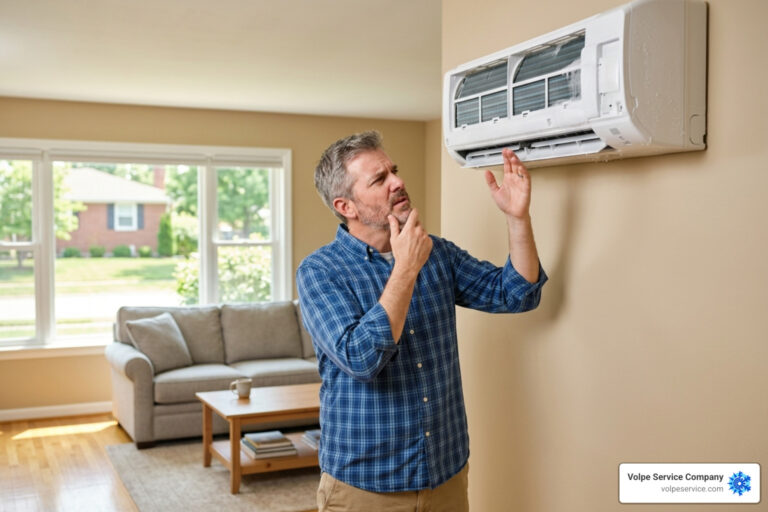
Why is my ac blowing warm air is one of the most common — and most frustrating — AC problems homeowners in East Hanover, NJ face, especially as temperatures climb in spring and summer. If your vents are running but the air feels warm instead of cool, something in your system has broken down — and the longer you ignore it, the worse it can get.
Here are the most common reasons your AC is blowing warm air:
- Incorrect thermostat settings – Fan set to “ON” instead of “AUTO,” or the system accidentally switched to heat mode
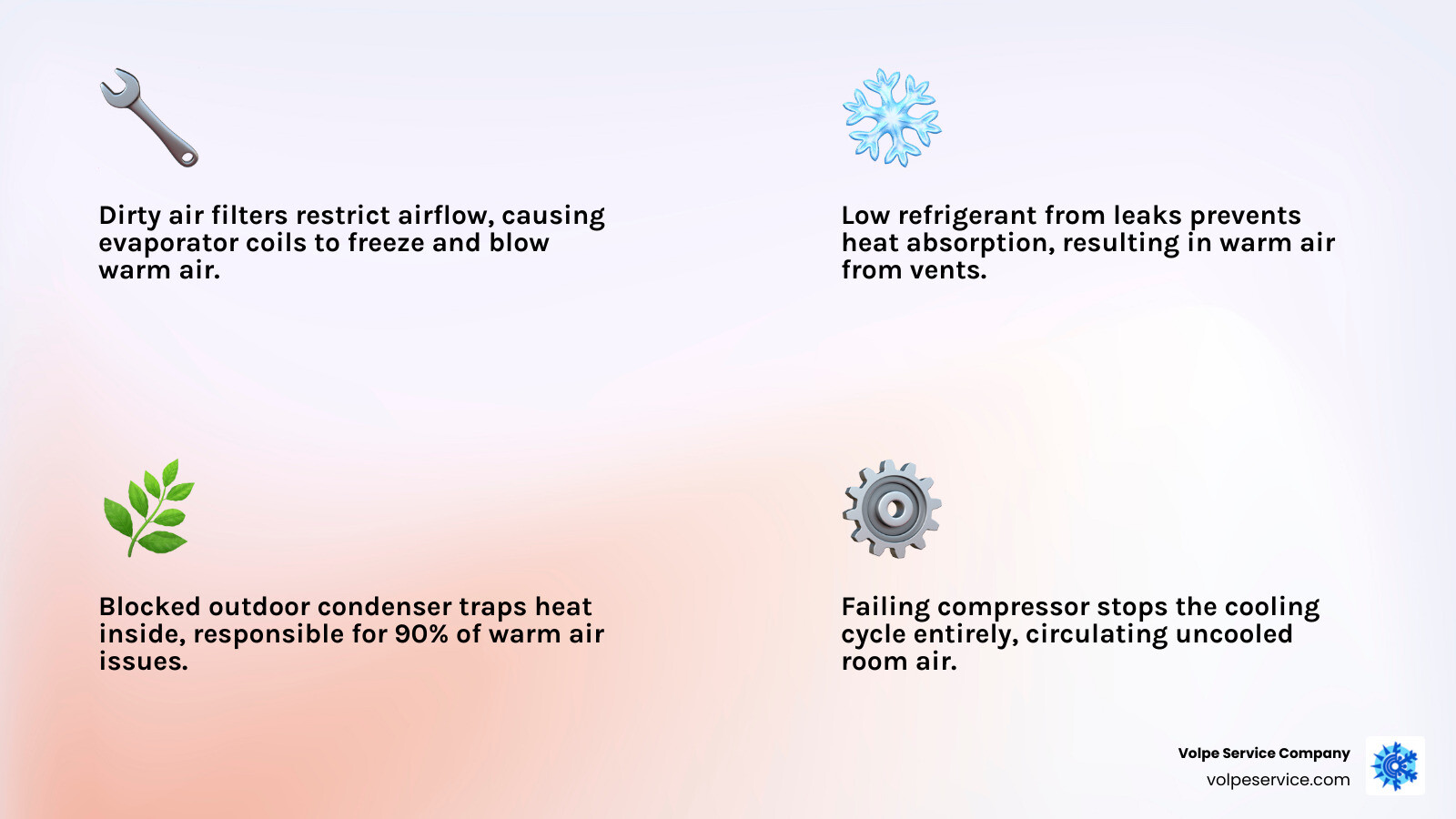
- Dirty or clogged air filter – Restricts airflow, causes the evaporator coil to freeze, and forces warm air through vents
- Refrigerant leak – Low refrigerant means your system can’t absorb heat from indoor air
- Dirty or blocked outdoor condenser unit – Prevents heat from being released outside (responsible for roughly 90% of hot air issues)
- Frozen evaporator coils – Caused by poor airflow or low refrigerant, blocking the cooling process entirely
- Failing compressor – The “heart” of your AC system; if it fails, cooling stops completely
- Tripped circuit breaker – Cuts power to the outdoor unit while the indoor fan keeps running, circulating uncooled air
- Capacitor or electrical component failure – Prevents the compressor and fan motors from starting properly
It’s a hot day in New Jersey, your AC is humming along — but the air coming out of your vents feels like it belongs in a sauna, not your living room. That mismatch between a system that sounds like it’s working and air that feels like it isn’t cooling is a telltale sign something has gone wrong inside your unit.
The good news? Many causes are diagnosable without specialized tools. The not-so-good news? Some — like refrigerant leaks and compressor failures — require a licensed HVAC technician to fix safely and correctly. This guide walks you through both.
Common Culprits: Why Is My AC Blowing Warm Air?
When we get a call from a frustrated neighbor in Morristown or Summit asking, “why is my ac blowing warm air,” we usually start by looking at the “big three”: settings, airflow, and the outdoor unit. Understanding Why Your AC Blows Warm Air: Causes & Solutions often begins with a simple realization: your air conditioner doesn’t actually “create” coldness. Instead, it removes heat from your home and dumps it outside.
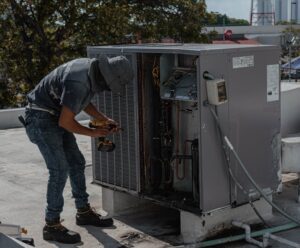
If any part of that heat-exchange process is interrupted, the air coming out of your registers will stay warm. Statistically, about 90% of the time, the culprit behind warm air is found in your outdoor condenser unit. Because that unit lives outside in the New Jersey elements, it is prone to dirt buildup, debris, and electrical surges that can shut down the cooling cycle while leaving the indoor fan running.
Beyond the outdoor unit, common mechanical failures include:
- Blown fuses or tripped breakers specifically for the outdoor condenser.
- A faulty contactor that fails to engage the compressor.
- A broken condenser fan motor that can’t pull heat away from the coils.
- Clogged condensate drain lines that trigger a safety float switch, shutting down the cooling.
Thermostat Malfunctions and Incorrect Settings
It may sound overly simple, but your thermostat is the “brain” of your HVAC system. If the brain is confused, the body won’t work. One of the first things What Should You Check When Your AC is Not Cooling is the fan setting.
If your fan is set to “ON,” the blower will run 24/7, even when the cooling cycle is off. This means it will blow uncooled, room-temperature air through your house between cycles, making it feel like the AC is failing. Always ensure your thermostat is set to “AUTO” and “COOL.”
Additionally, check your batteries. A low-battery signal can cause the thermostat to lose its connection with the AC unit. If you’re still using an old manual slider, consider an upgrade. Smart thermostats can save you 10-15% on your energy needs by improving cooling cycles and convenience.
Restricted Airflow and Dirty Filters
We can’t stress this enough for our clients in Livingston and West Orange: change your air filters! A dirty filter is more than just a nuisance; it’s a system killer. When a filter is clogged with New Jersey dust and pet dander, it restricts the air that needs to blow over your evaporator coils.
Without enough warm air passing over them, those coils get too cold and eventually freeze into a block of ice. Once frozen, they can no longer absorb heat, leading to warm air blowing out of your vents. Replacing a dirty filter can improve your AC’s energy efficiency by 5-15%, which is a significant saving on those July utility bills. If you notice weak airflow or a musty smell, these are clear Signs You Need an AC Repair.
Mechanical Failures and Refrigerant Issues
If your thermostat is correct and your filter is clean, but you’re still asking “why is my ac blowing warm air,” we have to look deeper into the mechanical heart of the machine. Your AC uses refrigerant to move heat. Think of it as the “blood” of the system. If the blood is low, or the “heart” (the compressor) isn’t pumping, the system fails.
AC Cooling Coil Problems often stem from the delicate balance of pressure and temperature. If the electrical components like the capacitor fail, the compressor won’t even start. Recognizing AC Capacitor Failure Signs—like a humming sound from the outdoor unit or a “hard start” where the unit struggles to kick on—can save you from a much more expensive compressor replacement later.
| Symptom | Likely Cause | Recommended Action |
|---|---|---|
| Hissing or bubbling sounds | Refrigerant Leak | Call a Professional Immediately |
| Humming but fan isn’t spinning | Capacitor Failure | Professional Repair Required |
| Tripped breaker (repeatedly) | Electrical Short/Compressor Issue | Do Not Reset; Call a Pro |
| Ice on the copper lines | Low Refrigerant/Airflow Block | Turn off AC and Thaw |
Identifying a Refrigerant Leak
Refrigerant is not like gas in a car; it shouldn’t “run out.” If it’s low, you have a leak. These leaks are Signs Your AC Needs Urgent Repair because low refrigerant causes the compressor to work overtime, eventually leading to a total system burnout.
You might notice a sweet, chemical-like aroma near your vents or hear a high-pitched hissing sound coming from the indoor or outdoor unit. In the humid New Jersey summers, a refrigerant leak almost always leads to ice buildup on the copper lines or the indoor evaporator coil. Because handling refrigerant requires EPA certification, this is never a DIY fix.
Why is my ac blowing warm air due to a failing compressor?
The compressor is the most expensive and vital component of your system. If it fails, your AC is essentially just a very large, expensive fan. When a compressor starts to fail, you might hear rattling or “coins in a dryer” clanking noises from the outdoor unit.
If you notice that your outdoor unit isn’t turning on at all, or it’s causing your electrical breakers to trip every time it tries to start, your compressor might be “grounded” or “shorted.” Understanding How to Know if Your Air Conditioner is Broken often comes down to listening to these mechanical cries for help.
Troubleshooting Steps for Homeowners in New Jersey
Before you panic, there are several steps you can take to troubleshoot. We’ve been providing AC Repair Tips Chester NJ for decades, and many times, the solution is right in front of you.
First, verify your power supply. Go to your electrical panel and look for the circuit labeled “AC” or “Air Conditioner.” Sometimes, a power surge during a New Jersey thunderstorm can trip the breaker for the outdoor unit while the indoor air handler stays on. If the breaker is tripped, reset it once. If it trips again immediately, stop and call us—there is a dangerous electrical short that needs attention. There are at least 7 Common Reasons That Your AC is Not Turning On, and many start at the breaker box.
Why is my ac blowing warm air when the outdoor unit is dirty?
In towns like Montville and Boonton, where beautiful trees and gardens are common, the outdoor unit often becomes a magnet for grass clippings, leaves, and “cottonwood” fuzz. This debris acts like a blanket, trapping heat inside the unit. If the heat can’t escape, the refrigerant can’t cool down, and your AC starts blowing warm air.
Check for:
- Overgrown vegetation within two feet of the unit.
- A “mat” of dust or hair on the metal fins.
- Debris trapped inside the top of the unit that might be blocking the fan.
Clearing these obstructions is one of the 8 Reasons Your AC Is Not Turning On & How to Fix Them. You can gently use a garden hose (not a power washer!) to rinse away dirt from the exterior fins.
Thawing Frozen Evaporator Coils
If you see ice on your unit, your first instinct might be to turn the temperature down even further to “force” it to work. Do not do this. This will only make the ice block larger and could permanently damage your compressor.
Instead, follow these steps:
- Turn the AC system completely “OFF” at the thermostat.
- Switch the fan setting to “ON” (this blows warm air over the ice to melt it).
- Check your air filter; if it’s dirty, replace it immediately.
- Wait about 24 hours for the system to fully thaw.
If the system freezes up again after you restart it with a clean filter, you likely have a refrigerant leak or a failing blower motor. These are Top Warning Signs: How to Tell if Your Air Conditioner is Broken.
Preventive Maintenance to Avoid Future Cooling Failures
The best way to stop asking “why is my ac blowing warm air” is to prevent the problem before it starts. Most air conditioners are designed to last 10-15 years, but in our experience serving New Jersey since 1963, only well-maintained units actually reach that milestone.
What is the Most Common AC Repair? It’s often the repair that could have been avoided with a simple tune-up. We recommend a professional inspection twice a year: once in the spring for your cooling system and once in the fall for your heating. During these visits, a technician can spot a failing capacitor or a tiny refrigerant leak before it turns into a mid-July emergency. If you’re wondering How Do I Know if My Air Conditioner Needs to Be Repaired, the answer is often found during these routine checks.
Frequently Asked Questions
Is it safe to keep running the AC if it’s blowing warm air?
No. If your AC is blowing warm air, the system is struggling. Continuing to run it can cause the compressor to overheat or lead to “slugging,” where liquid refrigerant enters the compressor and destroys it. It also wastes a significant amount of energy, spiking your utility bills for zero comfort.
How often should I service my AC system to avoid this problem?
You should have a professional tune-up at least once a year, ideally in the spring. Additionally, you should be checking and/or changing your air filters every 1–3 months, depending on whether you have pets or allergies.
What are the differences in troubleshooting for home central AC vs. car AC?
While both use the refrigeration cycle, car AC systems use R134a refrigerant and are prone to leaks caused by road vibrations. Car AC issues are often caused by a clogged cabin air filter or a failing compressor clutch. Home AC systems are much larger, use different refrigerants (like R-410A), and involve complex ductwork that can also leak or become disconnected.
Conclusion
At Volpe Service Company, we’ve been helping our neighbors in East Hanover, Parsippany, and across Northern New Jersey stay cool since 1963. We know that when your AC fails, it’s more than just an inconvenience—it’s a threat to your home’s comfort and your family’s well-being. Whether you’re dealing with a simple thermostat glitch or a complex compressor failure, our family-owned team is here to provide data-driven solutions and honest, transparent service.
Don’t spend another night in a sweltering house. If you’ve tried the DIY steps and your vents are still blowing warm, it’s time for the pros to step in. More info about HVAC services is just a click away—let us get your home back to the crisp, cool sanctuary it should be.