
Why Uneven Temperatures Are Driving New Jersey Homeowners to Ductless Zoning
How ductless systems provide zone comfort is one of the most practical questions a homeowner can ask — and the short answer is this:
A ductless mini-split system connects one outdoor unit to multiple indoor air handlers, each with its own thermostat. Every room or zone gets independent temperature control, so you heat or cool only the spaces you’re actually using — no ductwork, no shared thermostat, no compromises.
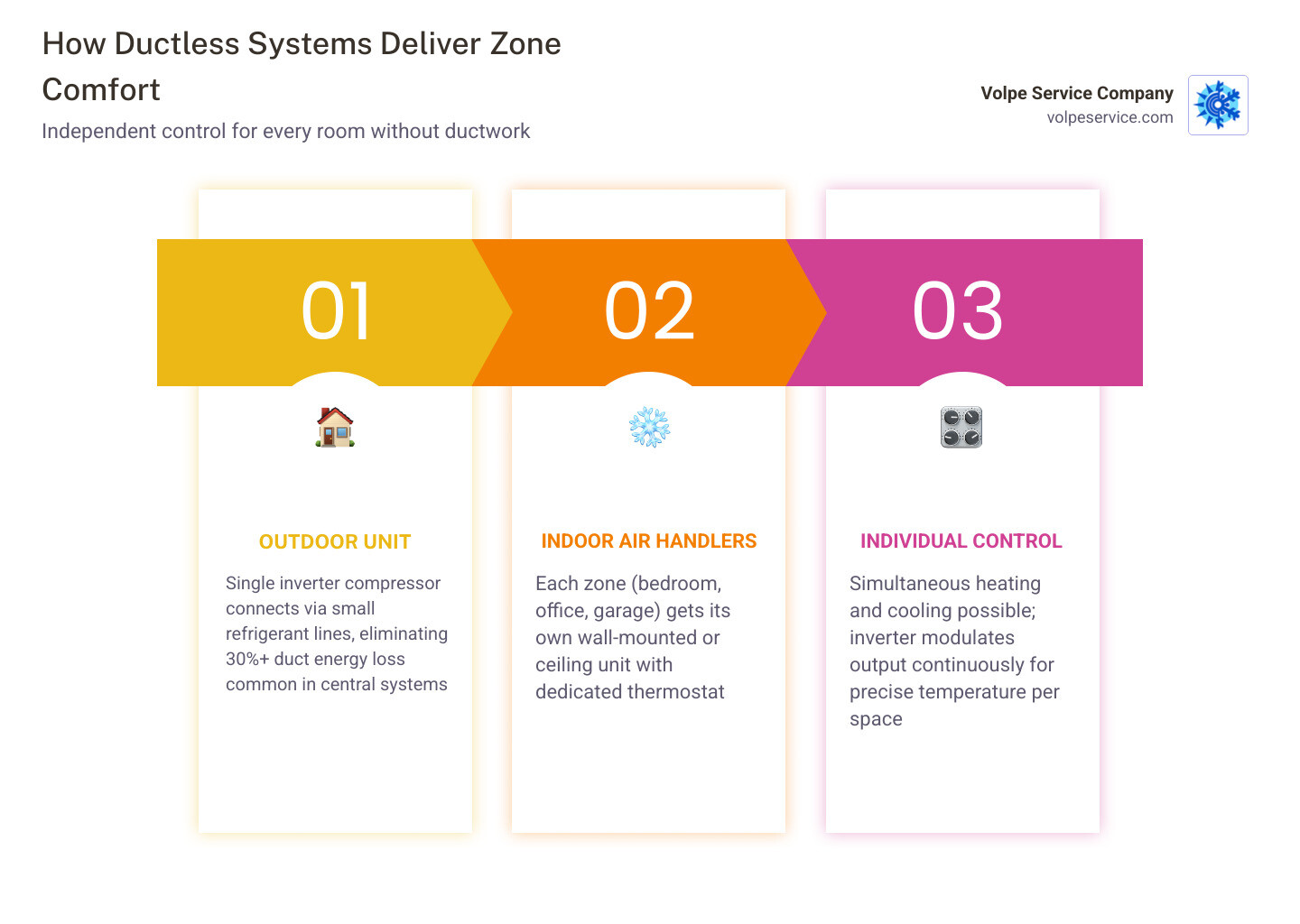
Here’s a quick breakdown of how it works:
- One outdoor compressor connects to two or more indoor air handlers via small refrigerant lines run through a 3-inch wall opening.
- Each indoor unit serves its own zone — a bedroom, a living room, a converted garage, or an attic office.
- Each zone has its own controller, so one person can cool their bedroom while another warms the living room simultaneously.
- An inverter-driven compressor adjusts its output continuously based on demand, instead of blasting on and off like a traditional system.
- No ducts means no energy lost through leaky attic ductwork — which can account for more than 30% of a central system’s energy consumption.
If you’ve ever dealt with a second-floor bedroom that stays stuffy all summer while the downstairs freezes, or a converted garage that no amount of space heaters can fix, this is exactly the problem ductless zoning is built to solve. Across Northern and Central New Jersey — where homes range from century-old bungalows to modern additions — single-thermostat central air systems regularly fall short. Rooms with different sun exposures, ceiling heights, and insulation levels simply don’t respond the same way to one blanket temperature setting.
The result? Constant thermostat battles, wasted energy conditioning empty rooms, and spaces that never quite feel right no matter how you adjust the system.
Ductless systems flip that equation. Instead of forcing one temperature on your whole home, they let each space find its own balance — on its own schedule.
Key terms for how ductless systems provide zone comfort:
Understanding How Ductless Systems Provide Zone Comfort
To understand how ductless systems provide zone comfort, it helps to look at how traditional systems fall short. In a standard central HVAC setup, you have one central thermostat, typically located in a hallway or main living room. When that single thermostat registers a temperature change, the furnace or air conditioner kicks on and blasts conditioned air through a complex network of ducts to every single room in the house, regardless of whether those rooms actually need it.
Ductless systems completely bypass this rigid, single-point design. A ductless multi-zone system operates on a “split” layout. It consists of a single outdoor condenser/compressor unit connected to multiple indoor air handlers (also called heads) placed in different rooms throughout your home.
Instead of moving bulky volumes of air through ductwork, these systems circulate pressurized refrigerant directly to the specific indoor units. Each indoor air handler features its own internal temperature sensor and operates on its own localized controller (either a handheld remote, a wall-mounted thermostat, or a smart device app).
Because each indoor unit acts as its own self-contained micro-climate controller, you gain true independent control over individual temperature zones. If you have an empty guest room, you can turn its air handler off entirely without affecting the rest of the house. If you prefer your master bedroom at a crisp 68 degrees but want your home office at 72 degrees, you simply adjust the respective controllers. This customized control is a primary reason Why Your Home Deserves a Ductless Upgrade, as it delivers unparalleled personalization while eliminating the energy waste of heating or cooling unoccupied rooms.
How Ductless Systems Provide Zone Comfort in Multi-Story Homes
Multi-story homes in New Jersey — especially classic colonials and split-levels in towns like Summit, Morristown, and Livingston — present a classic thermodynamic challenge: heat naturally rises. During our hot New Jersey summers, warm air migrates upstairs, leaving second-floor bedrooms stuffy and uncomfortable. Meanwhile, the downstairs living spaces stay cool, tricking the single central thermostat into shutting the system down before the upstairs bedrooms ever get relief.
Ductless zoning solves this problem by establishing localized thermostats exactly where you sleep and live. By mounting dedicated indoor air-handling units in each second-floor bedroom, you can bypass the central system’s structural limitations. The upstairs units will run independently to pull heat out of the bedrooms, while the downstairs units scale back their output because those lower rooms are already cool.
This targeted approach is particularly useful in older properties. If you are looking to preserve the architectural integrity of a classic residence, reading up on Ductless vs Ducted: The Best Ways to Add AC to a Century Home will show you how these low-profile systems bring modern comfort to classic layouts without requiring invasive renovations or sacrificing closet space for ductwork.
How Ductless Systems Provide Zone Comfort in Converted Spaces
Many homeowners across New Jersey look for creative ways to expand their usable square footage. Statistics show that more than 50% of homes in the United States have a covered, closed garage that can be converted into living space. Whether you are transforming a garage into a home gym, finishing a basement in Parsippany, or setting up a quiet attic office in Madison, these spaces share a common issue: they are almost always cut off from the home’s main HVAC ductwork.
Extending traditional ductwork into a garage, attic, or basement is often impractical, incredibly disruptive, and highly inefficient. It strains your existing system, which wasn’t sized to handle the extra volume.
This is where a Customized Ductless Installation shines. Because a ductless mini-split requires only a tiny, non-invasive conduit to connect the indoor air handler to the outdoor unit, it can be installed in practically any converted space within a matter of hours. The newly converted room becomes its own independent comfort zone. You can keep your home gym cool during an intense workout or warm up your attic office on a freezing winter morning, all without altering the temperature settings in the main house.
Key Components of a Multi-Zone Mini-Split System

A multi-zone ductless system relies on a few highly engineered components working in perfect harmony. Unlike traditional systems that rely on heavy mechanical dampers to block or restrict airflow, ductless zoning controls comfort directly at the source of heat transfer.
The system is made up of four essential components:
- The Outdoor Compressor/Condenser Unit: This is the heart of the system, typically installed on a concrete pad or wall bracket outside your home. It contains the compressor, condenser coil, fan, and system electronics. In a multi-zone system, this single outdoor unit can power up to eight separate indoor air handlers.
- The Indoor Air Handlers: Mounted directly inside the conditioned rooms, these units contain the evaporator coil, a quiet blower fan, air filtration screens, and temperature sensors.
- The Refrigerant Line Set and Conduit: A bundle containing copper refrigerant tubing, a power cable, communication wiring, and a condensate drain line. This line set connects the outdoor unit to each indoor head through a small, three-inch hole drilled in the exterior wall.
- The Localized Controllers: Wireless remotes, wall-mounted smart thermostats, or smartphone applications that let you manage the temperature, fan speed, and airflow direction for each specific zone.
Inverter Technology and Variable-Speed Compressors
The real magic behind how ductless systems provide zone comfort lies inside the outdoor unit: the inverter-driven compressor.
Traditional HVAC systems use single-speed compressors that operate on an all-or-nothing basis. They turn on at 100% capacity, blast cold or hot air until they hit the thermostat setpoint, and then shut completely off. This constant on-and-off cycling causes noticeable temperature swings, creates loud noise, and consumes a massive amount of start-up energy.
Inverter technology works more like a dimmer switch than an on/off light switch. It allows the compressor to modulate its speed continuously, adjusting its output anywhere from 10% to 100% of its rated capacity.
When you turn on a zone, the inverter ramps up to reach your desired temperature quickly. Once that temperature is achieved, the compressor scales back to a low, steady speed, running continuously to maintain that exact comfort level. This continuous capacity modulation eliminates the drafty temperature spikes associated with traditional systems, keeps the indoor air handlers operating whisper-quietly, and dramatically reduces overall energy consumption.
Indoor Unit Form Factors and Placement
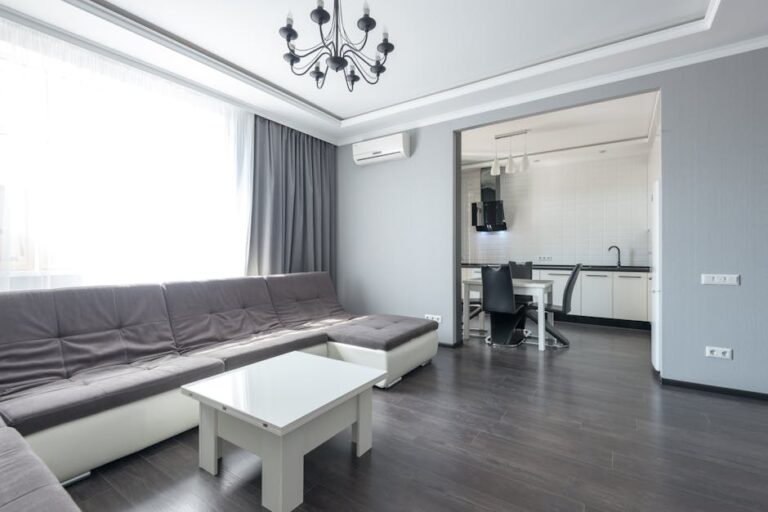
Homeowners sometimes worry that adding ductless units will disrupt their home’s interior design. Fortunately, modern ductless air handlers come in several sleek, low-profile form factors designed to blend seamlessly into any room:
- Wall-Mounted Units: The most common style, mounted high on a wall. They are slim, typically only seven inches deep, and are designed with curved, neutral casings to look as unobtrusive as possible.
- Ceiling Cassettes: Ideal for homeowners who prefer a completely flush look. These units install directly into the ceiling, leaving only a low-profile grille visible. They distribute air in four directions, making them excellent for larger rooms or open-concept spaces.
- Floor Consoles: These units mount low on a wall near the floor, making them perfect for rooms with low ceilings, knee walls (like in finished attics), or beneath large windows. They are also highly favored for heating applications, as they deliver warm air right at floor level where it can naturally rise.
Comparing Zoned Ductless Systems to Traditional Central Air
To help you visualize the structural and performance differences, let’s look at how a multi-zone ductless setup compares directly to traditional ducted central HVAC:
| Feature | Multi-Zone Ductless Mini-Split | Traditional Ducted Central HVAC |
|---|---|---|
| Zoning Capability | True independent room-by-room control | Typically single-zone (one thermostat for entire home) |
| Energy Loss | Zero duct-related energy losses | 20% to 30%+ loss through leaky ductwork |
| Efficiency Ratings | Up to 35 SEER2 / 18 HSPF2 | Typically 15.2 to 25 SEER2 |
| Installation Impact | Non-invasive; requires only a 3-inch wall hole | Invasive; requires cutting walls/ceilings for ducts |
| Operating Noise | Whisper-quiet (20–32 dB indoors) | Moderate (expansion noises, rushing air in vents) |
| Lifespan | 15 to 20 years (with proper care) | 10 to 15 years |
Making the switch from an older ducted system to a modern mini-split offers several Mini Split Installation Top Benefits, including lower utility bills, whisper-quiet operation, and the end of room-to-room temperature battles.
Traditional Ducted System:
[Central AC] ---> (Leaky Attic/Basement Ducts: 30% Energy Loss) ---> [All Rooms (Same Temp)]

Multi-Zone Ductless System:
[Outdoor Unit] === (Refrigerant Lines: 0% Duct Loss) ===> [Zone 1: 68°F]
 ===> [Zone 2: 72°F]
 ===> [Zone 3: OFF]
Eliminating Ductwork Energy Losses
According to the U.S. Department of Energy, duct losses can account for more than 30% of energy consumption for space conditioning, especially if those ducts run through unconditioned spaces like a hot attic or a chilly crawlspace. Over time, ductwork naturally develops cracks, loose connections, and fallen insulation, allowing precious heated or cooled air to escape before it ever reaches your living spaces.
Because ductless systems deliver comfort directly to the room through sealed refrigerant lines, they completely eliminate these duct-related thermal losses. 100% of the energy you pay for is delivered directly into your living space.
This structural advantage allows ductless systems to achieve incredible efficiency. While traditional ducted heat pumps typically top out around 25 SEER2, high-performance ductless mini-splits can achieve ratings up to 35 SEER2. Replacing an inefficient, older ducted setup with a properly sized ductless system often cuts heating and cooling energy consumption by 20% to 40%.
Retrofit Suitability for Older New Jersey Homes
Many of our local communities, such as Montville, Mountain Lakes, and Chester, feature beautiful historic homes built long before the invention of central air conditioning. Retrofitting these homes with traditional ducted systems often requires building soffits, dropping ceilings, or sacrificing valuable closet space to hide bulky metal ductwork.
A ductless system is the ultimate non-invasive alternative. The entire installation requires only a small, three-inch hole through an exterior wall to route the refrigerant lines and wiring. This preservation-friendly approach ensures that your home’s plaster walls, hand-carved crown molding, and original architectural details remain completely untouched.
If you are looking to bring modern comfort to a home without existing ductwork, our specialized team can help you design a system that fits your home’s unique character. You can learn more about our local installation process by visiting our Ductless Installation Parsippany NJ page.
Best Practices for Designing and Maintaining Your Ductless Zones
While ductless technology is incredibly flexible, achieving perfect zone comfort requires careful planning, professional design, and regular upkeep. Simply hanging units on walls without a strategic plan can lead to short-cycling, uneven airflow, and reduced efficiency.
Sizing Your System with Professional Load Calculations
The most critical step in designing a multi-zone ductless system is getting the sizing right. Sizing is not a matter of guessing based on square footage alone. A professional installer must perform a detailed load calculation, commonly known as an ACCA Manual J calculation.
This calculation takes several variables into account:
- The exact square footage and ceiling height of each room.
- The type and level of insulation in your walls and ceilings.
- The number, size, and orientation of your windows (e.g., south-facing rooms with heavy afternoon sun require more cooling capacity).
- The local climate conditions in Northern and Central New Jersey.
- How the room is used (a kitchen with heat-generating appliances needs different capacity than a quiet bedroom).
If a unit is oversized, it will cool the room too quickly and shut off before it has a chance to properly dehumidify the air, leaving the room feeling cold and clammy. If it is undersized, it will run constantly at maximum speed, driving up your energy bills and wearing out the compressor prematurely. Professional calculations ensure that each indoor unit matches your room’s thermal needs perfectly.
Essential Maintenance for Long-Term Performance
Ductless systems are highly reliable, but they are not maintenance-free. To keep your system running at peak efficiency and protect your indoor air quality, follow these essential maintenance practices:
- Clean the Mesh Filters Every Two Weeks: Every indoor air handler contains washable mesh filters that trap dust, pet dander, and airborne particles. Because these units recirculate room air directly, dirty filters quickly restrict airflow, forcing the fan motor to work harder and reducing the system’s heating and cooling capacity. Simply pop open the front panel, slide the filters out, wash them under warm water or vacuum them, let them dry completely, and slide them back in.
- Keep the Outdoor Unit Clear: Ensure that the outdoor compressor has at least two feet of clear space around it. Keep leaves, weeds, snow, and garden debris from blocking the airflow through the condenser coil.
- Schedule Professional Deep Cleanings: While you can easily handle the basic filter maintenance, the internal blower wheels, evaporator coils, and condensate drain lines require professional attention. Over time, moisture on the cold evaporator coils can lead to dust and organic growth on the blower wheel.
Having a licensed technician perform a professional deep clean every one to three years will keep your system running cleanly and efficiently. For a comprehensive look at what to expect during a professional setup and how to care for your system, check out our Guide to Ductless Installation.
Frequently Asked Questions About Ductless Zone Comfort
Can a single outdoor unit power multiple indoor zones?
Yes, absolutely. Multi-zone ductless systems (often called multi-split systems) are specifically designed for this. A single, high-capacity outdoor unit can connect to and power multiple indoor air handlers. Each indoor unit operates independently with its own thermostat.
The only operating rule to keep in mind is mode consistency: all indoor units connected to a single outdoor compressor must operate in the same general mode (either all cooling or all heating) at the same time. You cannot have one bedroom cooling to 65°F while the living room is actively heating to 75°F on the same outdoor unit. However, you can turn individual units off completely or set them to widely different temperatures within that same mode.
How quiet are ductless indoor air handlers during operation?
Ductless indoor units are incredibly quiet — so much so that most homeowners forget they are even turned on. Traditional central air systems create noticeable noise from rushing air in the ductwork and the metal ducts expanding and contracting. Window air conditioners are even louder, often running at 50 to 60 decibels (dB) right next to your ears.
Because the loud compressor component of a ductless system is located completely outdoors, the indoor air handlers only contain a small, balanced blower fan. On their lowest fan settings, modern indoor units operate at sound levels as low as 19 to 22 decibels. For context, 20 dB is about the volume of a soft whisper or rustling leaves, making ductless systems an exceptionally quiet choice for bedrooms, nurseries, and home offices.
Do ductless systems help improve indoor air quality?
Yes, ductless systems can significantly improve your home’s indoor air quality. Traditional ducted systems are notorious for collecting dust, pollen, mold spores, pet dander, and other allergens inside the dark, hard-to-reach ductwork. Every time the central fan kicks on, these particles are circulated throughout your entire house.
Ductless systems eliminate this issue entirely by removing the ducts. Air is filtered and conditioned directly inside the room where the unit is installed. Additionally, many modern ductless air handlers come equipped with multi-stage filtration systems, including enzyme and carbon-based filters that absorb pollen, dust, odors, and microscopic impurities. Because the filters are washable and easily accessible, maintaining clean, fresh air in your home is simple and straightforward.
Experience Personalized Comfort with Volpe Service Company
If you are tired of dealing with drafty rooms, high heating and cooling bills, and constant battles over a single thermostat, it is time to experience the difference that zoned comfort can make. How ductless systems provide zone comfort is through a combination of smart engineering, inverter-driven efficiency, and independent room-by-room control — and our team at Volpe Service Company is here to help you bring this modern solution to your home.
We have been proudly serving Northern and Central New Jersey homes and businesses since 1963. From our office in East Hanover, our licensed, highly trained contractors provide data-driven solutions, honest pricing, and courteous service to our neighbors in Livingston, Morristown, Summit, Parsippany, West Orange, and beyond.
Ready to upgrade your home’s comfort? Explore our comprehensive Ductless HVAC Services Parsippany NJ and schedule your personalized home comfort consultation with us today!