

Why Ductless Heating and Cooling for New Jersey Homes Makes Sense
Ductless heating and cooling for New Jersey homes is one of the most practical upgrades a homeowner can make — especially if your house was built before central air was standard. No ductwork? No problem. Whether you’re dealing with hot upstairs bedrooms in July, a freezing addition in January, or an older home where running ducts would mean tearing apart walls and ceilings, a ductless mini-split system gives you efficient, zoned comfort without the construction headache.
Here’s a quick look at why ductless systems work so well for NJ homeowners:
- No ductwork required — installation needs only a small hole in the wall, not a full renovation
- Year-round comfort — modern systems provide both heating and cooling from a single unit
- Zoned control — each room or area gets its own temperature setting
- Energy savings — duct losses in traditional systems can exceed 30% of energy use; ductless eliminates that waste
- Handles NJ winters — cold-climate heat pump models operate efficiently well below freezing
- Works anywhere — additions, garages, basements, sunrooms, and older homes without chases
- Long lifespan — with proper care, systems last 15 to 20 years
- Available incentives — federal tax credits and NJ Clean Energy Program rebates can offset upfront costs
New Jersey’s climate is demanding. Summers are hot and humid. Winters are genuinely cold. And a huge share of the state’s housing stock — colonial-era houses, post-war ranches, Victorian-era builds — was never designed with modern ductwork in mind. That mismatch leaves a lot of homeowners stuck choosing between expensive duct retrofits or living with window units and space heaters.
Ductless mini-splits solve that problem directly. They’re quiet, efficient, flexible, and increasingly the go-to choice for NJ homeowners who want real comfort without gutting their homes to get it.
What a ductless mini-split system is and how it works
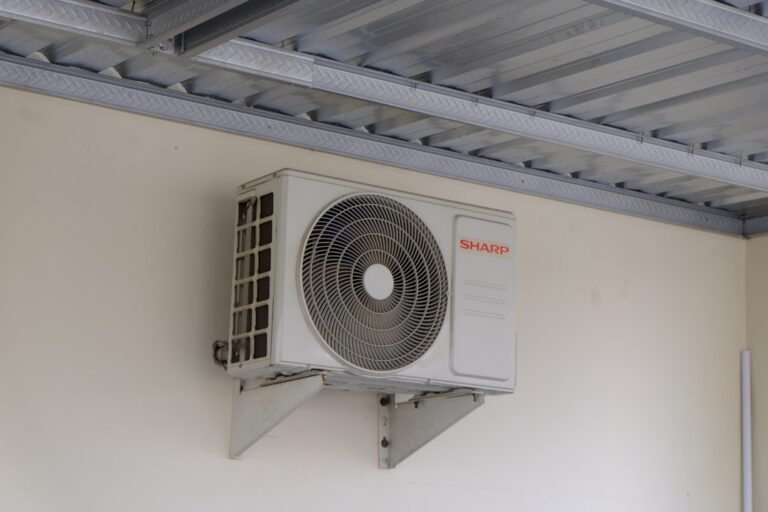
A ductless mini-split is a heating and cooling system made up of two main parts:
- An outdoor unit that moves heat in or out of the home
- One or more indoor units that deliver conditioned air directly into the room
These parts are connected by a small bundle of refrigerant lines, wiring, and a condensate drain that pass through a modest wall opening. No large sheet metal ductwork. No sacrificing half your attic. No turning your house into a construction zone for weeks.
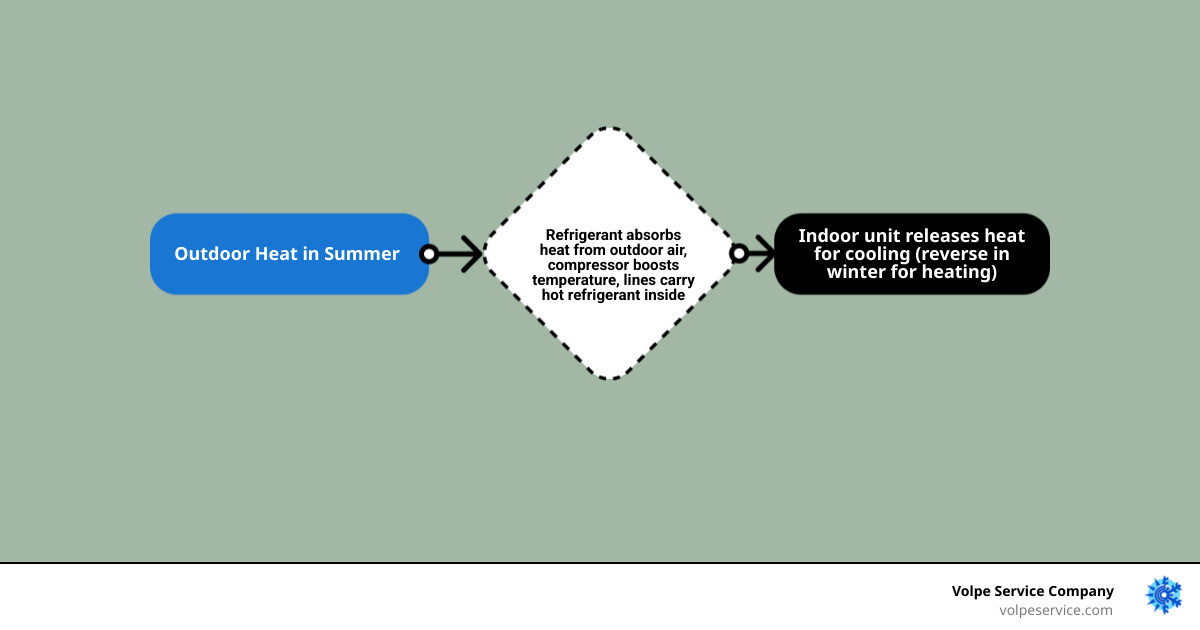
Most modern mini-splits are heat pumps. In summer, they pull heat from inside your home and move it outdoors. In winter, they reverse that process and pull heat from outdoor air to warm the room. That sounds a little like magic, but it is simply refrigeration technology doing its job.
Many systems also use inverter-driven compressors. Instead of blasting on and off like older equipment, inverter technology adjusts output gradually to match the room’s needs. That helps with:
- Better temperature stability
- Lower energy use
- Quieter operation
- Improved humidity control
Indoor units come in several styles, including high-wall units, ceiling cassettes, and other low-profile options depending on the room and layout. The big idea is simple: ductless systems condition each space directly rather than pushing air through a long network of ducts.
Why ductless heating and cooling for New Jersey homes is a strong fit for older houses
In towns like Morristown, Summit, Madison, Millburn, Montville, and Chester, many homes were built long before central air was common. These houses often have beautiful details and not much spare space for ducts. Think plaster walls, finished ceilings, tight wall cavities, and architectural features nobody wants to disturb.
That is where ductless really shines.
Because installation only requires a small wall penetration and strategic equipment placement, ductless systems are often a much less disruptive retrofit than adding central ductwork. For older homes, that can mean:
- Preserving original finishes
- Avoiding major demolition
- Reducing installation mess
- Solving room-by-room comfort issues without overhauling the whole house
They are also a strong fit for homes with uneven temperatures. Older New Jersey houses often have one room that bakes in the sun, one that never seems warm enough, and a second floor that acts like a sauna in August. Ductless zoning lets us target those trouble spots directly instead of trying to make one thermostat somehow keep everyone happy. As many families know, one thermostat for the whole house is sometimes less “comfort system” and more “domestic negotiation device.”
The biggest benefits homeowners get from ductless systems
For many households, the appeal of ductless goes far beyond “it works without ducts.” The real advantages show up every day in comfort, efficiency, and flexibility.
Here are the biggest benefits:
- Lower energy waste because there are no duct losses
- Zoned comfort for different rooms and schedules
- Quiet operation compared with window units and many older HVAC systems
- Better fit for additions, finished basements, garages, and attic spaces
- Strong humidity control during sticky New Jersey summers
- Flexible equipment placement
- Washable filters that help support cleaner air
- Long service life, often around 15 to 20 years with proper maintenance
Duct losses in traditional systems can account for more than 30% of energy consumption, especially when ducts run through attics or crawlspaces. Ductless systems avoid that issue entirely. High-efficiency mini-splits can also reach SEER2 ratings in the 20 to 33 range, and many homeowners see meaningful reductions in energy use compared to older ducted or room-by-room systems.
If you want a deeper look at the comfort and efficiency advantages, see why a ductless upgrade makes sense.

How zoned temperature control improves comfort and lowers waste
Zoning is one of the best reasons to consider ductless.
With a traditional one-thermostat setup, the whole house gets treated like one giant room. But homes do not behave that way. Bedrooms may be cooler than living spaces. Guest rooms may sit empty for weeks. Upper floors collect heat. Sun-facing rooms warm up fast. Basement spaces stay cooler longer.
Ductless solves this by giving each zone its own control. That means you can:
- Keep bedrooms cooler for sleeping
- Make a nursery or home office more comfortable during occupied hours
- Reduce conditioning in unused guest rooms
- Help upstairs rooms stay comfortable in summer
- Fine-tune problem areas without affecting the whole house
That level of control improves comfort and can reduce waste, because you are not paying to heavily heat or cool rooms nobody is using.
Common places ductless works best in New Jersey homes
Ductless is especially useful in spaces that were added later or were never well served by the original HVAC design.
Common applications include:
- Home additions
- Finished attics
- Basements
- Garages or workshops
- Sunrooms
- Bonus rooms
- Converted offices or guest suites
- Rooms with chronic hot or cold spots
These are the areas where extending ductwork can be difficult, expensive, or ineffective. A ductless system can often give those spaces dedicated comfort without overloading the rest of the house.
For more examples of room-by-room solutions, visit Customized Ductless Installation.
Can ductless heating and cooling for New Jersey homes handle every season?
Yes, when the system is chosen and designed correctly.
New Jersey weather is not exactly subtle. We get humid summer days, chilly shoulder seasons, and winter stretches where temperatures drop well below freezing. A well-matched ductless heat pump system can handle all of that, but the key phrase is “well-matched.”
Modern cold-climate mini-splits are built for year-round performance. Many provide strong cooling in summer, dehumidification in spring and fall, and effective heating in winter. Some advanced models can maintain full heating output down to 5 degrees Fahrenheit and continue providing heat even at temperatures as low as -13 degrees Fahrenheit.
That does not mean every mini-split is automatically the right fit for every house. Home size, insulation levels, air leakage, room layout, and the number of zones all matter. That is why system design is so important.
How mini-splits perform during humid New Jersey summers
Summer comfort in New Jersey is not just about air temperature. It is also about moisture.
A house can be 72 degrees and still feel clammy if humidity is too high. Ductless mini-splits help by cooling the air and removing moisture at the same time. Many systems also include a dry mode or variable-speed operation that helps maintain more even indoor conditions instead of creating the cold-damp swings some older systems produce.
Benefits in summer include:
- Consistent room cooling
- Better moisture removal
- Less sticky indoor air
- Quiet performance
- Cleaner appearance than window units
Because inverter systems can run at lower, steadier speeds, they often do a better job with humidity than equipment that constantly cycles on and off.
How modern ductless systems handle cold New Jersey winters
A common question we hear is whether ductless systems can really heat a home during a New Jersey winter.
The answer is yes, many can. Cold-climate heat pump technology has improved dramatically. Systems with hyper-heating or similar low-ambient performance features are designed specifically to keep working in freezing weather.
Important factors include:
- Outdoor winter design temperatures
- Insulation and air sealing
- Whether the system is single-zone or whole-home multi-zone
- Room-by-room heat loss
- Whether backup heat is part of the overall plan
In some homes, ductless can serve as a whole-home heating and cooling system. In others, it works best for specific zones or as part of a broader comfort strategy. The right answer depends on the home’s layout and thermal performance, not wishful thinking and not “my neighbor said it worked great.” Your neighbor may also think their attic conversion was insulated. We prefer to measure first.
Installation, sizing, and choosing the right setup
The success of a ductless project depends heavily on design. A great system on paper can disappoint if it is oversized, undersized, or poorly placed.
That is why professional planning should include:
- A home assessment
- Room-by-room load calculations
- Indoor unit placement strategy
- Outdoor unit location
- Refrigerant line routing
- Condensate drainage planning
- Electrical review
- Startup and testing
If you want a closer look at what professional planning involves, see Mini Split Installation Process Explained.
What the installation process looks like and how long it usually takes
Most ductless installations are relatively fast compared with full duct retrofits. Many single-zone projects can be completed in one day, while more complex multi-zone systems may take longer depending on the home and scope.
A typical installation includes:
- Evaluating the room or zones
- Mounting the indoor unit bracket
- Creating a small wall opening for the line set
- Running refrigerant lines, electrical connections, and condensate drain
- Setting the outdoor unit on a pad or bracket
- Completing electrical connections
- Vacuuming and charging the system as required
- Testing startup, airflow, and controls
A neat installation matters. Clean line routing, thoughtful drainage, and careful placement make a big difference in both performance and appearance.
For a step-by-step overview, see Mini Split Installation Steps.
How to choose the right size and number of zones
Choosing a mini-split is not just about square footage.
Proper sizing depends on several factors:
- Room dimensions
- Insulation levels
- Window area and sun exposure
- Ceiling height
- Air leakage
- Occupancy patterns
- Whether the room is over a garage, under an attic, or otherwise exposed
The number of zones depends on how you use the home. A single family room may only need one indoor unit. A whole-home setup may need several indoor heads connected to one outdoor unit, or a combination of systems depending on layout.
Good design is especially important in multi-story homes, where upstairs and downstairs loads can vary significantly. If you would like help understanding the main questions homeowners ask before installation, review Mini Split Installations Questions.
Single-zone vs multi-zone: which is better for your layout?
Here is a simple comparison:
| Setup | Best for | Main advantage | Main consideration |
|---|---|---|---|
| Single-zone | One room, addition, garage, office, sunroom | Simple and targeted | Covers one area only |
| Multi-zone | Several rooms or whole-home planning | Centralized outdoor equipment with room-by-room control | Requires more detailed design |
A single-zone system is often ideal when you have one problem room or one distinct area to condition.
A multi-zone system makes sense when you want several rooms served by one outdoor unit with independent indoor controls. That can work well in older homes, houses with additions, or layouts where different rooms have different comfort demands.
If you are weighing ductless against other home cooling approaches, this article may help: Is a Mini Split Better Than Central Air for Your Home.
Rebates, maintenance, and what to look for in an installer
Ductless systems are a long-term comfort investment, so it pays to think beyond installation day. Efficiency, maintenance, incentives, and installation quality all affect long-term results.
For general planning tips, visit Guide to Ductless Installation.
Incentives New Jersey homeowners should ask about in 2026
In 2026, homeowners should ask about two major categories of incentives:
- Federal tax credits for qualifying heat pump installations
- New Jersey utility or energy-efficiency rebates for eligible ENERGY STAR certified systems
The federal Inflation Reduction Act includes a tax credit worth 30% of qualifying project costs, up to $2,000 for eligible heat pump installations. New Jersey’s Clean Energy Program may also offer time-sensitive rebates for qualifying equipment, and these programs can change over time.
A few reminders:
- Eligibility depends on the equipment and installation details
- Paperwork matters
- Deadlines matter
- Program rules can change
That is why we recommend asking about available incentives early in the planning process, not after the system is already installed.
Maintenance habits that help a ductless system stay efficient
Ductless systems are low-maintenance, but not no-maintenance. There is a difference.
To keep performance strong, homeowners should stay on top of:
- Regular filter cleaning, often monthly during heavy-use periods
- Keeping indoor units unobstructed
- Watching for reduced airflow or unusual odors
- Scheduling professional tune-ups
- Inspecting condensate drainage
- Checking coils and electrical components during service
Professional maintenance helps preserve efficiency, support warranty requirements, and catch small issues before they turn into larger repairs. With proper care, ductless mini-splits commonly last 15 to 20 years.
What to look for in a professional ductless installer
Not all ductless installations are equal. The difference is often in the planning and details.
When choosing an installer, homeowners should look for:
- Room-by-room load calculations, not guesswork
- Knowledge of local code requirements
- Clear recommendations on zone layout
- Thoughtful indoor and outdoor placement
- Drainage and line-routing planning
- Clean finishing details such as neat line covers
- Help with warranty registration and documentation
- Strong communication and honest pricing
At Volpe Service Company, we focus on data-driven design, courteous service, and clear communication from start to finish. That matters because a ductless system is not just equipment on a wall. It is a comfort strategy for how your home actually lives.
Frequently Asked Questions About Ductless Heating and Cooling for New Jersey Homes
Can a ductless mini-split heat and cool an entire home?
Yes, it can. A whole-home ductless setup uses multiple indoor units placed in key rooms or zones, all designed around the home’s layout and heating and cooling needs.
This works especially well when:
- The home has no existing ducts
- The floor plan naturally supports zoning
- Different rooms have different comfort demands
- A retrofit would be too invasive
In some homes, a whole-home ductless system is the best answer. In others, ductless is better for additions, upper floors, or problem rooms while another system serves the rest of the house. The best approach depends on the house, not on a one-size-fits-all template.
How long do ductless mini-splits usually last?
With proper maintenance, most ductless mini-splits last about 15 to 20 years.
Service life depends on:
- Installation quality
- Maintenance history
- How heavily the system is used
- Indoor air quality and filter care
- Outdoor exposure conditions
Routine service and prompt attention to performance changes can help extend lifespan and protect efficiency.
What should homeowners ask before scheduling installation?
Before moving forward, ask these questions:
- How will the system be sized?
- How many zones do we really need?
- Where will the indoor and outdoor units go?
- What efficiency ratings should we consider?
- Are there incentives available in 2026 for this equipment?
- How long will installation likely take?
- What maintenance will we need after installation?
The answers should be clear, practical, and tailored to your home.
Conclusion: Is ductless right for your New Jersey home?
If you live in an older home, have a space that never feels comfortable, or want better control over how different rooms are heated and cooled, ductless may be an excellent fit. It is especially well suited to the kinds of homes we see every day in East Hanover, Livingston, Parsippany, Denville, Mountain Lakes, Mendham, and nearby Northern New Jersey communities.
The big advantages are hard to ignore:
- No ductwork required
- Strong year-round performance
- Zoned comfort
- High efficiency
- Quiet operation
- Flexible installation in hard-to-condition spaces
If you are exploring ductless heating and cooling for New Jersey homes, the next step is making sure the system is designed correctly for your layout, comfort goals, and seasonal needs.
To learn more or schedule service, visit Ductless HVAC Services Parsippany NJ.