

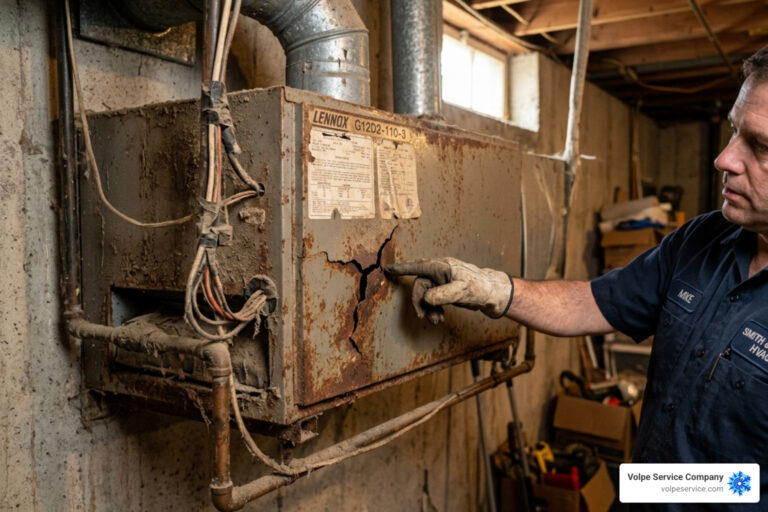
Determining How Old Is Too Old for an HVAC System
When we talk about the lifespan of your heating and cooling equipment, we aren’t just talking about when it stops turning on. In the HVAC world, “too old” refers to the point where a system is no longer efficient, reliable, or safe to operate. Most modern systems are designed to last between 15 and 20 years. However, as we move into April 2026, many homeowners in areas like East Hanover and Summit are finding that systems installed in the early 2010s are hitting a performance wall.
The typical lifespan of a system is a range, not a fixed date. While a well-maintained furnace might reach its 25th birthday, a neglected air conditioner might fail before it hits double digits. Understanding Ac Replacement Time involves looking at the manufacture date—usually found on the nameplate of your indoor or outdoor unit—and comparing it to its performance history. If your system is approaching the 15-year mark, you aren’t just looking at an old machine; you’re looking at a piece of technology that is likely 20–30% less efficient than it was on day one.
Understanding How Old Is Too Old for an HVAC System in New Jersey
In Northern New Jersey, our climate puts unique stresses on mechanical equipment. From the high humidity of July in Parsippany to the freezing coastal winds near Millburn, your HVAC system works hard year-round. Humidity is a silent killer for air conditioners; it forces the compressor to run longer and can lead to coil corrosion.
In our experience serving communities like Montville and Boonton since 1963, we’ve observed that local systems often hit a major “inflection point” between years 12 and 15. This is when the cumulative effect of New Jersey’s seasonal swings starts to manifest as mechanical fatigue. If your system is in this age bracket, it is statistically more likely to suffer a catastrophic failure during a peak heatwave or cold snap when the load is highest.
Typical Lifespan Expectations by Equipment Type
Different components of your home comfort system age at different rates. Outdoor units (like AC condensers and heat pumps) are exposed to the elements, while indoor units (like furnaces and boilers) stay protected but face intense thermal stress.
| Equipment Type | Typical Lifespan (Years) | Factors Affecting Longevity |
|---|---|---|
| Central Air Conditioner | 15 – 20 | Humidity, salt air (coastal), maintenance |
| Heat Pump (Air Source) | 10 – 15 | Year-round usage, defrost cycles |
| Gas Furnace | 15 – 30 | Heat exchanger health, filter changes |
| Boiler (Cast Iron) | 20 – 35 | Water quality, seal integrity |
| Ductless Mini-Split | 15 – 20 | Usage patterns, indoor air quality |
Telltale Signs Your System is Reaching Its Limit
Age is just a number, but performance is a reality. One of the first signs that a system is “too old” is a steady, unexplained climb in your utility bills. As components like motors and compressors wear down, they require more electricity to produce the same amount of heating or cooling. If you notice your energy costs have risen by 15-25% over the last three years despite similar weather, your system is likely losing the battle against time.
Another major indicator is inconsistent comfort. Are you finding that the upstairs of your Madison home is sweltering while the downstairs is freezing? Or perhaps you’ve noticed 8 Telltale Signs Its Time To Replace Your Furnace, such as rooms that never quite reach the temperature set on the thermostat. These “comfort gaps” suggest that the system can no longer move air effectively or maintain the necessary thermal exchange.
Deciding How Old Is Too Old for an HVAC System Based on Performance
Keep an ear (and a nose) out for these performance red flags:
- Strange Noises: Rattling, banging, or squealing sounds often indicate failing bearings, a cracked belt, or a compressor nearing the end of its life.
- Frequent Cycling: If your AC or furnace turns on and off every few minutes (short-cycling), it’s under immense strain, which accelerates wear on electrical components.
- Humidity Issues: An aging AC loses its ability to dehumidify, leaving your indoor air feeling “clammy” even if the temperature is cool.
- Unusual Odors: Musty smells can indicate mold in an old coil, while burning smells might point to overheating electrical parts.
Safety Risks of Aging Heating Equipment
When it comes to heating, “too old” can occasionally mean “unsafe.” For gas furnaces, the most critical component is the heat exchanger. Over 15 to 20 years, the repeated expansion and contraction of the metal can cause stress cracks. A cracked heat exchanger is a serious safety hazard because it can allow carbon monoxide to leak into your home’s air supply.
We always tell our clients in West Orange and Livingston to watch the burner flame. A healthy flame is crisp and blue. A yellow or orange flickering flame is one of the primary Furnace Replacement Needs Indicators, signaling incomplete combustion. If your furnace is over 15 years old and exhibits these signs, replacement isn’t just a comfort choice—it’s a safety necessity.
The Financial Math: When to Repair vs. Replace
Deciding whether to sink more money into an old unit or invest in a new one is a math problem. Many homeowners fall into the “repair trap”—paying for a small fix this year, a medium fix next year, and eventually realizing they’ve spent half the cost of a new system on a machine that is still 15 years old and inefficient.
When we evaluate systems in Morristown or Denville, we use data-driven diagnostics to help homeowners understand Should You Repair Or Replace Your Air Conditioner 5 Factors To Consider. If your system is under 10 years old, a repair is almost always the right move. Once you cross that 12-to-15-year threshold, the math starts to shift toward replacement.
Applying the 50% Rule and the $5,000 Rule
To make this decision easier, we recommend two simple industry heuristics:
- The 50% Rule: If the cost of a single repair is 50% or more of the cost of a brand-new system, you should almost always replace it. Investing that much into an aging unit rarely provides a good return on investment.
- The $5,000 Rule: Multiply the age of your system by the cost of the repair. If the result is more than $5,000, replacement is usually the more economical choice. For example, a $400 repair on a 15-year-old system equals $6,000. According to this rule, it’s time to look at When To Replace Ac options.
Total Cost of Ownership and Efficiency Gains
Don’t just look at the price of the equipment; look at the “Total Cost of Ownership.” An older system might cost you an extra $400 to $600 per year in wasted energy and minor service calls. Over five years, that’s thousands of dollars that could have gone toward a new, high-efficiency unit.
Modern systems use SEER2 (Seasonal Energy Efficiency Ratio) ratings to measure cooling efficiency. Upgrading from a 10-year-old unit (often 10-13 SEER) to a modern high-efficiency model (17-20+ SEER2) can reduce your cooling bills by 20% to 40%. Our Ac Replacement Guide details how these efficiency gains often pay for a significant portion of the new system over its first decade of operation.
Regulatory Impacts: Refrigerant Phase-outs and Efficiency Standards
Sometimes, external factors decide how old is too old for an hvac system. The most significant of these is the EPA’s phase-out of R-22 refrigerant (often called Freon). As of January 1, 2020, R-22 is no longer produced or imported in the U.S. If your AC was built before 2010, it likely uses R-22.
When these older units develop a leak, the cost of the remaining recycled refrigerant is astronomical. In many cases, a simple refrigerant recharge on an old R-22 unit can cost more than a major mechanical repair. Furthermore, the industry is currently transitioning away from R-410A toward newer, even more eco-friendly refrigerants. This makes Furnace Replacement Top Signs and AC age even more critical, as parts for older, phased-out systems become increasingly scarce and expensive.
The Hidden Price of Procrastination
Waiting for your system to “die” completely before replacing it is often the most expensive strategy. Why? Because HVAC systems rarely fail on a mild Tuesday in October. They fail on the hottest day of July when every HVAC company in Northern New Jersey is fully booked.
Procrastination leads to “emergency pricing” and limited choices. You might be forced to settle for whatever unit is in stock rather than the high-efficiency model that would save you the most money. Older, single-stage technology is also being replaced by variable-speed systems that provide much better comfort and humidity control. By being proactive, you can choose the right technology for your home rather than having the choice made for you by an emergency.
Financial Incentives for Upgrading in 2026
The good news for homeowners in Mendham or Chester is that there has never been a better time to upgrade. Under the Inflation Reduction Act, federal tax credits are available for high-efficiency heat pumps (up to $2,000) and qualifying central AC or furnaces (up to $600). When combined with local utility rebates available in New Jersey, these incentives can significantly offset the investment. If you are wondering When To Consider A Furnace Replacement, checking the current 2026 rebate schedule is a great place to start.
Environmental Factors and Maintenance Impact on Longevity
While we’ve discussed age as a primary factor, maintenance is the great “lifespan equalizer.” A system that has its filters changed every three months and receives an annual professional tune-up will almost always outlast a neglected one. Dirt is the primary cause of premature failure; it restricts airflow, causes motors to overheat, and leads to “frozen” AC coils.
In towns like Mt. Olive and Mendham, where homes are often surrounded by trees and nature, outdoor coils can quickly become clogged with pollen, dust, and debris. This forces the system to work harder, effectively adding “miles” to the compressor. Regular maintenance ensures that your system doesn’t age prematurely.
How Professional Care Extends System Life
Our data-driven diagnostics allow us to see problems before they cause a breakdown. During a professional safety inspection, we check for:
- Electrical integrity: Tightening connections to prevent “pitting” and overheating.
- Refrigerant levels: Ensuring the system isn’t running “lean,” which destroys compressors.
- Clear condensate lines: Preventing water damage and mold growth.
- Safety controls: Testing limit switches and carbon monoxide sensors.
Consistent care is the best way to avoid the “too old” label for as long as possible. Many of the Furnace Replacement Needs Indicators we see in the field could have been delayed for years with proper annual servicing.
The Role of Proper Sizing and Installation
Finally, a system is only as good as its installation. If an HVAC unit is oversized for a home—a common problem in older New Jersey houses—it will “short-cycle,” turning on and off rapidly. This creates massive wear and tear on the starter components and prevents the system from ever reaching its peak efficiency.
We utilize ACCA Manual J load calculations to ensure that every replacement system we install in Parsippany or Boonton is perfectly sized for the home’s square footage, insulation levels, and window orientation. Proper sizing, combined with ensuring your existing ductwork is compatible with modern high-pressure blowers, is the only way to ensure your new system actually reaches its 20-year potential.
Frequently Asked Questions about HVAC Longevity
What is the absolute maximum age for an HVAC system?
While we occasionally see cast-iron boilers in older Summit or Morristown homes that have reached 40 years, this is the exception. For modern forced-air systems, 25-30 years is generally the absolute limit. However, by year 20, most systems are so inefficient compared to modern standards that they are costing the homeowner significantly more in monthly bills than the cost of a replacement.
Does a 12-year-old AC always need to be replaced?
No. If a 12-year-old system is cooling well, has a clean bill of health from a technician, and hasn’t required major repairs, it may have several good years left. However, 12 years is the “inflection point” where you should begin budgeting for a replacement. At this age, the risk of a major component failure (like the compressor) increases significantly.
How do I know if my system uses R-22 refrigerant?
The easiest way is to check the data plate on the side of your outdoor condenser unit. Look for the “Refrigerant” or “Type” line. If it says R-22, your system is part of the EPA phase-out. If it says R-410A, it uses the more modern (though also currently being managed) refrigerant. Generally, if your system was manufactured before 2010, there is a high probability it relies on R-22.
Conclusion
Deciding how old is too old for an hvac system doesn’t have to be a guessing game. By looking at the calendar, your utility bills, and the frequency of your repair calls, the right choice usually becomes clear. At Volpe Service Company, we’ve spent over 60 years helping our neighbors in East Hanover, Livingston, and throughout Northern New Jersey navigate these decisions with honesty and data-driven expertise.
Whether your system needs one more season of careful maintenance or it’s time to embrace the comfort and savings of modern technology, we are here to help. We believe in climate control done right—guaranteed.
Schedule a professional system evaluation with Volpe Service Company today to find out exactly where your system stands on the longevity timeline.