
What an HVAC Maintenance Visit Includes — and Why It Matters for Your Home
What an HVAC maintenance visit includes is something every New Jersey homeowner should understand before scheduling service. Here is a quick overview of what a standard professional visit covers:
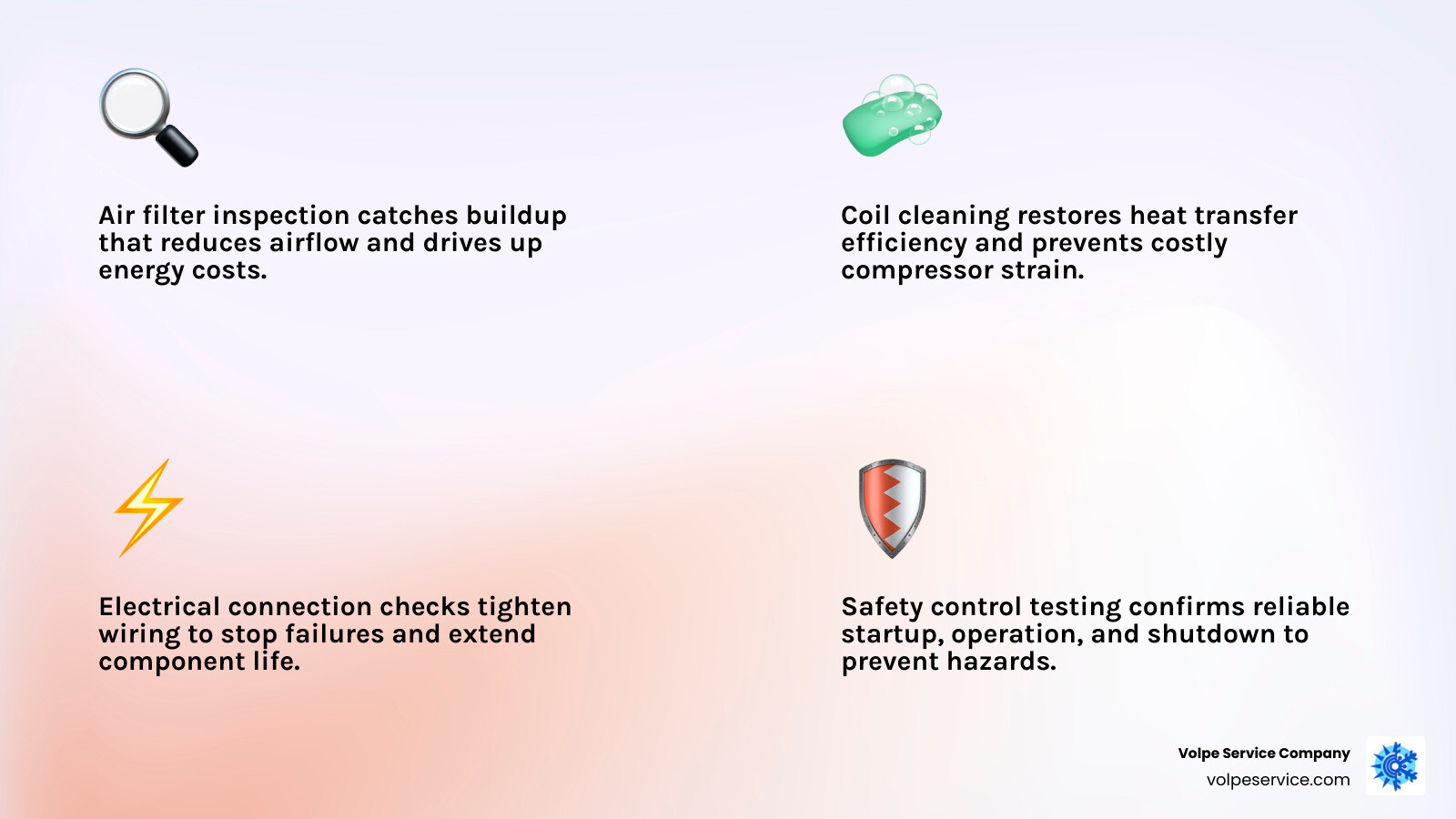
- Air filter inspection or replacement — dirty filters reduce airflow and drive up energy costs
- Thermostat calibration — ensures accurate temperature control and energy savings
- Electrical connection inspection — technicians check and tighten wiring to prevent failures
- Lubrication of moving parts — reduces friction and wear on motors and bearings
- Coil cleaning — both evaporator and condenser coils are cleaned to maintain heat transfer
- Refrigerant level check — too much or too little refrigerant stresses the compressor
- Condensate drain inspection — prevents clogs, water damage, and mold growth
- Blower motor and airflow assessment — poor airflow can cut system efficiency by up to 15%
- Safety controls testing — verifies the system starts, runs, and shuts down correctly
- Heating component checks — includes burner assembly, heat exchanger, and carbon monoxide testing
- Ductwork inspection — looks for leaks, damage, or blockages that hurt performance
A thorough visit typically takes between 45 and 60 minutes. If a technician wraps up significantly faster than that, there is a good chance some steps were skipped.
Think of it the way you would think about an oil change for your car — except your HVAC system runs over 2,000 hours every year. That kind of workload demands regular attention. Research shows that consistent maintenance can extend system life by up to 48% and prevent yearly efficiency losses of up to 15%. For homeowners in Northern and Central New Jersey, where summers are humid and winters are genuinely cold, skipping that service is a real risk.
The sections below break down each part of the visit in detail — from what happens at the outdoor condenser to what your technician should hand you when the job is done.
Why Regular System Inspections are Essential in 2026
As we move through May 2026, the technology inside our heating and cooling systems has become more sophisticated, but the physics of home comfort remain the same. Dust, friction, and electrical wear are the silent enemies of your comfort. Without a professional eye, these issues accumulate until your system simply quits on the hottest day of July or the coldest night in January.
At Volpe Service Company, we have seen how Regular HVAC Maintenance is Crucial for preventing the “domino effect” of equipment failure. When one component, like a dirty air filter, is neglected, it forces the blower motor to work harder. This leads to overheating, higher energy consumption, and eventually, a burnt-out motor.

Is it worth the effort? Absolutely. Many homeowners ask us, Is HVAC Tune-Up Worth It? and the data provides a clear answer. A well-maintained system operates at peak efficiency, while a neglected one can lose up to 15% of its efficiency every single year.
| Feature | Maintained System | Neglected System |
|---|---|---|
| Lifespan | 15–20 Years | 10–12 Years |
| Energy Efficiency | Peak Performance | Up to 15% Loss/Year |
| Repair Frequency | Rare / Minor | Frequent / Emergency |
| Air Quality | High (Filtered/Clean) | Low (Dust/Allergens) |
| Warranty Status | Valid (with records) | Often Voided |
What Does an HVAC Maintenance Visit Include for Cooling Systems?
In New Jersey, our air conditioners work overtime to combat both heat and high humidity. When we perform a cooling-specific maintenance visit, our focus shifts toward heat transfer and moisture management.
A major part of Regular AC Maintenance and Cleaning involves the coils. The evaporator coil (indoor) and condenser coil (outdoor) must be clean to exchange heat effectively. Dirty coils act like an insulating blanket, trapping heat inside your home and forcing the system to run longer cycles.
During Spring Maintenance for Your Air Conditioner, we also verify refrigerant levels. This isn’t like topping off your gas tank; an HVAC system is a sealed loop. If the refrigerant is low, it means there is a leak that needs to be addressed. Conversely, overcharged systems can damage the compressor.
Finally, we pay close attention to the condensate drain line. As your AC removes humidity from the air, that water has to go somewhere. We ensure the drain is clear of algae and debris to prevent water from backing up into your home. This is a vital part of Seasonal AC Maintenance for Summer, as a clogged drain is one of the most common causes of emergency service calls in August.
Critical Safety and Performance Checks for Heating Equipment
When the leaves start to fall in Morristown or Parsippany, our focus shifts to the heating side of your system. While cooling is about comfort, heating maintenance is largely about safety.
The most critical part of this visit is the heat exchanger inspection. This component separates the combustion gases (including carbon monoxide) from the air being blown into your living spaces. A crack in the heat exchanger is a serious safety hazard. We also perform carbon monoxide testing to ensure your home remains a safe environment for your family.
Beyond safety, we look at the efficiency of the “burn.” This includes:
- Burner Assembly: We clean the burners to ensure a clean, blue flame for maximum fuel efficiency.
- Ignition System: Whether you have a pilot light or electronic ignition, we ensure it’s firing reliably so you aren’t left in the cold.
- Gas Connections: We check for leaks and ensure gas pressure is set to the manufacturer’s specifications.
Even though people often associate maintenance with cooling, Why Regular AC Maintenance is Essential applies to the entire “HVAC” umbrella because many components, like the blower motor and ductwork, are used year-round.
Indoor and Outdoor Checkpoints: A Comprehensive Breakdown
To give you a better idea of what does an hvac maintenance visit include, it helps to look at the system as two distinct halves: the indoor air handler/furnace and the outdoor condensing unit.
Our technicians follow a data-driven checklist to ensure no detail is overlooked. This professional oversight is exactly What Does an HVAC Contractor Do? to protect your investment.
What does an hvac maintenance visit include for indoor components?
Inside your home, the focus is on air quality and mechanical movement. We start with the thermostat, ensuring it is calibrated correctly. If your thermostat is off by just two degrees, your system could be running much longer than necessary.
We also inspect the air filters. While we recommend homeowners check these monthly, we provide a professional-grade replacement or cleaning during our visit. We then move to the blower motor, checking its amperage and lubricating any moving parts to prevent the friction that leads to motor failure.
Finally, we perform a ductwork inspection. We look for visible sags, leaks, or disconnected sections that allow your expensive conditioned air to escape into the attic or crawlspace. For local residents, our HVAC Maintenance Plan Parsippany NJ is designed to catch these indoor issues before they impact your utility bills.
What does an hvac maintenance visit include for outdoor units?
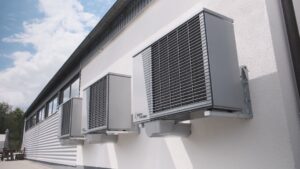
The outdoor unit is exposed to the elements 365 days a year. We begin by clearing away any leaves, grass clippings, or debris that have accumulated around the base. Proper airflow is essential; we recommend keeping at least two feet of clear space around the unit.
We then clean the coils using specialized solutions that remove the “gunk” without damaging the delicate aluminum fins. We also inspect the fan motor and blades for any signs of wear or imbalance. Finally, we check the refrigerant lines for proper insulation and any signs of vibration damage. This level of detail is why we are considered the go-to for The Best Spring AC and HVAC Maintenance for Northern New Jersey.
How to Prepare Your New Jersey Home for a Service Call
We want to make your maintenance visit as efficient as possible. Homeowners in places like Livingston, Summit, and Madison can help by taking a few simple steps before we arrive:
- Clear the Area: Ensure there is a clear path to your indoor unit (usually in a basement, closet, or attic) and your outdoor unit. Move any stored boxes or overgrown brush.
- Pet Safety: We love pets, but for their safety and the focus of our technicians, please keep them in a separate room or secured during the visit.
- System History: Have you noticed any strange noises, “hot spots” in certain rooms, or a sudden jump in your energy bill? Letting us know these details helps us provide a more accurate diagnostic.
- Filter Access: If your filters are in a hard-to-reach spot, let us know ahead of time.
Preparing for a visit ensures that we can spend more time on the technical “deep dive” and less time moving furniture. If you’re interested in year-round protection, check out our HVAC Service Plans Guide 2025 to see how we can automate your home’s comfort.
Frequently Asked Questions about HVAC Maintenance
How often should I schedule an HVAC maintenance visit?
The industry standard is twice per year. We recommend a cooling-focused visit in the spring and a heating-focused visit in the fall. If you have a heat pump system that handles both, you still need two visits to ensure the reversing valve and defrost cycles are checked before the extreme New Jersey seasons hit.
How long does a typical maintenance visit take?
A thorough, professional maintenance visit usually takes between 45 and 90 minutes. This allows enough time to clean the coils, test all electrical components, calibrate the thermostat, and perform safety checks. If someone claims to do a “full tune-up” in 15 minutes, they are likely only performing a visual inspection.
What are the signs that my system needs immediate attention?
Don’t wait for your scheduled visit if you notice:
- Unusual Noises: Squealing, banging, or grinding sounds.
- Short Cycling: The system turns on and off every few minutes.
- Odd Odors: Musty smells (potential mold) or burning scents (electrical issues).
- Inconsistent Temps: One room is freezing while another is sweltering.
Conclusion
Since 1963, Volpe Service Company has been the trusted name for climate control across Northern and Central New Jersey. From our home base in East Hanover to the busy streets of Parsippany and the quiet neighborhoods of Mendham, we provide data-driven solutions that keep your home comfortable and your energy bills predictable.
We don’t just “look” at your system; we analyze it. Our licensed technicians use their 60+ years of collective experience to ensure your HVAC system is prepared for whatever the New Jersey weather throws its way. Don’t wait for a breakdown to realize the value of a tune-up.
Schedule your professional HVAC service in Parsippany today and experience the difference that honest pricing and expert workmanship can make for your home.