

Why Proper HVAC Sizing Is the Foundation of Home Comfort
How proper HVAC sizing affects comfort comes down to one core idea: a system that matches your home’s actual heating and cooling needs will keep every room at a steady temperature, control humidity, and run efficiently — while a system that’s too big or too small will do none of those things well.
Here’s a quick summary:
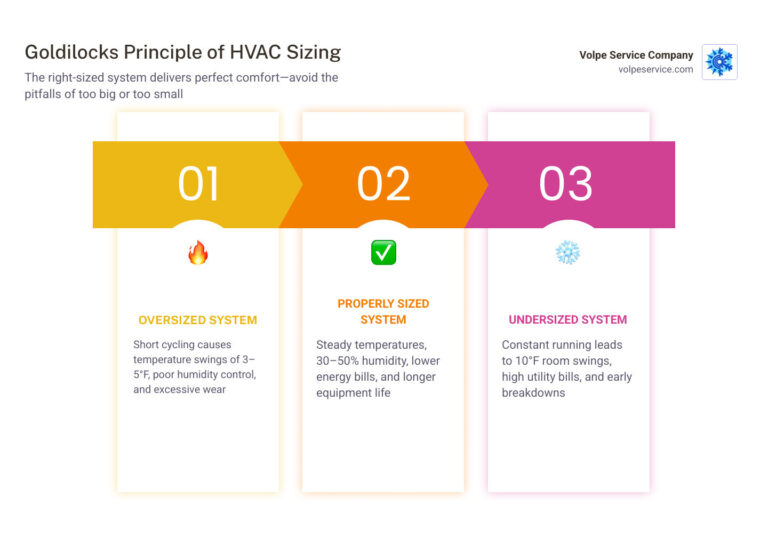
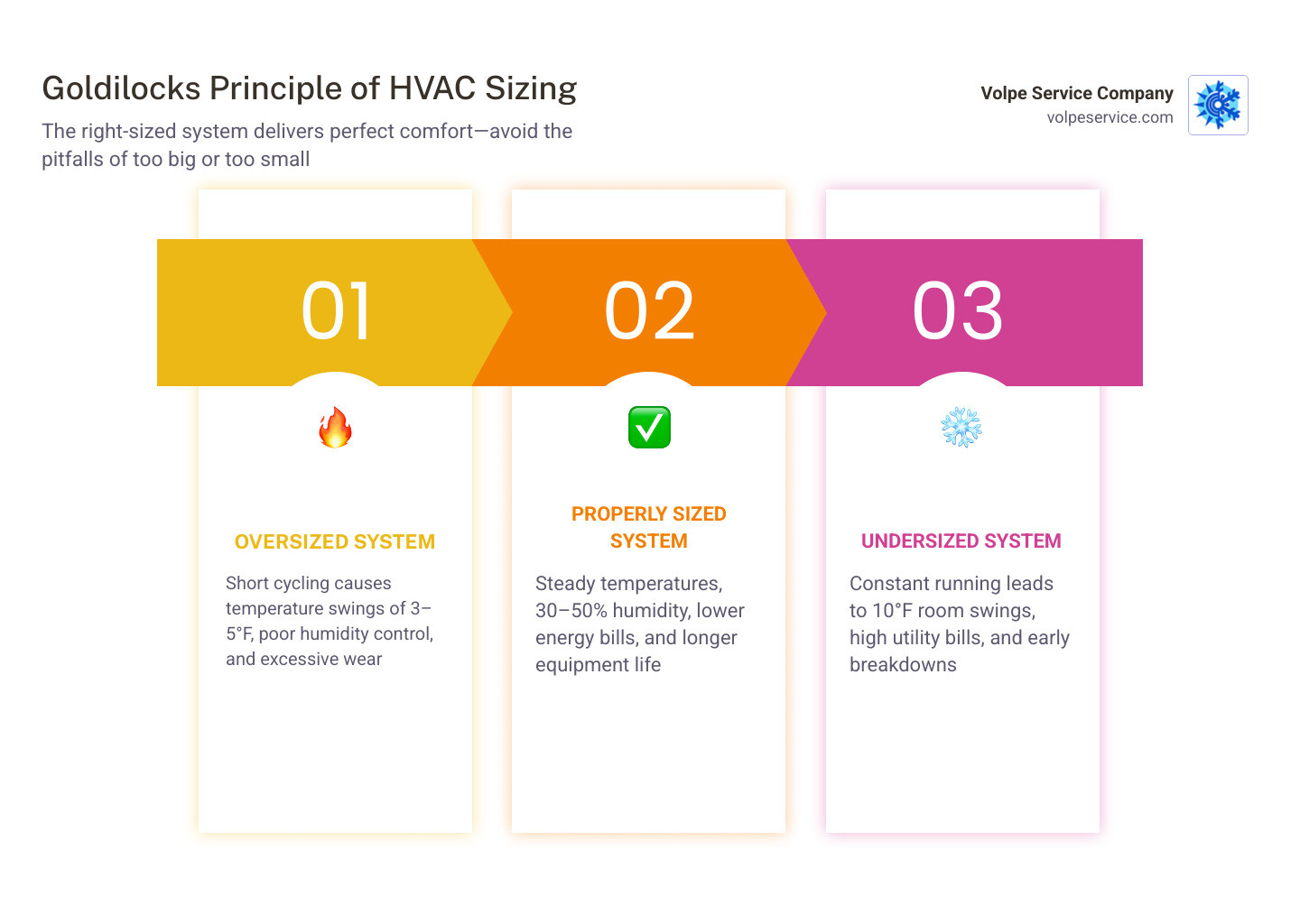
- Correctly sized system: Steady temperatures, humidity between 30–50%, lower energy bills, longer equipment life
- Oversized system: Short cycling, clammy air, temperature swings of 3–5°F between cycles, faster wear
- Undersized system: Constant running, temperature swings up to 10°F between rooms, high utility bills, early breakdowns
More than half of U.S. homes have an HVAC system that is either too big or too small. That means most homeowners are paying more than they should — and still not feeling comfortable.
Think of it like Goldilocks searching for the right bowl of porridge. Too much capacity and the system blasts on and off before it can do its job. Too little and it runs nonstop trying to catch up. Only the right size hits that sweet spot where comfort, efficiency, and reliability all come together.
For New Jersey homeowners dealing with humid summers, cold winters, and everything in between, getting sizing right is not optional — it’s the difference between a home that feels good year-round and one that never quite gets there.
How Proper HVAC Sizing Affects Comfort and Efficiency

When we talk about “sizing” in the HVAC world, we aren’t talking about the physical dimensions of the outdoor unit. Instead, we are referring to the system’s capacity to move heat. This is measured in BTUs (British Thermal Units) or “tons.” One ton of cooling capacity is equal to 12,000 BTUs per hour. On average, one ton of capacity can cool about 500 to 600 square feet, but that is just a rough starting point.
The reason how proper hvac sizing affects comfort is so significant is that a correctly sized unit doesn’t just change the temperature; it manages the entire indoor environment. When a system is perfectly matched to your home’s needs, it runs for long enough cycles to filter the air and remove moisture without wasting energy. If you are considering an upgrade, our AC Replacement Guide can help you understand the broader steps involved in selecting a new system.
Maintaining Ideal Humidity: How proper HVAC sizing affects comfort
In areas like East Hanover and Livingston, New Jersey, humidity is a major player in our summer comfort. An air conditioner has two jobs: lowering the air temperature and removing moisture. A properly sized system keeps indoor humidity between 30-50%.
If the unit is too large, it cools the air so quickly that the thermostat reaches its goal and shuts the system off before the evaporator coil has had enough time to pull moisture out of the air. This results in “clammy” air—where the room is technically 72 degrees, but you feel sticky and uncomfortable. To avoid this, understand Why AC Unit Needs Professional Sizing before you make a purchase.
Stabilizing Indoor Temperatures: How proper HVAC sizing affects comfort
We have all been in a house where the living room is freezing, but the upstairs bedrooms are sweltering. Often, this is a sizing and airflow issue. A correctly sized system provides consistent airflow that eliminates these “hot spots.” By running optimized cycles, the system ensures that air is distributed evenly through the ductwork, maintaining a steady climate throughout the house. For homeowners in Summit or Morristown, our Expert AC Installation Services focus on achieving this exact balance.
The Consequences of an Oversized HVAC System
There is a common misconception that “bigger is better” when it comes to air conditioners. Many people think that a larger unit will cool the house faster. While it might reach the set temperature quickly, it creates a host of problems that actually decrease your comfort.
Short Cycling and Component Stress
When a system is too powerful for the space, it engages in “short cycling.” This means it turns on, blasts cold air, reaches the thermostat setting in a few minutes, and shuts off. Then, as the temperature quickly rises again, it kicks back on.
This constant stop-and-start is incredibly hard on the equipment. Think of it like driving a car in heavy stop-and-go traffic versus cruising at a steady speed on the Garden State Parkway. Short cycling causes energy spikes (as the most electricity is used during startup) and puts immense strain on the compressor, significantly shortening the lifespan of your investment. You can learn more about how we prevent these issues in our AC Installation Process Guide.
Poor Dehumidification and Air Quality
As mentioned, an oversized system doesn’t run long enough to dehumidify. This lingering moisture doesn’t just make you feel sticky; it can lead to mold growth inside ductwork and on surfaces. Furthermore, because the system isn’t running long cycles, the air isn’t being pulled through your high-efficiency filters often enough, leading to stagnant air and poor indoor air quality.
The Struggles of an Undersized HVAC System
On the flip side, an undersized system is like trying to cool a gymnasium with a window unit. It simply cannot keep up with the heat gain of the home, especially during those scorching July days in West Orange or Parsippany.
Inability to Reach Set Points
An undersized unit will run 24/7 without ever reaching the temperature you set on the thermostat. This leads to temperature swings of up to 10°F between rooms, as the system struggles to push enough conditioned air to the furthest points of the house. If you are preparing for a replacement to fix this, see How to Prepare Your Home for a New HVAC System to make the transition smoother.
Accelerated System Wear
Because the system never stops running, the components wear out at an alarming rate. Blower motors can overload, and coils can actually freeze over because they are working beyond their designed capacity. This results in frequent, expensive repairs and a system that might fail completely years before it should.
The Science of Sizing: Professional Load Calculations
At Volpe Service Company, we don’t guess. We use data-driven solutions to ensure your home in Madison or Montville is perfectly outfitted. Professional sizing involves three specific protocols developed by the Air Conditioning Contractors of America (ACCA). You can find out more about what to expect during these visits in our HVAC Services Comprehensive Overview.
Factors Considered in a Manual J Calculation
A Manual J calculation is the industry standard for determining the “load” of a home. We look at much more than just square footage. Factors include:
- Square Footage: The basic starting point.
- Window Orientation: Which rooms get the direct afternoon sun?
- Insulation Levels: What is the R-value in your attic and walls?
- Ceiling Height: Vaulted ceilings require more cooling than standard 8-foot ceilings.
- Occupancy Patterns: How many people live in the home?
- Local Climate Data: Specific weather patterns for Northern New Jersey.
- Lighting and Appliances: Everything that generates heat inside the home.
Beyond Square Footage: The Manual S and D Protocols
Once we know the load (Manual J), we use Manual S to select the specific piece of equipment that matches that load. We then use Manual D to ensure your ductwork is designed to handle the airflow (CFM) the system requires. Without proper duct design, even a perfectly sized unit will struggle with static pressure issues. Understanding this AC Installation Process is key to a long-lasting system.
Signs Your Current System is Improperly Sized
If you aren’t sure if your current system is the right fit, look for these red flags. In our experience serving Boonton and Mountain Lakes since 1963, these are the most common indicators of a sizing mismatch:
| Symptom | Oversized System | Undersized System |
|---|---|---|
| Cycle Length | Short, frequent bursts (Short cycling) | Runs constantly without stopping |
| Humidity | High (Air feels “sticky” or “clammy”) | High (System can’t keep up with load) |
| Energy Bills | Spikes due to frequent startups | High due to 24/7 operation |
| Temperature | Swings of 3-5°F between cycles | Swings of 10°F between rooms |
| Noise | Loud “whoosh” of air when starting | Constant background hum that never ends |
Frequently Asked Questions about HVAC Sizing
What is a Manual J load calculation?
It is a scientific, data-driven assessment used by professionals to determine exactly how much heat a home gains in the summer and loses in the winter. It moves beyond “rules of thumb” to provide precise BTU requirements based on your home’s unique construction.
Why is “bigger is better” a misconception in HVAC?
A larger system will satisfy the thermostat too quickly, leading to short cycling. This results in poor humidity control, uneven temperatures, and increased wear and tear on the compressor. A “just right” system runs longer, more efficient cycles.
How does the New Jersey climate influence system sizing?
In New Jersey, we experience high humidity and extreme temperature swings. A system sized for April 2026 standards must be robust enough to handle a 95-degree day with 80% humidity in Chester or Mendham, while still being efficient enough to run during milder spring days without short cycling.
Conclusion
Since 1963, Volpe Service Company has been the trusted name for “Climate Control Done Right.” Whether you are in East Hanover, Denville, or Mt. Olive, we pride ourselves on providing honest pricing and data-driven solutions that prioritize your long-term comfort over a quick sale.
Getting the sizing right is the single most important step in any HVAC project. It protects your equipment, your wallet, and most importantly, your family’s comfort. If you’re curious about how your current system stacks up or are planning for an upgrade, Calculate your needs with our SEER calculator and see the difference that professional expertise can make. Reach out to us today—we’re here to make sure your home stays “just right” all year long.