

Is Converting from Oil to Gas Worth the Investment for NJ Homeowners?
Is converting from oil to gas worth the investment? For most New Jersey homeowners who have access to a natural gas main and plan to stay in their home for at least five to seven years, the answer is generally yes.
Here’s a quick summary to help you decide:
You’re likely a good candidate for conversion if you:
- Have a natural gas main already running on your street
- Own a home in Northern or Central New Jersey where gas service is widely available
- Are planning to stay in the home long enough to recoup the upfront cost
- Have an aging oil furnace or boiler that’s approaching the end of its useful life
- Want to eliminate the hassle of fuel deliveries and on-site oil storage
You may want to hold off if you:
- Plan to sell the home within the next few years
- Live in a rural area without access to a gas main
- Recently replaced your oil system with a newer, high-efficiency unit
- Are exploring alternatives like heat pumps that may better align with long-term energy goals
Millions of Northeast homes still run on heating oil, and every winter, rising oil prices and delivery headaches push more homeowners to ask whether switching to natural gas makes financial sense. The short answer is that it often does — but the math depends on your specific home, your location, and how long you plan to stay. This guide breaks down everything you need to know to make a confident decision.
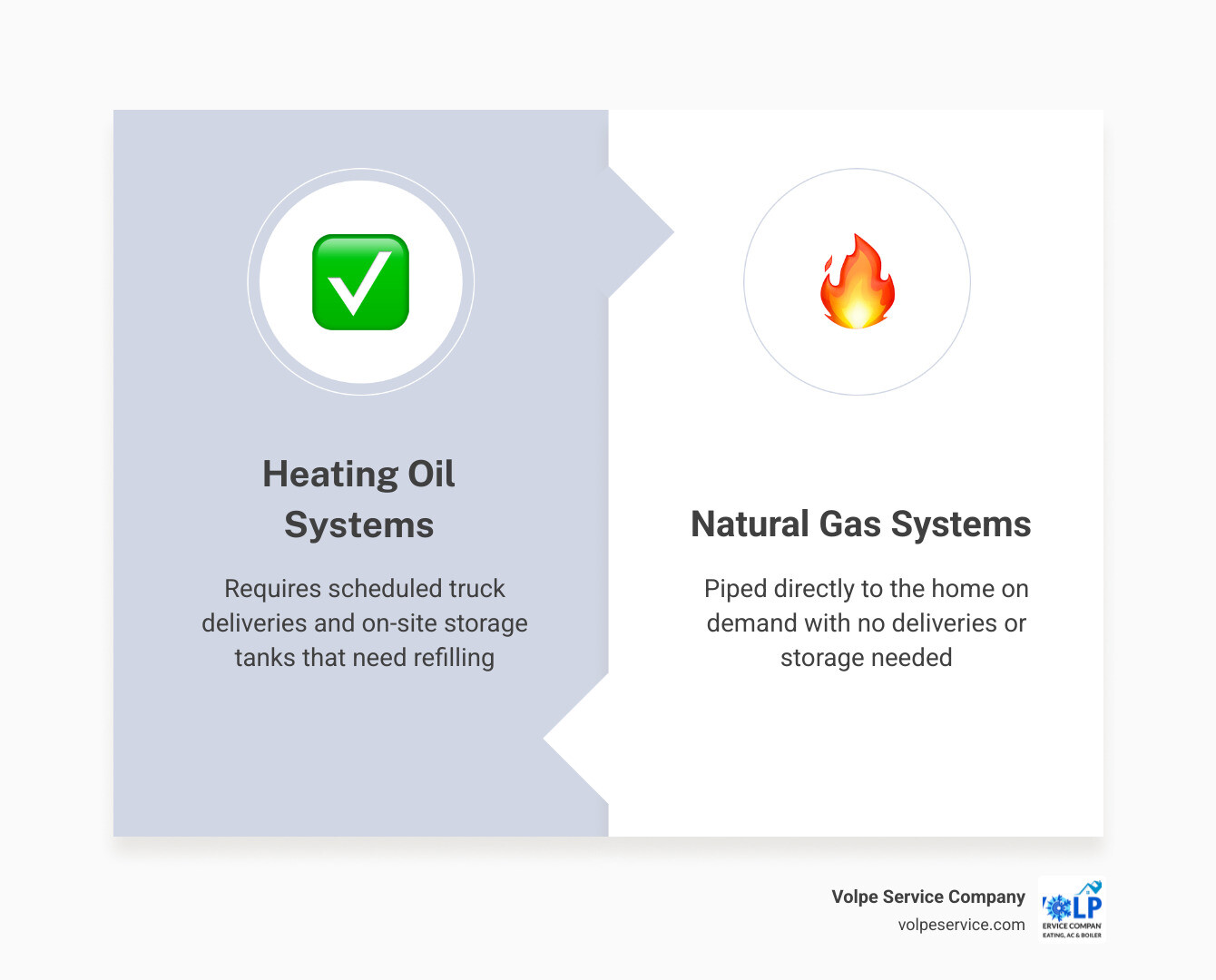
When evaluating whether is converting from oil to gas worth the investment, it helps to look at how these two heating methods stack up side-by-side. New Jersey homeowners are often surprised by how much technology has advanced, particularly regarding fuel efficiency and system reliability.
| Feature | Heating Oil Systems | Natural Gas Systems |
|---|---|---|
| Fuel Delivery | Requires scheduled truck deliveries | Piped directly to the home on demand |
| On-Site Storage | Requires a large metal tank (basement, yard, or buried) | No storage tank required |
| Average System Efficiency | Typically 80% to 87% AFUE | Up to 95% to 98% AFUE |
| Maintenance Requirements | High (frequent cleanings, soot removal, nozzle changes) | Low (cleaner combustion, fewer filter clogs) |
| Environmental Impact | Higher carbon emissions and particulate matter | Cleanest burning fossil fuel; lower carbon footprint |
| Price Stability | Volatile (tied directly to global oil markets) | More stable (regulated utility rates) |
Fuel Efficiency and Heating Performance
One of the most compelling arguments for making the switch is the dramatic jump in fuel efficiency. The Annual Fuel Utilization Efficiency (AFUE) rating measures how efficiently a heating system converts fuel into usable heat for your home.
Older oil boilers and furnaces—especially those humming away in basements across places like Parsippany, NJ, or Livingston, NJ—often operate at lower efficiency levels. This means a significant portion of the fuel you pay for is literally lost up the chimney.
In contrast, modern condensing gas systems can achieve efficiency ratings of up to 98%. Because natural gas burns hotter and cleaner, these systems recover energy from exhaust gases that would otherwise escape. When you partner with us for Oil to Gas Conversions Mt. Olive NJ, we focus on upgrading you to a system that maximizes every bit of fuel consumed.
System Reliability and Peace of Mind
With heating oil, you are at the mercy of delivery schedules. Heavy winter snowstorms in Morris County can delay fuel trucks, leaving you to monitor your tank’s fuel gauge with anxiety. If your tank runs dry during a freezing stretch in Summit, NJ, or Denville, NJ, you risk frozen pipes and a freezing household.
Natural gas is piped directly into your home through underground utility lines. It is always there when you need it, eliminating the need to monitor fuel levels or schedule winter deliveries. Furthermore, because gas burns so cleanly, gas furnaces and boilers experience far less soot buildup, leading to fewer unexpected breakdowns and service calls when the weather is at its worst.
Key Factors and Alternatives to Consider Before Switching

Before making a final decision, it is essential to look at your home’s infrastructure. Converting your heating system is not just about swapping one metal box for another; it involves your fuel delivery method, storage equipment, and environmental considerations.
If you currently use heating oil, you have a storage tank somewhere on your property. Above-ground tanks take up valuable square footage in your basement or utility room. Worse, underground tanks represent a significant environmental liability. Over time, steel tanks can corrode and leak, potentially contaminating surrounding soil and groundwater. Decommissioning and removing these tanks is a crucial step in the conversion process that instantly eliminates this worry.
Determining If Converting from Oil to Gas Is Worth the Investment for Your Home Size
Your home’s total square footage and heating load play a massive role in the financial viability of a conversion. Larger homes in spacious communities like Chester, NJ, or Mendham, NJ, naturally consume more heating fuel during our cold New Jersey winters.
Because larger homes have higher baseline energy usage, the percentage savings gained from switching to a highly efficient gas system translate into much larger annual utility bill reductions. If you own a large home with drafty spaces, the payback period on your investment will be significantly shorter than it would be for a compact townhouse.
To understand how a systemic heating and cooling upgrade impacts your overall home comfort and budget, it is helpful to look at how we evaluate the overall return on home comfort investments, as detailed in our guide on The Real ROI of Replacing Your Central Air.
Evaluating System Lifespan and Long-Term Maintenance Savings
While cast-iron oil boilers are known for their durability, they require rigorous and expensive annual maintenance to keep running safely. Oil combustion creates a heavy layer of soot and ash that must be brushed and vacuumed out of the heat exchanger every year. Oil burners also require regular replacement of fuel filters, pump strainers, and burner nozzles.
Gas-fired systems require much less intensive annual upkeep. While they still need a professional safety inspection and filter changes, they do not suffer from the heavy soot accumulation characteristic of oil systems. Over a decade or more, these reduced maintenance requirements add up to substantial savings. If you are currently debating whether to keep patching up your aging oil system or make a larger change, explore our HVAC Cost Guide: Is a Repair Worth the Investment? to weigh your options.
Comparing Gas Conversions to Modern Heat Pumps and High-Efficiency Oil Systems
Natural gas is not the only alternative to an aging oil burner. Modern electric heat pumps have become incredibly efficient, even in cold climates like Northern New Jersey.
- Electric Heat Pumps: These systems transfer heat rather than creating it through combustion. They provide both heating in the winter and cooling in the summer, making them a highly versatile option.
- Hybrid Systems: Some homeowners choose a dual-fuel approach, combining an electric heat pump with a gas furnace backup for the ultimate balance of efficiency and cold-weather performance.
- High-Efficiency Oil: If gas is not available on your street, upgrading to a modern oil burner with a higher AFUE rating can still reduce your fuel consumption, though you will still have to manage oil deliveries and tank maintenance.
For a deeper dive into how changing your fuel source affects your home’s carbon footprint, read our article on Fueling Change: How Switching to Gas Shrinks Your Carbon Footprint.
Impact on Home Resale Value and Property Equity
An outdated oil heating system can be a major red flag for modern home buyers. Many buyers are wary of the maintenance, delivery logistics, and potential tank leaks associated with oil heat. If you plan to sell your home in East Hanover, NJ, Livingston, NJ, or Madison, NJ, in the future, converting to natural gas can make your property far more attractive.
A clean, modern gas heating system is a major selling point that can help your home sell faster and protect your equity. To understand how heating upgrades influence appraisals and buyer perceptions, check out these helpful resources:
- Learn how efficiency upgrades boost overall equity: How Energy Efficient HVAC Systems Boost Your Home Value
- Discover the marketing advantages of a new system: Will a New HVAC Help Sell Your Home Faster?
- Explore high-impact upgrades: 6 HVAC Upgrades That Will Increase Your Home’s Value
- Protect your hard-earned equity: Protect Your Equity by Understanding How HVAC Condition Affects Appraisals
Financial Incentives, Tax Credits, and Rebates in New Jersey
One of the best ways to make an oil-to-gas conversion more affordable is by taking advantage of the robust financial incentives available to New Jersey residents. State programs and local utility companies offer excellent incentives to encourage homeowners to transition to cleaner, more efficient heating systems.
How New Jersey Rebates Help Decide If Converting from Oil to Gas Is Worth the Investment
In New Jersey, programs like the NJ Clean Energy Program, along with incentives from local utilities like PSE&G and New Jersey Natural Gas (NJNG), provide substantial rebates for installing high-efficiency gas equipment. These incentives are specifically designed to offset the upfront cost of your upgrade, making the transition much easier on your household budget.
To see what programs are currently active and how you can maximize your savings, review our comprehensive guide on The Best New Jersey Energy Rebates for Your Next HVAC Upgrade.
Federal Tax Credits and Financing Options for Energy Upgrades
In addition to state and utility rebates, federal incentives under the Inflation Reduction Act provide significant tax credits for qualifying high-efficiency heating systems. These tax credits allow you to deduct a portion of the system’s cost directly from your federal taxes.
Furthermore, many New Jersey utilities offer attractive, low-interest or even zero-percent financing programs for energy-efficiency upgrades, allowing you to spread the investment over several years while enjoying lower utility bills immediately. For more details on navigating tax write-offs for home comfort improvements, read Can You Write Off a New HVAC System on Your Taxes?.
The Step-by-Step Oil-to-Gas Conversion Process
Converting your home from oil to gas is a structured process that requires coordination between you, our team of licensed technicians, your local utility company, and municipal inspectors.
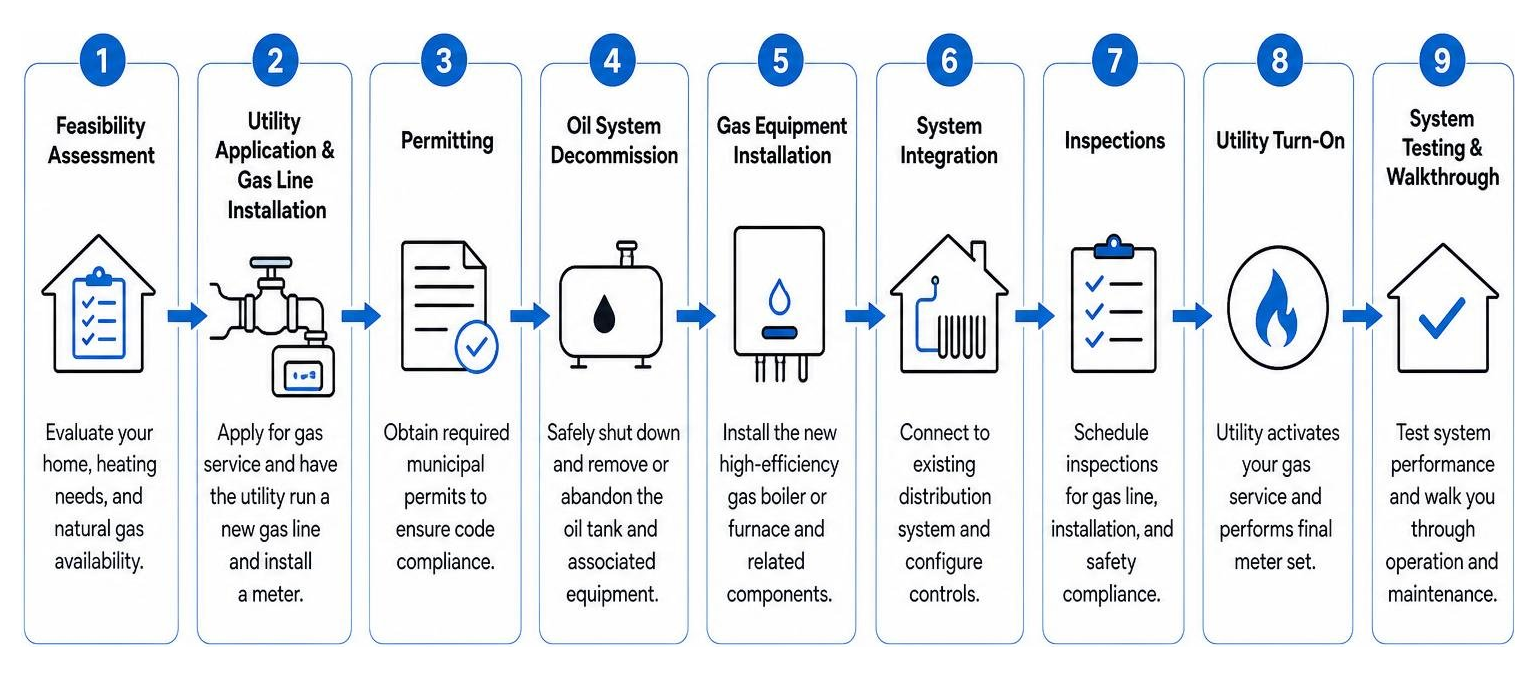
Here is a look at what the conversion journey looks like from start to finish:
- Feasibility Assessment: We visit your home to perform a detailed heat-load calculation, inspect your existing ductwork or piping, and confirm that natural gas is available at your street.
- Utility Application & Gas Line Installation: We help you submit an application to your local utility company to run a new gas service line from the street main to your home and install a gas meter.
- Permitting: We secure all necessary municipal permits from your local New Jersey township (such as West Orange, NJ, or Montville, NJ) to ensure the work complies with local building and safety codes.
- Oil Tank Decommissioning: A licensed specialist safely pumps out any remaining heating oil, cleans the tank, and removes it from your property (or properly decommissions it if it is a buried tank).
- System Installation: We remove your old oil furnace or boiler and install your new, high-efficiency gas system. This step may also include installing a chimney liner or routing new PVC venting through an exterior wall.
- Gas Piping & Hookup: We run professional gas piping from the new meter to your heating system and any other gas appliances you wish to add (such as a water heater, stove, or dryer).
- Testing & Inspection: We thoroughly test the system for safety, balance the airflow or water distribution, and coordinate the final municipal inspection to sign off on the project.
Frequently Asked Questions About Oil-to-Gas Conversions
How long does a typical oil-to-gas conversion take?
While the actual installation of the new furnace or boiler and the removal of the old oil tank usually takes only two to four days of on-site labor, the entire process takes longer. Coordinating with the utility company to bring the gas line from the street to your house and waiting for local municipal permits can take anywhere from three to six weeks. We handle all the scheduling and coordination to make this process as smooth and non-disruptive as possible.
Is natural gas available at my New Jersey address?
Natural gas is widely available throughout Northern and Central New Jersey, but availability can vary street by street. The easiest way to check is to look for existing gas meters on your neighbors’ homes or contact your local utility provider (such as PSE&G or NJNG). If a gas main runs down your street, extending a service line to your house is a standard procedure.
Are there situations where converting from oil to gas is not recommended?
Yes. If you plan to move out of your home within the next year or two, you likely won’t stay long enough to recoup the upfront installation costs through lower utility bills. Additionally, if your home is in a rural area far from the nearest gas main, the cost of extending the utility line to your property may be prohibitive. In these cases, upgrading to a high-efficiency oil system or transitioning to an electric heat pump is often a more practical choice.
Conclusion
Making the switch from oil to natural gas is a major home improvement project, but for many New Jersey families, it is one of the smartest investments they can make. By converting to gas, you can enjoy more stable fuel prices, lower annual maintenance demands, increased home value, and the daily convenience of on-demand heating.
At Volpe Service Company, we have been helping New Jersey homeowners stay warm and comfortable since 1963. Our family-owned business is built on data-driven solutions, courteous communication, and honest, transparent service. Whether you live in East Hanover, Morristown, Summit, or Mt. Olive, our team of licensed professionals is ready to guide you through every step of your heating upgrade.
Ready to see if a gas conversion is the right choice for your home? Contact Volpe Service Company today or visit our Oil to Gas Conversions Mt. Olive NJ service page to schedule your professional home assessment!