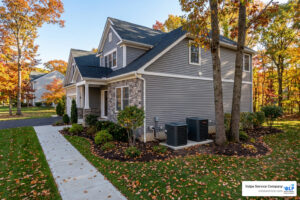


Why Getting the Best HVAC Setup for Northeast New Jersey Weather Is One of the Most Important Decisions You’ll Make as a Homeowner
Finding the best HVAC setup for Northeast New Jersey weather is not a one-size-fits-all decision — and if you’ve lived through a Morris County January or an August heat wave in Essex, you already know why.
Quick Answer: Best HVAC Setups for Northeast New Jersey
| Home Type | Top Recommendation | Why It Works |
|---|---|---|
| Well-insulated newer home | Cold-climate inverter heat pump | Efficient heating and cooling in one system |
| Home with gas service | Dual-fuel (heat pump + gas furnace) | Heat pump efficiency plus gas backup for extreme cold |
| Older home without ductwork | Ductless mini-split | Zoned comfort with no major renovation |
| Older home with small chases | High-velocity small-duct system | Fits century homes without tearing out walls |
| Long-term owner with suitable lot | Geothermal heat pump | Lowest operating costs over time |
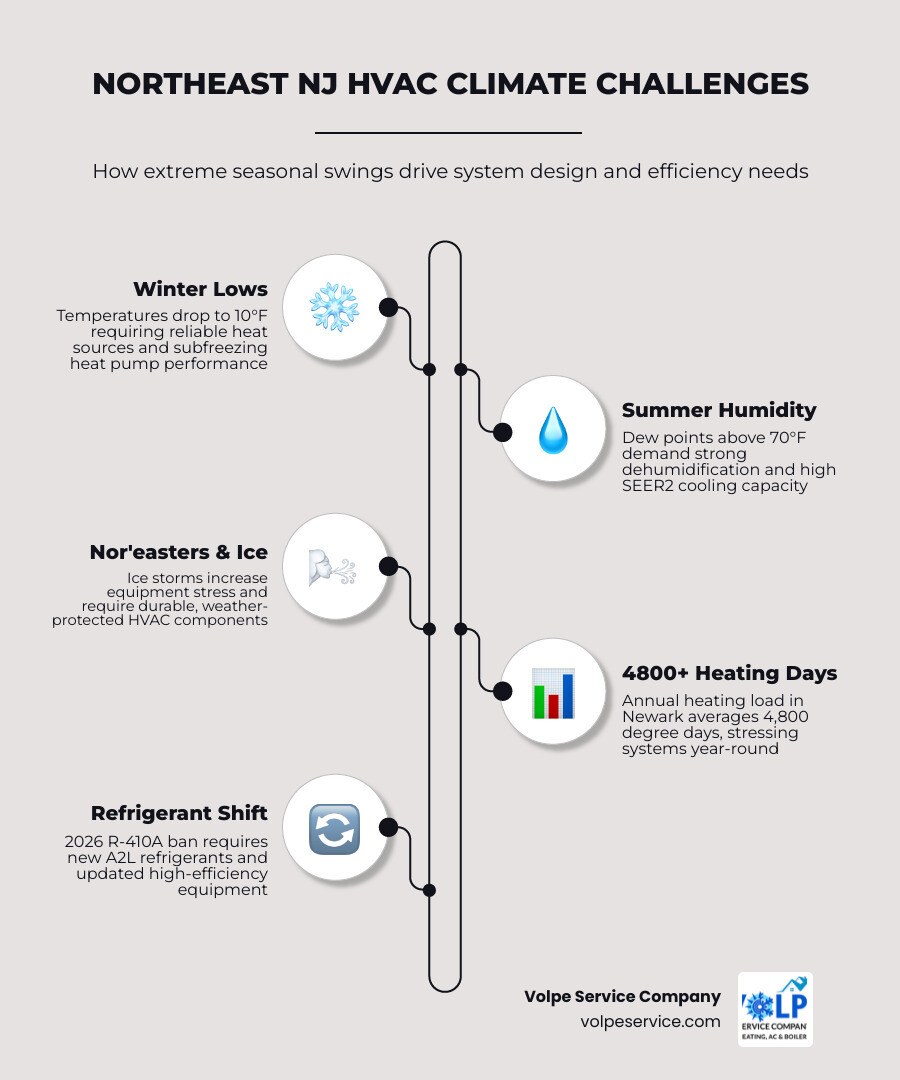
Northern New Jersey sits across two demanding ASHRAE climate zones — Zone 4A (Mixed-Humid) and Zone 5A (Cold-Humid) — with winter temperatures that can drop to 10°F in counties like Morris and Passaic, and summer dew points that push above 70°F. Newark alone averages around 4,800 heating degree days and 1,100 cooling degree days per year. That means your HVAC system never really gets a break.
Add to that the 2026 federal ban on new R-410A equipment, rising energy costs, and the fact that 78% of New Jersey homes still run aging refrigerant systems, and the stakes for choosing the right setup are higher than ever.
This guide walks you through every major system type, efficiency rating, and sizing consideration — so you can make a confident, informed choice for your home.
Terms related to best hvac setup for northeast new jersey weather:
- how noreasters and ice storms affect your equipment
- how northern new jersey climate affects your hvac system
Understanding the Northeast New Jersey Climate Challenge
To design the best HVAC setup for Northeast New Jersey weather, we first have to look at what our local climate throws at us. Towns like Morristown, West Orange, and Parsippany experience a distinct seasonal transition. We go from snow-heavy, subfreezing winter storms to thick, muggy summer days where you feel like you are breathing soup.
According to ASHRAE standards, our region transitions from Climate Zone 4A (Mixed-Humid) in areas closer to the coast and lower elevations, to Zone 5A (Cold-Humid) in the higher-elevation northern areas like Denville, Mount Olive, and Chester.
During the winter, our local design temperature drops as low as 10°F. In the summer, we plan for design conditions reaching 92°F dry-bulb, paired with oppressive dew points above 70°F. This creates a relentless cycle for your heating and cooling equipment.
Because we experience both freezing winters and sticky summers, your HVAC system has two distinct jobs:
- In Winter: It must provide reliable, consistent heat without sending your monthly utility bills into the stratosphere.
- In Summer: It must cool the air while actively removing gallons of moisture. If an air conditioner is oversized or poorly designed, it will short-cycle, cooling the house too quickly without running long enough to pull out the humidity. This leaves you feeling cold and clammy, and it creates a prime breeding ground for mold.
Between winter Nor’easters and summer heat waves, your system is running almost year-round. This is what we call The Garden State Grind: Why Your HVAC Never Gets a Day Off. Additionally, the freezing rain, heavy snow, and high winds of our winter storms can physically damage outdoor units. Understanding How Nor’easters and Ice Storms Affect Your HVAC Equipment is key to selecting durable outdoor cabinets and placing them in protected areas of your property.
Comparing System Types: Finding the Best HVAC Setup for Northeast New Jersey Weather
Choosing the right system means matching your home’s unique layout, insulation levels, and existing infrastructure to the right technology. Let’s look at how the primary HVAC configurations compare for Northern New Jersey homes.
Cold-Climate Heat Pumps vs. Gas Furnaces
For decades, the standard choice in North Jersey was a split system: a gas furnace for winter and a traditional central air conditioner for summer. Furnaces remain popular because they burn natural gas to generate a blast of hot air, which quickly warms a drafty home on a freezing January night.
However, modern cold-climate heat pumps have changed the game. Unlike older heat pumps that struggled to produce heat once temperatures dropped below freezing, today’s cold-climate models feature advanced inverter-driven compressors. These systems do not generate heat through combustion; instead, they extract existing heat from the outdoor air (yes, even at 10°F or lower) and pump it indoors.
When reviewing the Beginner’s Guide to Heat Pump Advantages Over Traditional Heating, the primary benefit is efficiency. Because they transfer heat rather than creating it, heat pumps can operate at over 200% to 300% efficiency, compared to a maximum of 95% to 98% for the highest-tier gas furnaces.
If you are asking yourself, Is It Worth Installing a Heat Pump?, the answer depends on your current setup. For homes without natural gas access, or those looking to reduce their carbon footprint, a cold-climate heat pump is an exceptionally efficient option. To learn more about this transition, explore Why New Jersey Homeowners Are Warming Up to Modern Heat Pumps.
Dual-Fuel Systems: The Best HVAC Setup for Northeast New Jersey Weather in Winter
For many homeowners in areas like Summit, Millburn, and Livingston, the ultimate compromise is a dual-fuel system (also known as a hybrid comfort system).
A dual-fuel system combines an electric heat pump with a high-efficiency gas furnace.
- How it works: During the mild spring and autumn “shoulder seasons,” and even through most of the winter when temperatures are between 35°F and 50°F, the electric heat pump handles the heating. It runs quietly and highly efficiently, keeping your home perfectly warm.
- The switch: Once the temperature drops below a programmed “balance point” (typically around 30°F to 35°F, where electricity rates and heat pump capacity cross over with gas furnace efficiency), the system automatically shuts off the heat pump and fires up the gas furnace. This ensures you get that powerful, cozy blast of hot gas heat when the weather is at its absolute coldest, protecting your comfort and keeping your electric bills predictable.
This hybrid approach gives you the best of both worlds: maximum efficiency during mild weather and maximum heating capacity during extreme cold snaps.
Ductless Mini-Splits and High-Velocity Systems for Older Homes
Northeast New Jersey is famous for its historic architecture. Towns like Madison, Montville, and Boonton feature stunning Victorian, Colonial, and Tudor homes. While these properties are beautiful, they present a major HVAC challenge: they were built long before central air conditioning existed, meaning they lack the wall cavities and joist spaces required for traditional sheet-metal ductwork.
If you own a historic property, trying to retrofit standard ducts often means lowering ceilings, building bulky soffits, and tearing out original plaster walls. Fortunately, you have two excellent alternatives:
- Ductless Mini-Splits: These systems use an outdoor condenser connected to one or more indoor air-handling units mounted on the wall or ceiling. They require only a small, three-inch hole through the exterior wall for the refrigerant lines and electrical wiring. Mini-splits are highly efficient, offer independent temperature control for every room, and preserve the architectural integrity of your home.
- High-Velocity Small-Duct Systems: These systems use a specialized air handler that forces conditioned air through flexible, insulated tubes that are only two inches in diameter. These mini-ducts can easily be snaked through existing walls, closets, and floor joists without major renovations, delivering quiet, draft-free comfort through small, paintable round registers.
To find the right fit for your historic home, check out The Best HVAC Options for Northern New Jersey Century Homes. If you are debating between these two approaches, read our breakdown on Ductless vs Ducted: The Best Ways to Add AC to a Century Home. Additionally, if you are expanding your living space, you’ll find helpful advice in Everything You Need to Know About Ductless vs Central HVAC for Home Additions.
Key Efficiency Ratings and the 2026 Refrigerant Transition

When shopping for the best HVAC setup for Northeast New Jersey weather, you will run into several industry acronyms. Understanding these metrics will help you compare systems and calculate your long-term savings:
- SEER2 (Seasonal Energy Efficiency Ratio 2): Measures the cooling efficiency of air conditioners and heat pumps over a typical cooling season. The higher the number, the less electricity the system uses to cool your home. In New Jersey, the federal minimum is 13.4 SEER2, but high-efficiency models can reach 20+ SEER2.
- HSPF2 (Heating Seasonal Performance Factor 2): Measures the heating efficiency of heat pumps over a typical heating season. Look for ratings above 8.5 HSPF2 for strong cold-weather performance.
- AFUE (Annual Fuel Utilization Efficiency): Measures gas furnace efficiency as a percentage. An 80% AFUE furnace wastes 20% of its fuel up the chimney, while a 96% AFUE furnace converts 96% of the gas it burns directly into usable heat for your home.
The 2026 Refrigerant Safety Shift
As of January 1, 2026, the federal government has banned the production of new air conditioning and heat pump systems using R-410A refrigerant. This environmental phase-down is designed to reduce global warming potential by transitioning the industry to next-generation A2L refrigerants, such as R-454B and R-32.
What does this mean for you?
- Existing Systems: If your current R-410A system is running fine, you do not need to replace it immediately. However, because production of new R-410A equipment has stopped, the cost of repairing older units and sourcing reclaimed refrigerant will rise steadily as supplies dwindle.
- New Installations: Any central air conditioner or heat pump installed in 2026 must use the new, environmentally friendly A2L refrigerants. These systems are highly efficient and designed with advanced safety sensors, but they require specialized training and tools to install correctly.
Investing in a modern, compliant system is a smart financial move. High-efficiency upgrades not only lower your monthly utility bills but also increase your property value. For a deeper look at the financial benefits, read How Energy Efficient HVAC Systems Boost Your Home Value and discover the 6 HVAC Upgrades That Will Increase Your Home’s Value.
Sizing, Ductwork, and Zoning for Maximum Comfort
Even the most advanced, high-end HVAC system will fail to keep you comfortable if it is not sized, designed, and installed correctly.
Sizing via Manual J Calculations
A proper installation must start with a room-by-room Manual J load calculation. This data-driven process takes into account your home’s square footage, wall construction, insulation levels, window types, orientation to the sun, and local climate data. Guessing system size based on square footage alone often leads to oversized systems that short-cycle, waste energy, and fail to control humidity.
The Ductwork Reality Check
Your ductwork is the respiratory system of your home. If your ducts are leaky, undersized, or poorly routed, you can lose up to 20% to 30% of your conditioned air to unconditioned spaces like your attic or crawlspace. High static pressure caused by restrictive ducts also puts extra strain on your blower motor, leading to premature equipment failure. Properly sealing ducts with mastic and insulating attic runs is crucial to achieving your system’s rated efficiency.
Multi-Story Comfort and Zoning
Many homes in our service area — from colonial-style homes in Summit to split-levels in Livingston — suffer from the “hot second floor, freezing basement” syndrome. Because heat naturally rises and cool air sinks, a single thermostat on the main floor cannot keep the whole house comfortable.
An HVAC zoning system solves this problem by using motorized dampers inside your ductwork, controlled by independent thermostats in different zones of your home. This allows you to direct heating or cooling only where and when you need it, reducing energy waste and ensuring everyone in the family stays comfortable.
Designing the Best HVAC Setup for Northeast New Jersey Weather with Smart Controls
To tie your entire HVAC system together, we highly recommend integrating smart controls and variable-speed technology:
- Variable-Speed Blowers: Unlike traditional single-stage blowers that are either 100% on or 100% off, variable-speed motors continuously adjust their speed to match the heating or cooling load of your home. They run quietly, maintain incredibly stable temperatures, and provide superior dehumidification in the summer by keeping air moving slowly across the cold evaporator coil.
- Smart Thermostats: Upgrading to a smart thermostat allows you to program schedules, monitor your energy usage, and control your home’s temperature from your smartphone. Some advanced models can even monitor outdoor weather conditions and adjust your heat pump’s balance point automatically.
- Indoor Air Quality (IAQ) Upgrades: Because we keep our homes sealed tightly during hot summers and freezing winters, indoor air pollutants can build up. Integrating whole-home humidifiers (to combat dry winter air), whole-home dehumidifiers (for sticky summers), and high-efficiency MERV 11 to 13 media filters into your ductwork ensures your family breathes clean, healthy air year-round.
Frequently Asked Questions About New Jersey HVAC Systems
Are heat pumps sufficient for northern New Jersey winters?
Yes, modern cold-climate inverter heat pumps are fully capable of keeping North Jersey homes warm, even when outdoor temperatures drop below freezing. However, because heating capacity naturally decreases as the outdoor air gets colder, these systems must be sized precisely using Manual J calculations. In many local homes, pairing a cold-climate heat pump with a gas furnace in a dual-fuel configuration or installing electric resistance backup strips provides the perfect safety net for extreme winter cold snaps.
What is the 2026 refrigerant transition and how does it affect my system?
As of January 1, 2026, the EPA has banned the manufacture of new HVAC systems using R-410A refrigerant to reduce greenhouse gas emissions. All new installations now use environmentally safer A2L refrigerants (like R-454B or R-32). If you have an older R-410A system, you can still have it repaired, but as refrigerant manufacturers stop producing R-410A, the cost of recharging leaky older systems will rise significantly over the coming years.
How does a dual-fuel system work in NJ?
A dual-fuel system pairs an electric heat pump with a gas furnace. During mild winter days (above 35°F), the highly efficient heat pump warms your home. When a cold front rolls in and temperatures drop below freezing, the system automatically switches to the gas furnace to deliver rapid, high-temperature heat. This hybrid setup optimizes your energy costs based on local utility rates and outdoor temperatures.
Conclusion
Finding the best HVAC setup for Northeast New Jersey weather requires balancing our extreme local temperature swings with your home’s unique architecture and insulation. Whether you choose a high-efficiency cold-climate heat pump, a flexible ductless mini-split system, or a versatile dual-fuel setup, the key to long-term comfort and savings lies in professional, data-driven installation.
At Volpe Service Company, we have been helping our neighbors across Northern New Jersey keep their homes comfortable since 1963. From our office in East Hanover, our licensed technicians proudly serve Livingston, Morristown, Summit, West Orange, Madison, Millburn, Denville, Parsippany, Montville, Boonton, Mountain Lakes, Chester, Mendham, and Mt. Olive. We believe in climate control done right — with honest pricing, clear communication, and data-driven solutions tailored to your specific home.
Ready to upgrade your home’s comfort and lower your energy bills? Schedule a professional consultation with Volpe Service Company today and let our family take care of yours!